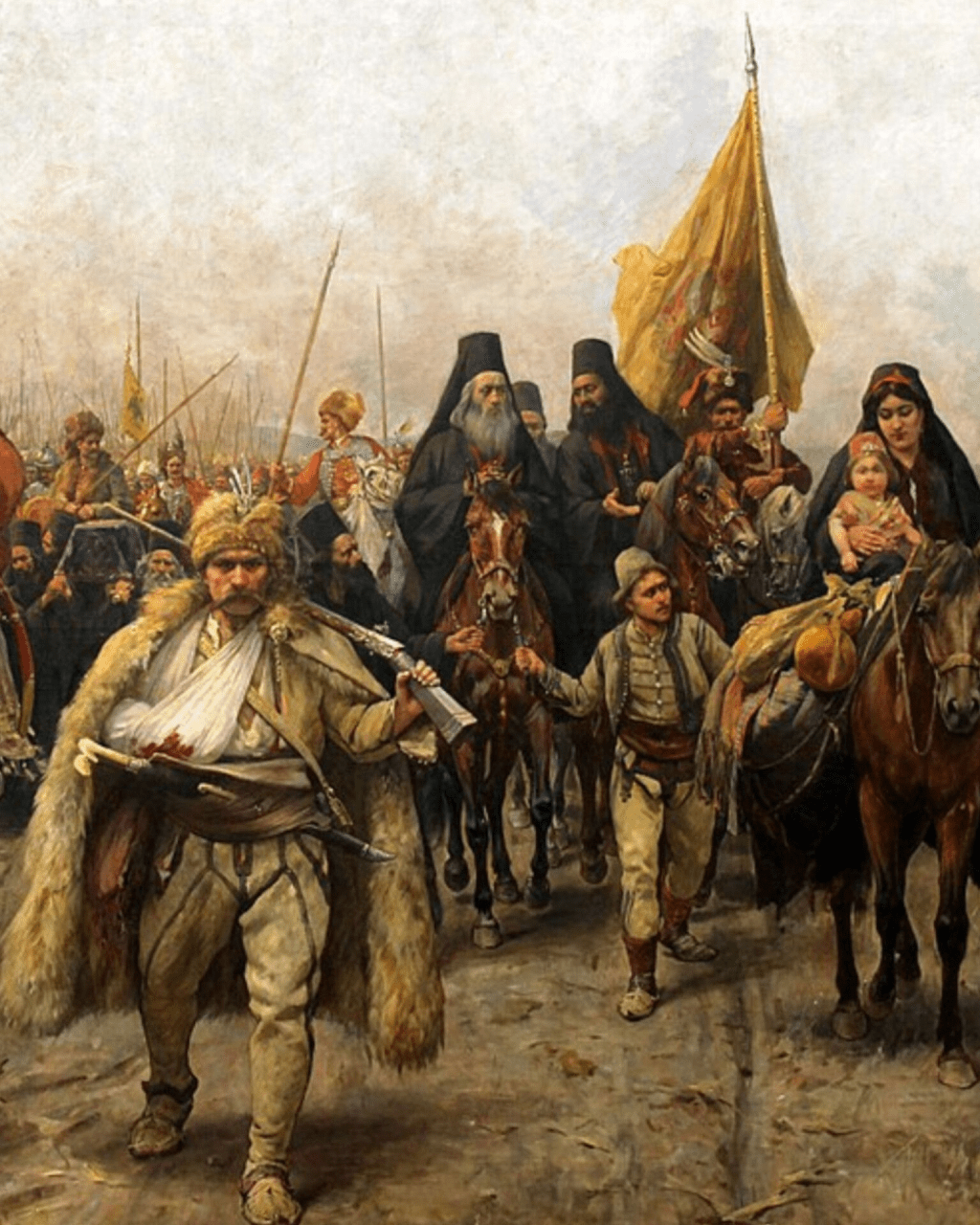

Paja Jovanović’s celebrated 1896 painting The Migration of the Serbs is known as a symbol of the alleged exodus of Orthodox Christians from the Ottoman Empire into Habsburg territory in the 17th century. However, a closer look of the clothing depicted in the work shows a different picture. Something the title misses.
Many figures in the painting are clearly wearing traditional Albanian garments such as the tirqe (embroidered wool trousers) and the plis, the white cap worn by northern Albanian highlanders. These details openly show the Kelmendi Albanians, both Catholic and Orthodox, who migrated alongside the Serbian communities during the same period.
Historical records support the idea that populations from the Kelmendi region—caught between Ottoman campaigns and regional conflict—moved northward together with other Christian groups. Jovanović, known for his meticulous ethnographic realism, appears to have intentionally highlighted this aspect. His representation of clothing and weaponry suggests that he was fully aware of the Albanian element.
Therefore, The Migration of the Serbs should be understood as a visual testimony where Albanians played a significant and visible role.

 Balkan Academia