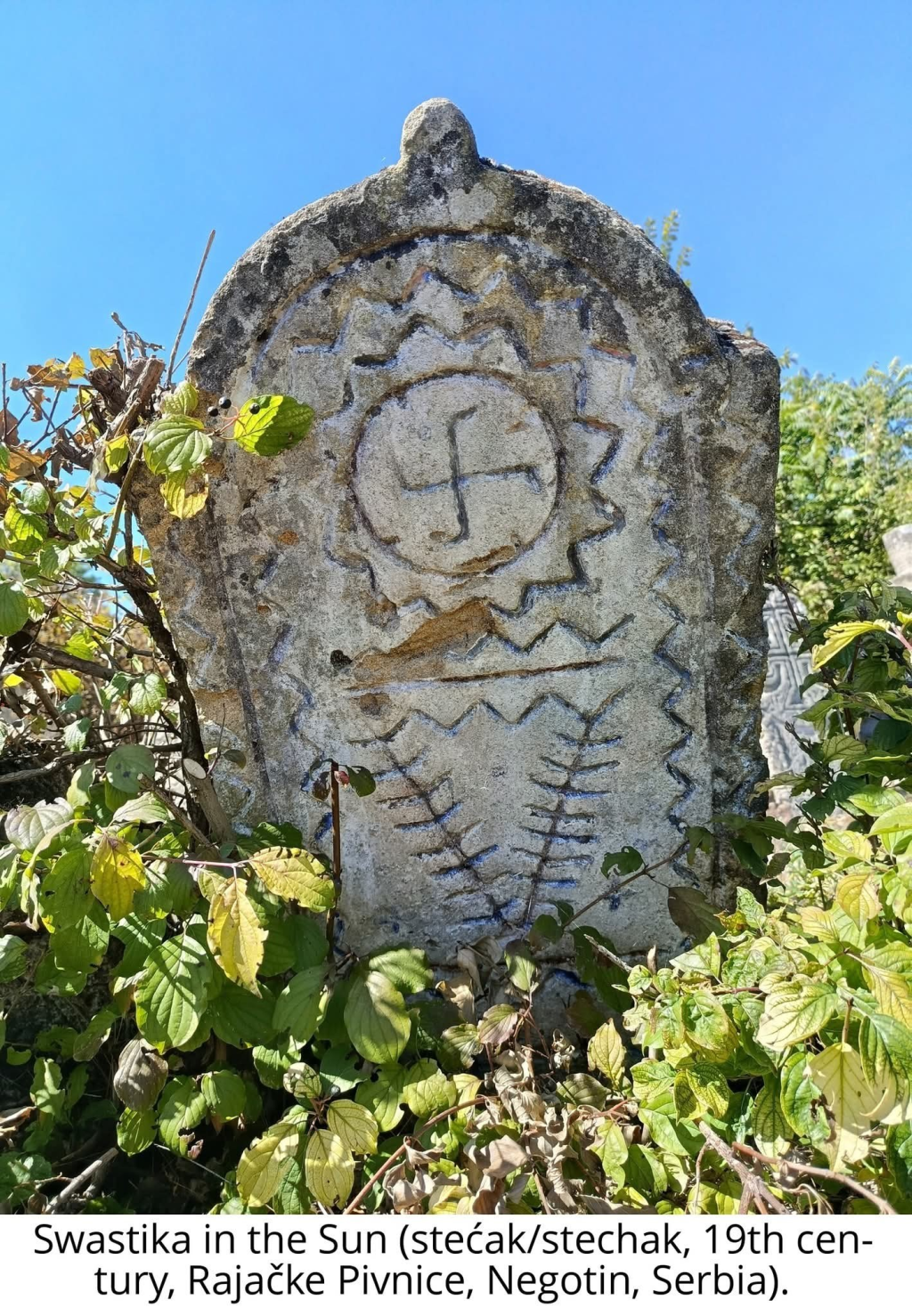

Abstract: This study explores the rich material culture and funerary traditions of the Illyrian and related ancient populations across the western Balkans, southern Serbia, Kosovo, and southern Italy. Evidence from tombstones, chariots, gold and silver ornaments, and sculptural reliefs demonstrates shared motifs such as swastikas, spirals, duel scenes, and solar symbols, linking the Dauni, Iapygian, and Dardanian populations to Illyrian heritage. Many of these artifacts, preserved in museums and local collections, have historically been misattributed to Slavic or medieval Serbian contexts, obscuring their true origins. Analyses of cemeteries, monumental tombstones, and settlement sites—including Rascia (Arsia) and other fortified locations—reveal long-standing traditions of ritualized burial, artistic representation, and religious symbolism, including sun and snake motifs. This research emphasizes the continuity of Illyrian cultural identity, highlighting its influence on subsequent regional populations and stressing the importance of recognizing these sites within their authentic historical and ethnic context.
Authors and publicists mentioned: Lulzim Osmanaj – The Illyrian Necropolis of Novipazar
Vullnet Lulo – Comments on Novi Pazar and archaeology
Marco Popovic – Serbian researcher mentioned regarding Novi Pazar
Joan Kalic – Research team member in Novi Pazar
Muamer Zukorlic – Grand Mufti of Sandzak, academician
Preveza Abrashi – On Illyrian chariots and artifacts
Shqipe Hoxha – On Illyrian Dacia and funerary monuments
Xhafer Leci – On Illyrian-Dardanian cemeteries in Sandzak
Husein Habibovič – Historian-geographer, on the Smaluča Cave
Nexho Laqi – On Illyrian tombs in Laçi, Kosovo
Eglantin Leshi – On Illyrian graves in southern Serbia
Lulzim Osmanaj writes:
The Dauni had some elements in common with the Illyrians and, in a broader context, with the Pelasgians and Illyrian art. The Dauni were an ancient people who lived in southern Italy, mainly in Apulia. They were part of the Iapygian tribal group (along with the Peucates and the Messapians). Many scholars believe that the Iapygians were related to the Illyrians, because their names, language, and elements of culture show similarities to the peoples of the Balkans. Like the Illyrians, the Dauni used tombs marked with stone monuments and had rich funerary practices.
The Illyrians had a rich tradition in carving motifs in stone, especially on tombs and funerary monuments, just like the Dauni. The duel scene in relief is a recurring theme in Illyrian art, where warriors were often depicted with shields and helmets.The geometric ornaments in relief, especially those in the form of swastikas, are similar to symbols found in Illyrian art and that of neighboring cultures.
This funerary statue (Photo of two soldiers) represents the most significant genre of Daunian art. Only a fragment has survived – the rectangular tombstone symbolizing the body was originally supplemented by a plastically modeled head.The main side shows the figure of the deceased with incised details of clothing such as long triangular ornaments hanging from the belt. The other sides of the monument are also decorated; the back shows a duel. The lower, plain part of the tombstone was lowered to the ground.
Similar monuments were created between 650 and 500 BC to mark the graves of people of high position. Material analyses have shown that the funerary statue was made of Apulian limestone.
Lulzim Osmanaj: The Illyrian Necropolis of Novipazar

Illyrian necropolis in the former Novi Pazar with Illyrian population. Even today, a large number of Slavized Albanians still live there. Our history is being distorted and our Academy has no hand in this and does not even want to know. In order to distort the truth, Serbian media denotes these ancient graves as “Medieval Serbian necropolis at the archaeological site of the Greek cemetery in the village of Ljuljac, near Novi Pazar, southwestern Serbia.”
The Bird God on a Charlot

All these Illyrian artifacts found around the Danube in Serbia, which are variously known as the Danube culture, are Illyrian. The Serbs did not write a single word that they are Illyrian, but only that they date back to around 1500 BC, leaving a confusion that no one can understand.
The Albanian Academy of Sciences should look for these artifacts because the world knows them as Illyrian and we are their descendants.

Another bell-shaped ceramic figure from the Danube River. Accidentally discovered in Dupljaja near Vršac, Serbia, it dates back to around 1500 BC. A bird goddess standing on a chariot pulled by waterfowl. She is not connected to the rest of the composition and can be removed. Lavishly decorated with spirals, sun circles and other ornaments. Collection of the National Museum of Serbia in Belgrade.
Vullnet Lulo writes:
What are the Serbs hiding in Sandzak? Do Albanians know? Marco Popovic is a Serb but one of those who tell the truth.
Both teams rarely come to Novi Pazar: Marko Popovic says that his work has ended, while Joan Kalic’s team lacks money for further research in Gradina. As for the existence of the Serbian Stari Ras, the Grand Mufti of the Islamic Community in Serbia, Muamer Zukorlic, at an important conference, declared: “We Bosnians are of Illyrian origin. If someone asks you where this is from now, answer freely,” the Mufti told us.
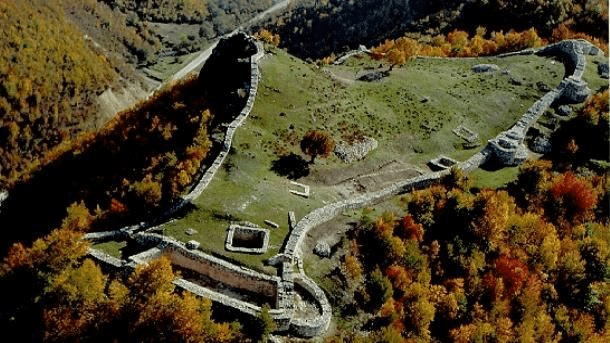
And that fortress above Novi Pazar, which they claim was the seat and cradle of the Serbian state, is actually Arsa, the old Illyrian capital and has no connection with any Rasi, and with the old Serbian state “. writes the Belgrade daily “Politika”. Much can be written about this ancient city, but one thing is certain: Ras-Arsa (Arza) is a city of the Illyrian kingdom.
Preveza Abrashi:
Gilded Illyrian Chariot of the Auteriat Tribe
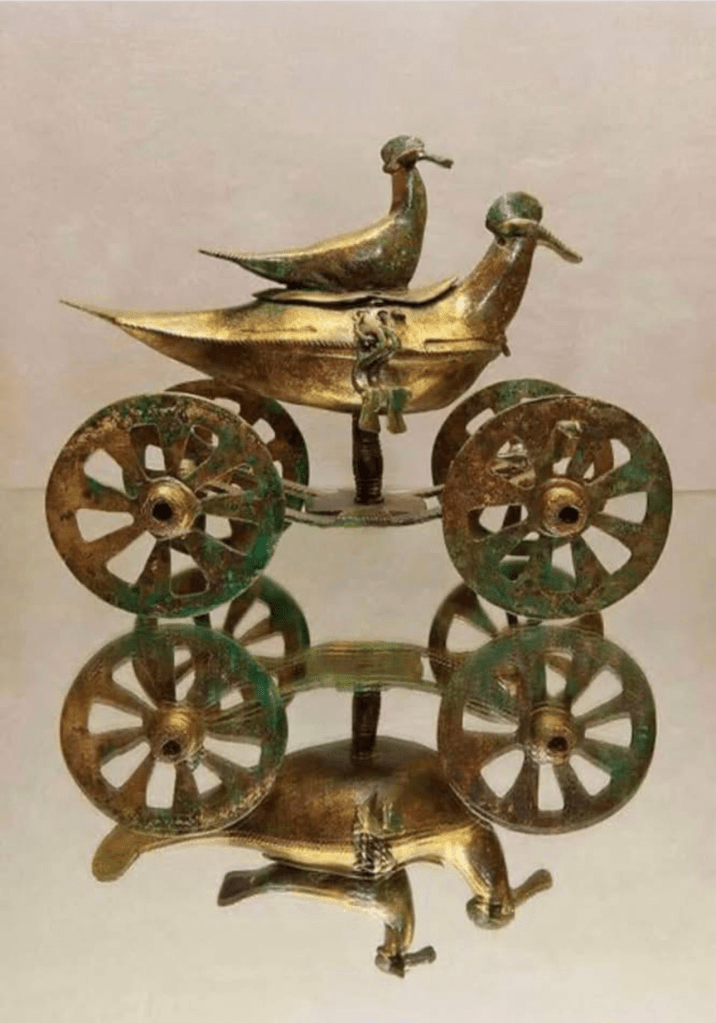
Gilded Illyrian Chariot of the Autariat Tribe, of the Iron Age, Called the Glasnac Culture, Today Bosnia.
Pelasgian Illyrian Chariot Discovered in Serbia.

The known Glasinac culture was an Iron Age prehistoric archaeological culture named after Glasinac locality in Bosnia and Herzegovina. The culture is associated with population that was later known as Autariatae, one of the most powerful Illyrian tribes In the second photo is the chariot discovered in Vršac today Serbia and belongs to the Bronze Age – New Iron Age.
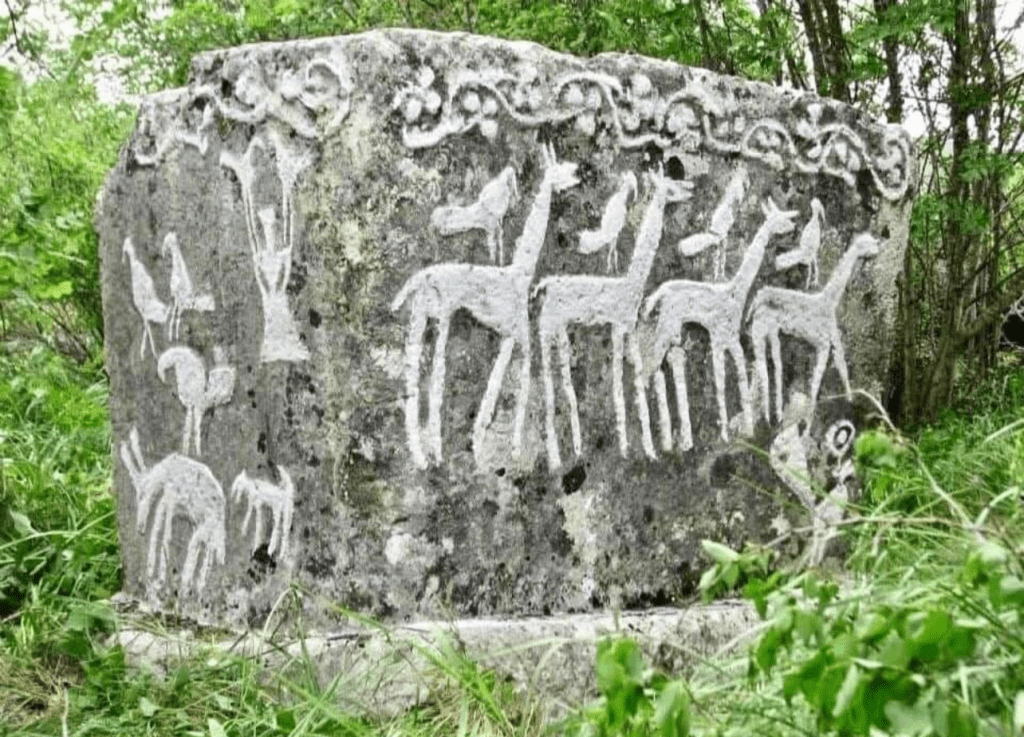
About 100,000 hanging stones scattered in Bosnia, Serbia, Montenegro and Croatia, with different sizes from a few tons to the largest 32 tons.

A large number of them with carvings with motifs of the Bronze and Iron Ages, motifs found in Illyrian stone carvings (flower of life, spirals, swastika, zoomorphic carvings, etc.) After many attempts by Slavic scientists to present them as their medieval culture, although there is no writing or record of their construction in the early or late Middle Ages. in recent research by foreign and local archaeologists and historians, they agree that these are only Illyrian heritage.
Shqipe Hoxha writes:
“Illyrian Dacia of Alburnus Maior. In the time of Trajan, Illyrian inhabitants from the mining districts of Dalmatia were colonized. Inscriptions and wax tablets found inside the mine tunnels attest to them. They preserved their tribal organization from Dalmatia. The Pirustae, Baridustae, Sardeates and Maniatae tribes are documented in Dacia.
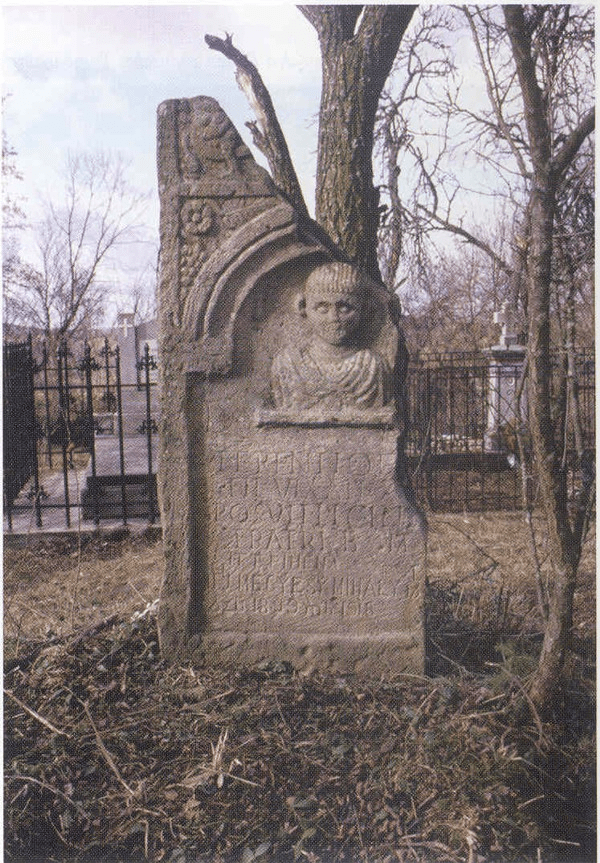
They preserved their institutions, led by principes and founded settlements called castella (kastellum Ansum, kastellum Baridustarum mentioned in the inscriptions). Unfortunately, none of these types of settlements have yet been identified in the field. Another, specific type of settlement is mentioned in a wax tablet: vicus Pirustarum, which seems to refer in this case to a district of Alburnus Maior.
Furthermore, three tombstones with portraits of the dead and Latin inscriptions were found in the cemetery from Brad-Muncelul.
Their images are typical of the representation of Illyrians on Dalmatian monuments. The inscriptions contain Roman, Illyrian and Thracian names.
In funerary monuments, Illyrians can be easily recognized thanks to a particular way of representation, specific to the area inhabited by them.
In Dacia, these iconographic features appear on the monuments discovered at Brad–Muncelul and Alburnus Maior.
They belong to the so-called “Illyrian art”, where men are depicted with hat-shaped hair and long pierced ears, while women have a turban or a similar hairstyle. There are monuments dedicated under the formula sub ascia at Alburnus Maior, a type of monument that originated in Dalmatia and was brought to Dacia by colonists from the mining districts.
For burial rites, the Illyrian colonists brought to Dacia for gold mining were in varying degrees of Romanization. The mapping of the latter type of graves has shown that they are mainly attributed to Illyrians. Numerous Illyrian cemeteries were found in the goldfields of the Western Carpathian Mountains, such as from Boteş-Corabia, near Ampelum (today Zlatna, Alba County), with groups of graves surrounded at the base by stone circles; several cemeteries were excavated in the neighborhood of Alburnus Maior (today Roşia Montană, Alba County).
The best known are those from Ţarina, Găuri, Tăul Secuilor, Tăul Cornii.
At the Găuri “Hop” site 171 graves were discovered in 2001 through a rescue excavation. A new cremation cemetery with ritually burned pits was excavated in Tăul Cornii, while another is known from Brad-Muncelul, with 126 cremation graves. Funerary monuments from Ţarina, representation of “Illyrian art” (R. Slotta, V. Wollmann, I. Dordea_Silber und Salz in Siebenbürgen, Bochum.
Preveza writes:
The Illyrian fort of Arsia (today Rascia, Serbia)
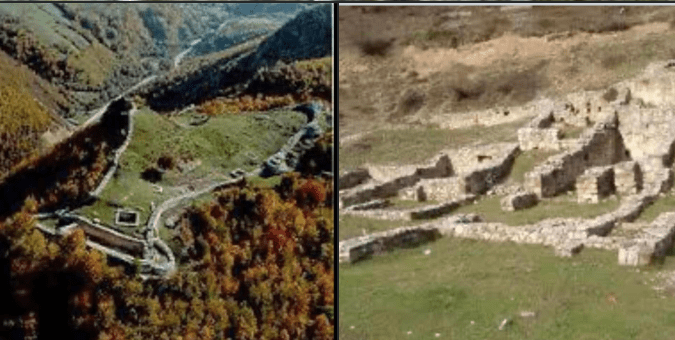
Originally Arsia, a well-known Illyrian settlement and fortress, the Romans called it Rascia, it is believed that the linguistic phenomenon of changing the places of the first two letters of the name occurred, or the name was taken from the rocky terrain with rasa. Later the center of the Serbian bishopric, Stari Ras
Illyrian royal tombs in Lower Selca, Mokër, Korça.

Preveza: Illyrian Jewelry from Gold and Silver, in Serbian Museums.
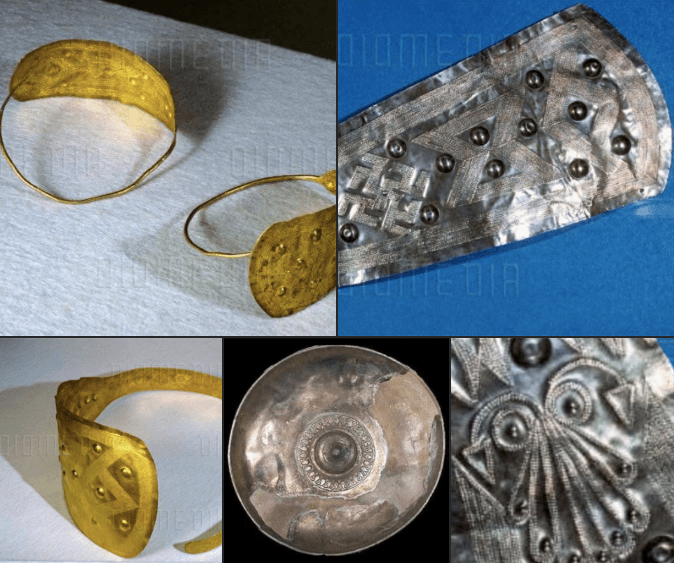
Novi Pazar Pair of gold belts 6-5th cent BC Serbia. Silver belt from Umcari near Belgrade 6 – 5thC BC Serbia. Novi Pazar Gold belt 6-5th cent. Gilded silver vessel, Novi Pazar 5th – 6th century.
Shqipe Hoxha:
Snake on a cross in the Catholic cemetery of Tuzi near Titograd, Montenegro.
In some graves we find Illyrian depictions of snakes on stone tombstones and wooden crosses. An extremely interesting and rare custom in some villages in southern Montenegro speaks of this.
The snake, as a symbol in Christianity, was given a function inherited from ancient times in these monuments, so these depictions from Montenegro should be interpreted as an example of an Illyrian heritage.
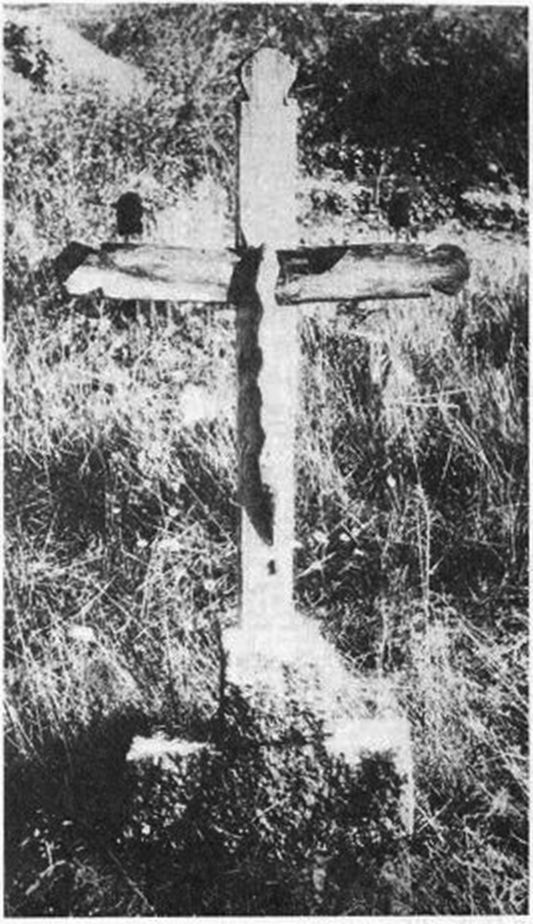
Snake on a cross in the Catholic cemetery of Tuzi near Titograd, Montenegro.
Abrashi writes:
Illyrian artefacts taken to Serbian museum of Vrsac. These are not Serbian or Slavic artefacts.

Xhafer Leci writes:
View of the Illyrian-Dardan cemetery, in the village of Glluhavicë, Tutin, Sandzak, the place called Çukara. This ancient place is known for its iron mine during the time of the Duke of Dubrovnik, and also during the Ottoman period.

In the Slavic Orthodox states, traces of our ancient history are being destroyed, erased, or hidden. One of the locals of this area told me, there are no records: “It could be a Byzantine, Roman cemetery. We absolutely cannot believe that in the territory of Serbia, research of cemeteries is allowed, Byzantine, Roman, Ottoman but certainly not Illyrian-Dardan.
I have read and heard, the Mufti of Sandzak, Academician Muamer Zukorlič, who said: We are not Serbs, Bosnians, nor Turks, but we are Illyrians. Years ago I visited the Sopočne Cathedral, the Illyrian Castle, Pazarište, where Stefan Nemanjič-Nimani lived, which the Serbs call: The Capital of the Middle Ages. Academician Muamer Zukorlič calls this castle the Illyrian Capital over 3 000 years old.
I also visited the Illyrian Cave in the village of Smaluča, which the historian-geographer, Husein Habibovič of Albanian origin, in his book “Gluhavica kroz vekove” calls Very ancient thousand-year-old cave of freedom…That’s it for this time. Thank you very much for the company, dear friend, my new name, Adem Semsovic .
Thank you for your work Ademe.
Glluhavica, 01.09.2023

Nexho Laqi writes:
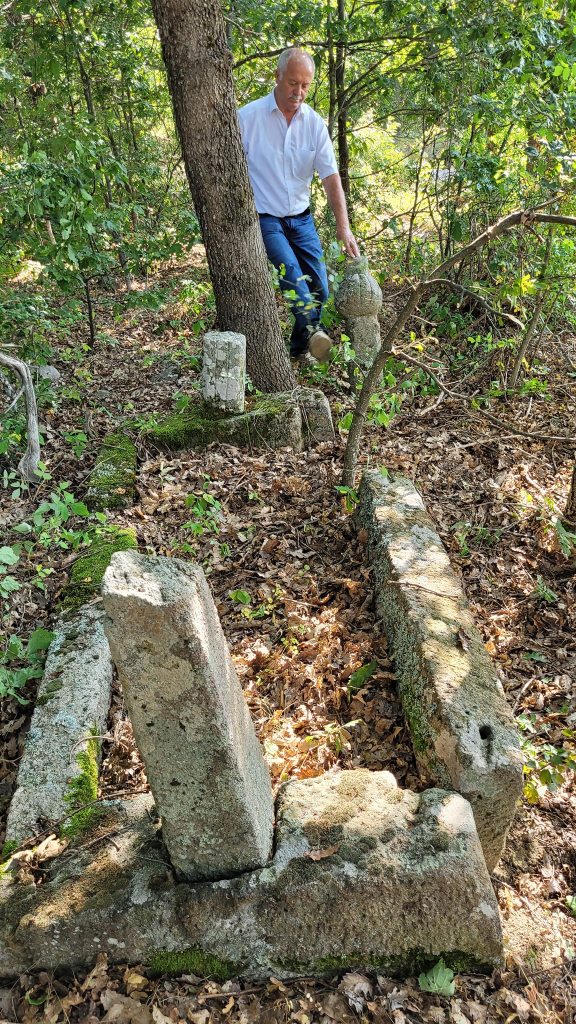
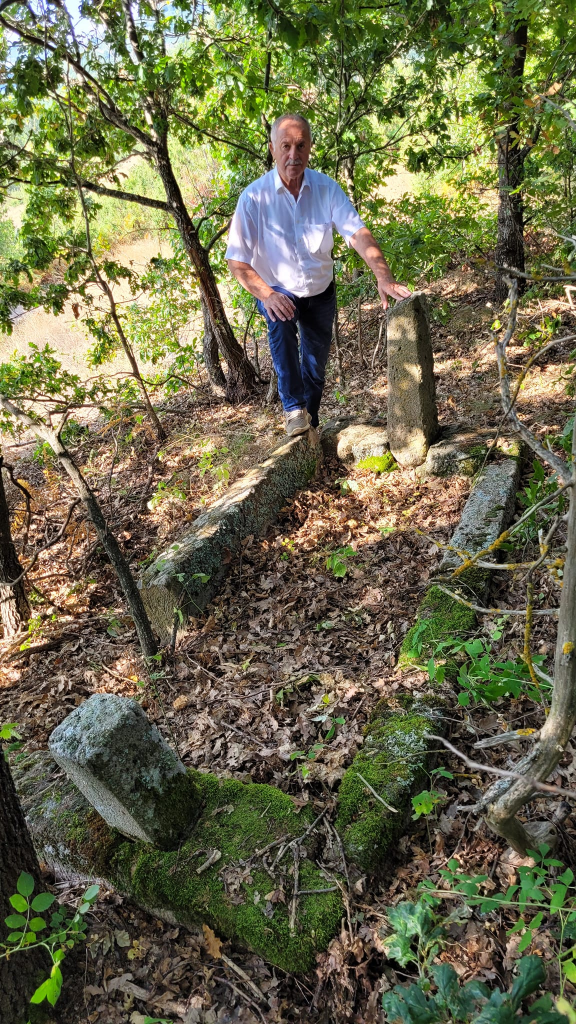
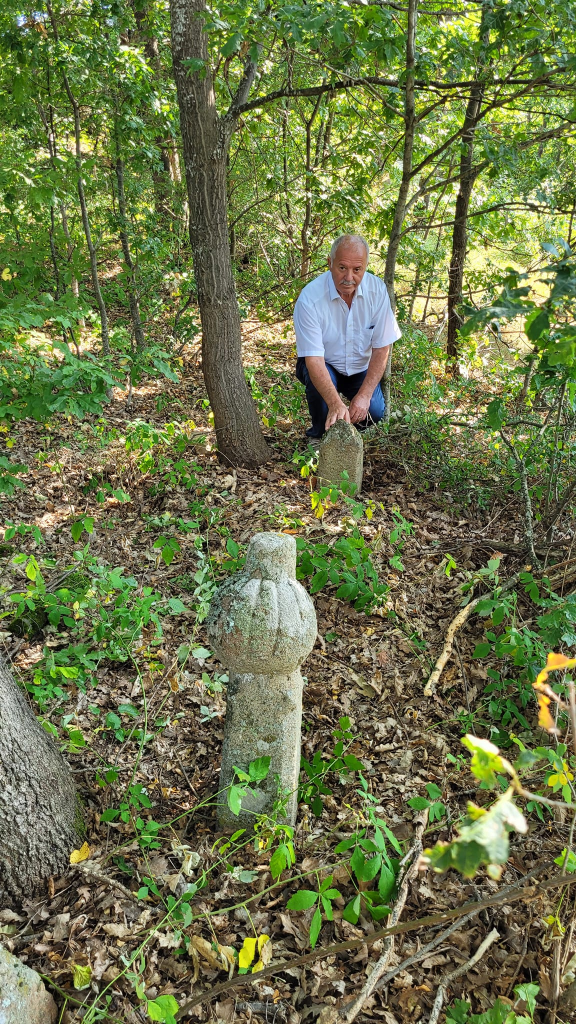
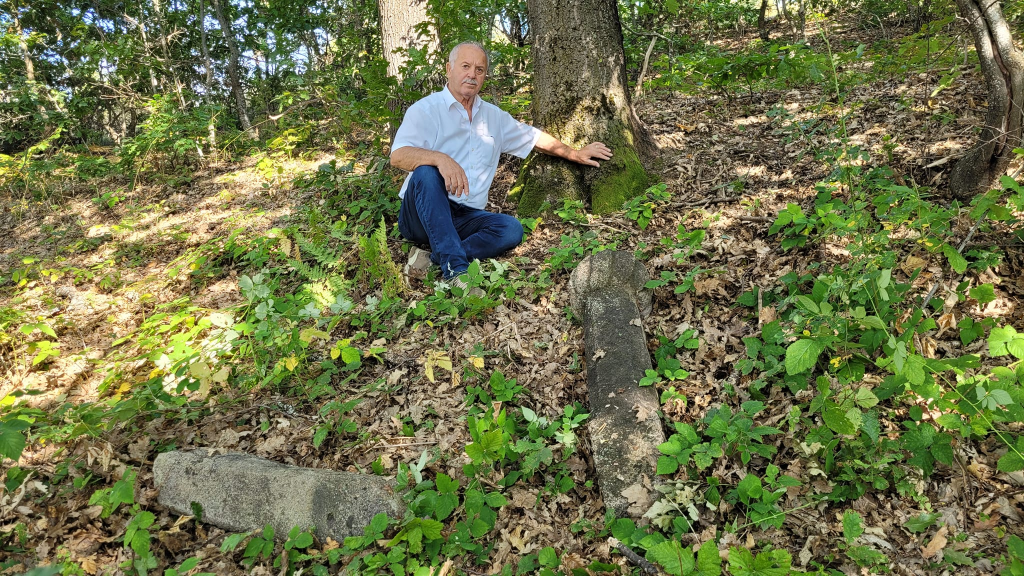
“These Illyrian Tombs are located in the village of Laçi, municipality of Hani-Elezit, State of Kosovo. From these Tombs we can learn that ten centuries ago we lived here, and we are descendants of these Tombs. I ask Archaeology to deal with the discovery of these Tombs, because they are needed for Illyrian Albanian History.”

Eglantin Leshi:
Illyrian graves in southern Serbia


 Balkan Academia