
Abstract
This study examines the interplay between Greater-Serbian nationalism and Russian pan-Slavic agitation in the late 19th century, focusing on Dalmatia and Bosnia as key zones of political influence. Through cultural symbols, covert operations, propaganda networks, and financial support for insurgent groups, Serbian and Montenegrin actors sought to weaken Austro-Hungarian authority and expand Slavic unity under Serbian leadership. Russian agents reinforced these efforts by merging political agitation with ecclesiastical loyalty to Orthodoxy. The material highlights how cultural mobilization, clandestine actions, and geopolitical ambitions collectively shaped the tensions that defined the Balkans on the eve of the 20th century.
Introduction
By the end of the 19th century, southeastern Europe had become a battleground of competing national movements, imperial ambitions, and ideological projects. Among these, Greater-Serbian nationalism and Russian pan-Slavism played a decisive role in reshaping political alignments across the region. Austria-Hungary’s occupation of Bosnia and Herzegovina in 1878 intensified these dynamics, prompting Serbia and Montenegro to pursue covert strategies aimed at undermining Habsburg rule. Dalmatia, with its strategic location between Bosnia and Montenegro, emerged as a critical conduit for cross-border propaganda and agitation. This text explores how cultural influence, political manipulation, and clandestine operations worked together to advance Serbian and Russian ambitions in the Balkans around 1899.
Background
The late 19th century was marked by the rise of national ideologies in the Balkans, where competing visions of statehood collided with imperial structures. Serbia and Montenegro, both animated by visions of unifying South Slavs under Serbian leadership, invested heavily in propaganda targeting Serb communities under Austro-Hungarian rule. Dalmatian Serbs became particularly important intermediaries, strategically positioned along the route between Bosnia and Cetinje. Russian pan-Slavists, driven by religious and geopolitical motivations, amplified these nationalist currents by supporting Serbian agents and exploiting Orthodox ecclesiastical ties.
Cultural products such as portraits of Prince Nicholas of Montenegro, widely distributed across Dalmatia and Bosnia, became symbols of loyalty to the Montenegrin and Serbian cause. Meanwhile, Serbian politicians such as Stojan Novaković financed insurgent bands intended to provoke uprisings in Bosnia. Although these missions often collapsed due to poor coordination and low morale, their very existence underscored the breadth of the pan-Slavic project and its capacity to destabilize the Austro-Hungarian frontier.
Austro-Hungarian rule and the strategic value of Bosnia
With Austria-Hungary’s occupation of Bosnia and Herzegovina, the Serbian population under Habsburg rule gained new political importance. At the same time, Montenegro and Serbia intensified efforts to destabilize the province by instigating uprisings. This created fertile ground for Greater-Serbian propaganda, particularly among the Serbs of Dalmatia.
Dalmatian Serbs as intermediaries of Montenegrin influence
Because the primary route between Bosnia and Montenegro passed through Dalmatia, Dalmatian Serbs became valuable agents in Montenegro’s political agitation. Public accusations claimed that Russian operatives influenced local Serbian leaders, who were allegedly collaborating with the Montenegrin prince against Austria. Although Dalmatian Serbs denied such claims, they also asserted—somewhat paradoxically—that they were more loyal Austrian patriots than Croats, Italians, or Germans.
The cult of the Montenegrin Prince
Despite public denials, the cultural and emotional ties were visible. Serbian painter Medović of Ragusa frequently produced portraits of Prince Nicholas of Montenegro, which were widely disseminated among Dalmatian Serbs. These prints, produced in Prague and financed by Serbian organizations or wealthy patrons such as merchant Nikolić of Zagreb, became popular symbols of Montenegrin prestige and Greater-Serbian sentiment. Their distribution extended beyond Dalmatia into Bosnia and Herzegovina, where families openly displayed the portraits in their homes—a gesture hardly compatible with declared Austrian patriotism.
Financial support and covert actions against Austria
The spread of pro-Montenegrin imagery was accompanied by direct financial support for armed insurgent groups. Serbia and Montenegro repeatedly funded bands intended to invade Bosnia, declare autonomy, and spark revolt against Austria. Even the most tolerant Austrian observers considered these acts dangerously close to treason.
The Novaković expedition: propaganda vs reality
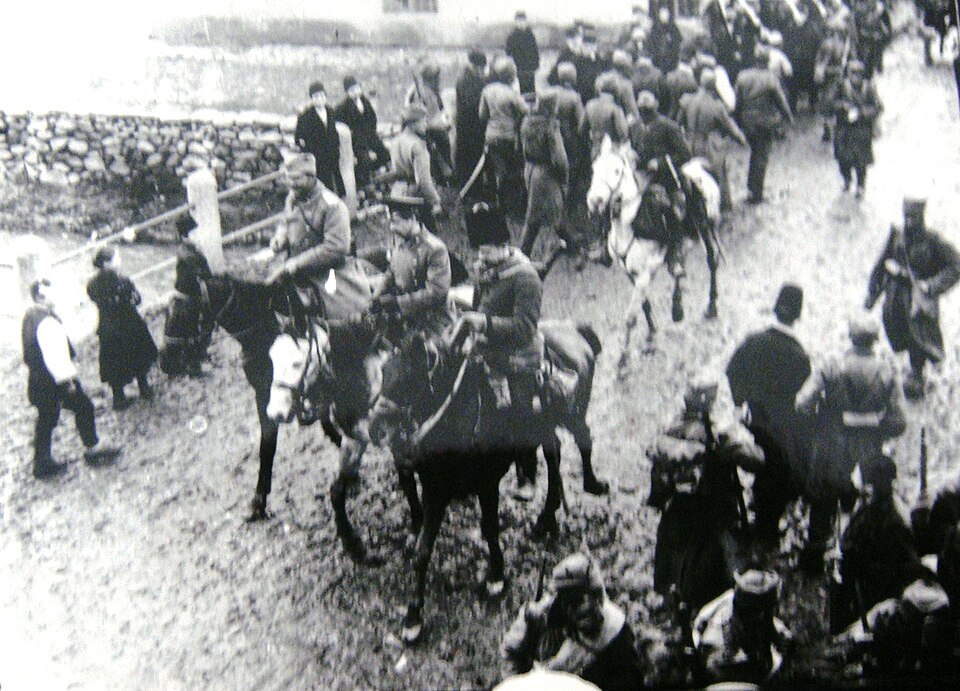
The text recalls an expedition organized by Stojan Novaković during his tenure as Serbian Prime Minister. He raised funds in Russia, Bosnia, Dalmatia, southern Hungary, and Serbia, while plundering state coffers and launching the propaganda newspaper Bosansko-Hercegovački Glasnik to promote the mission. Although reports described a heroic insurgent column marching toward the Bosnian border, the operation collapsed comically.
According to an Austrian general, the closer the group approached the border, the fewer men remained. Only five fighters actually reached the frontier; four fled, and the fifth revealed himself as an Austrian agent. Contrary to Serbian claims, Austrian gendarmes never even fired a shot.
The Pan-Slavic dimension
Serbs were particularly susceptible to Russian influence because of shared Orthodox religious identity. Pan-Slavic activists exploited this connection, intertwining nationalistic agitation with ecclesiastical issues. Russian agents circulated among Austrian Serbs, strengthening the ideological bridge between Serbian nationalism, Montenegrin ambitions, and broader Russian geopolitical goals.
Source
Die panslavistische Agitation und die südslavische Bewegung in Oesterreich-Ungarn Av Bresnitz von Sydačoff. 1899

 Balkan Academia