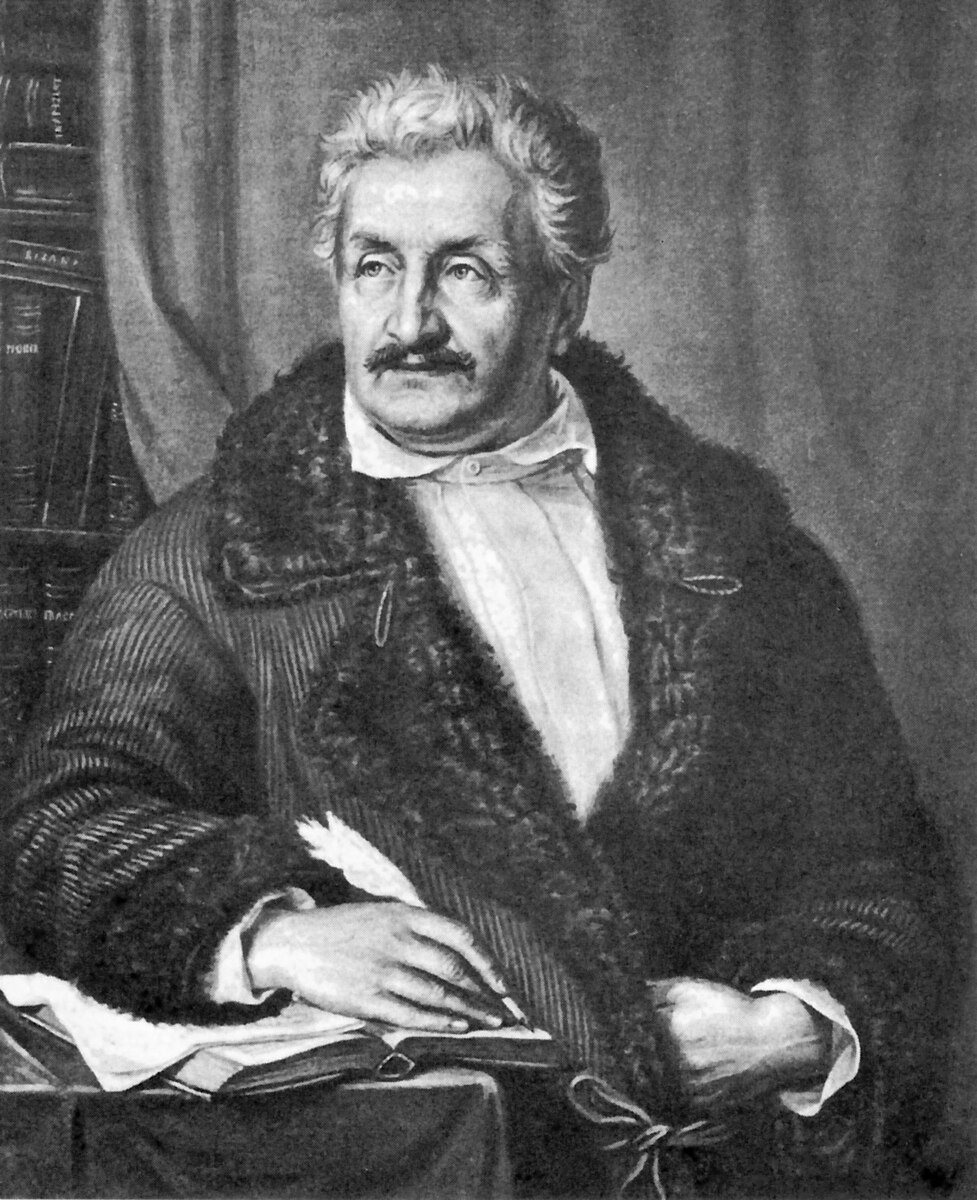

In his famous work “Geschichte der Halbinsel Morea wähänd des Mittelalters” (“History of the Morea Peninsula during the Middle Ages”, published 1830–1836), he made this very shocking conviction about his time:
“Not a drop of genuine Hellenic blood flows through the veins of the current Christian residents of Greece. ”
(“Not a drop of true Hellenic blood flows in the dams of today’s Christian inhabitants of Greece. ”)
Fallmerayer, after an extensive historical and linguistic study on the Peloponnese (Morean), concluded that:
The ancient Hellenic population had disappeared or assimilated after the Slavic Floods (Shek. VI-VIII after Christ);
Modern Greeks are the descendants of Slavs, Arvanites (Albanians) and other Balkan elements that were mixed with the small remains of the local population;
Modern Greek language is a form heavily influenced by Slavic and Albanian, although it retains the structure inherited from ancient Pellazgian Greek.
Why was this tease so shocking?
In the 19th century, Greece had just been declared an independent state (1830), claiming the direct heritage of ancient Greece. Fallmerayer’s thesis debunked this myth, because she claimed that “modern Greeks are not the sons of Hellenes”.
The most popular quotes from Fallmerayer:
“The ancient Hellenic nation has collapsed, and there is not a drop of its blood left in the veins of today’s Greeks. ”
(“The ancient Helen nation has set, and not a drop of blood from it remains in the dams of today’s Greeks. ”)
Modern Greeks are a mixture of Slavs, Albanians and Geldings.
(“Today’s Greeks are a mixture of Slavs, Albanians, and Vlahs. ”)
His ideas were strongly opposed by Greek and European Philohellenic academic circles.
However, many researchers afterwards (e.g. Hop , Crumbacher , G. Hertzberg, and even Karl Otfried Müller (correctly) confirmed important elements of his thesis.
Fallmerayer remains a brave figure who first raised the question: “Who really are the Greeks of today? ”
Source
Geschichte der Halbinsel Morea wähänd des Mittelalters” (“History of the Morea Peninsula during the Middle Ages”. 1836.

 Balkan Academia