
Spizza (Spica) is described as a town situated upon two steep mountains. Within it stands the Church of Saint Demetrius, whom the community has chosen as its patron and protector. In the same district there are approximately eleven rural churches, nearly all Catholic. Among these, the principal church is that of Saint Thecla, which was shared jointly by Catholics and Schismatics (Orthodox Christians).
Above Spizza to the north lie two villages, Tiomille (Tudjemilë) and Supei (Zubci) separated by a distance of two miles. One consists of forty families, the other of sixty. Each possesses its own church and parish, both dedicated to Saint Nicholas.
Spizza lies within a broader region under Venetian rule, extending along the coast between Budva and Antivari (Tivari, Bar). While parts of the surrounding territory belong to the Diocese of Antivari, the population historically included both Catholics and Orthodox Christians, though later ecclesiastical reconciliation led to the population becoming entirely Catholic, numbering approximately 315 inhabitants.
A parish priest, supported by a stipend from the Sacred Congregation, presides over Spizza. His pastoral responsibilities also include the nearby village of Sazine, which, together with four sacred chapels, forms a Christian administration serving approximately 190 Catholics.
Spizza is also connected territorially and spiritually with nearby monastic institutions, notably the Monastery of Saint Mary of Ratac (Rotacio), whose abbots traditionally held honorary titles conferred by the Archbishop of Antivari. Although the monastery later fell into decline—being abandoned by monks and plundered by the Turks—it remained an important historical and devotional reference point for Spizza and its surrounding region.
Reference
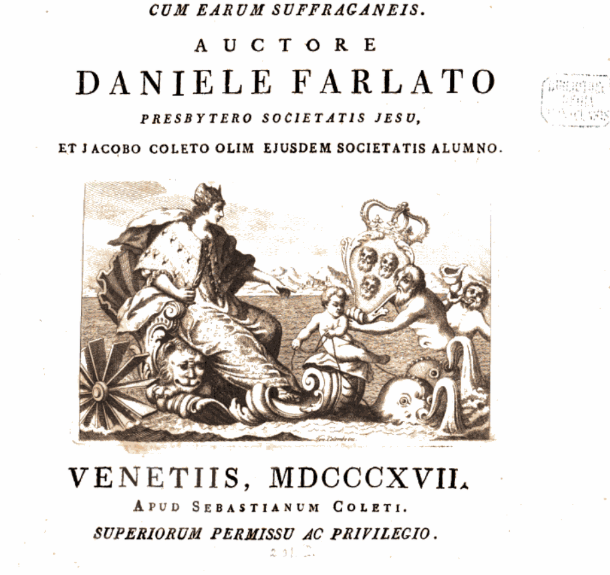
“Illyricum Sacrum Ecclesia Diocletiana, Antibarensis, Dyrrhachienis, Et Sirmiensis, Cum Earum Suffraganeis”, Volume 7 by Daniele Farlati, Jacopo Coleti. 1817.

 Balkan Academia