

by Lulzim Osmanaj. Translation and editing Petrit Latifi
Abstract
This study examines the antiquity and origin of the double-headed eagle symbol, arguing for its deep roots in Illyrian–Dardanian culture rather than later Roman or Byzantine adoption. Drawing on ancient mythology, classical sources, archaeological findings, and scholarly analyses, the paper traces the eagle’s sacred status as a solar and divine symbol associated with Zeus and pre-Hellenic Pelasgian traditions. Evidence from Illyrian shields, coins, funerary art, and stone carvings demonstrates the early presence of both single- and double-headed eagles in Illyrian lands from the Archaic period onward. The continuity of this symbol is further explored through medieval Albanian heraldry, particularly the Kastrioti family and Skanderbeg’s banner, highlighting an unbroken cultural transmission culminating in the modern Albanian national flag.
The double-headed eagle is the symbol of the unity of the Illyrian tribes. The symbol of the double-headed eagle is an ancient Illyrian heritage. The two heads of the eagles are the twinning or brotherhood of the famous Illyrian-Dardan tribes. The eagle was carried by Zeus Pellas and accompanies him throughout his life Ancient Pelagzo-Daedan mythology, not Greek, attached great importance to the eagle, considering it a divine bird. It was the symbol of the father of the gods Zeus and the bearer of his divine weapon – the thunderbolt.
Already the Pelasgian Homer mentions the eagle as Zeus’ favorite bird: “Who is dearer to you, Zeus, of all birds?”
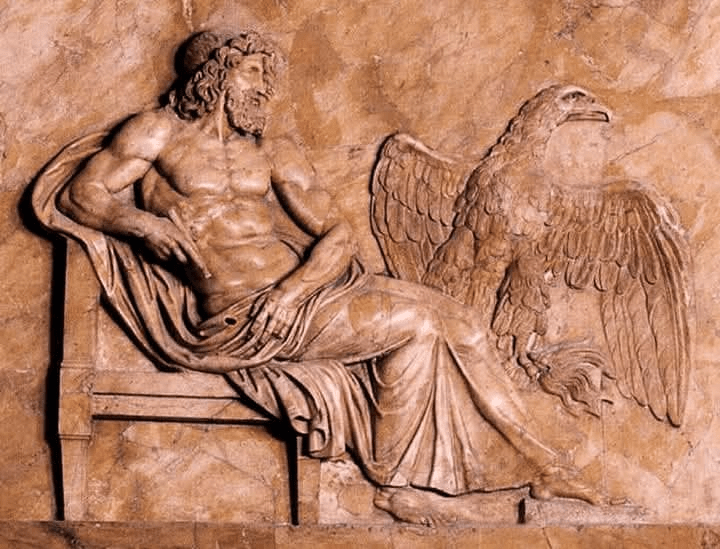
Initially, the eagle was a symbol of Pan, who gave it to Zeus. Many ancient traditions describe the connection between Zeus and the eagle. According to one of them, the eagle was born at the same hour as Zeus, and according to another, he predicted the victory of Zeus over the giants. Thus, in fortune-telling, especially in ornithomancy, the eagle took first place and is mentioned as “the greatest of birds” and “the head of prophecy” (Aristotle 8:18).
There are many images depicting Ganymede rising from an eagle. The most famous work is the magnificent bronze complex created by the sculptor of the 4th century BC. Leochares, a copy of which is in the Vatican. Zeus also sends an eagle to devour the liver of Prometheus, who is chained in the Caucasus.
This eagle was apparently adopted by the Illyrian Emperor of Buz-anti to have as a coat of arms in his Empire, which was Dardane with Emperors, soldiers and Illyrian-Dardane coat of arms.

Illyrian-Arbëresh scholar from Zara, Croatia Aleksander Stipčevič says that the eagle, as a mythical bird, has been part of the ancient culture and tradition of the Illyrian-Albanians, carrying powerful and complex symbolism. This solar symbol has a direct connection with the universe of gods and divine power, appearing as a sign of dual power and wisdom.
One of the best-known examples of the use of this symbol comes from ancient Epirus, where the eagle is directly related to Pyrrhus of Epirus.
Likewise, the ancient coins of the Bylini, a tribe of Southern Illyria, bear the symbol of a single-headed eagle, indicating its spread and importance in local art and culture.
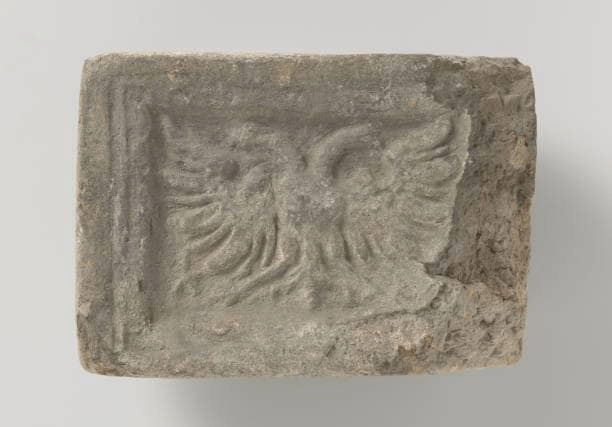
Analyses by Illyrian scholars such as Aleksandar Stipčević, undoubtedly confirm the use of the double-headed eagle as a solar symbol on the shields of Illyrian warriors. One of the most significant artifacts, also presented in this study, shows an Illyrian shield decorated with the symbol of the double-headed eagle.
These facts remove any doubt or speculation about the origin of this symbol, closely linking it to the Illyrian-Albanian heritage. Today’s Albanians have inherited the eagle symbol from their ancestors, maintaining an unbroken connection with the ancestral lands they continue to inhabit.
In almost all ancient cultures we encounter the eagle with one head or even two heads. The Roman emperors were Dardanian-Illyrian emperors, the soldiers were Illyrian, the coat of arms was Illyrian, how could they be Latin-Roman? Many ancient civilizations have adopted the eagle as their symbol, but its roots date back much earlier than the Roman or Byzantine Empires, which adopted it from earlier cultures. In the Illyrian lands, the double-headed eagle had meanings related to dual powers and divine omniscience, symbolizing the balance and union of contradictory powers.
The emperors of Byzantium were Illyrian-Dardan, the soldiers were also Illyrian, the Illyrian-Arbër coat of arms with the double-headed flag found in Croatia is proven to belong to the 6th-4th centuries BC and the Illyrian tribe of the Japodes.
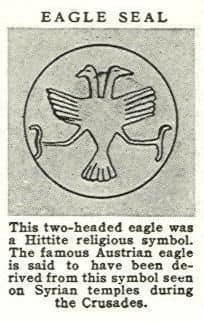
Then we have the Hittite double-headed eagle which was a Hittite religious symbol. The famous Austrian eagle is said to have come from this symbol first seen in Syrian temples during the Crusades.
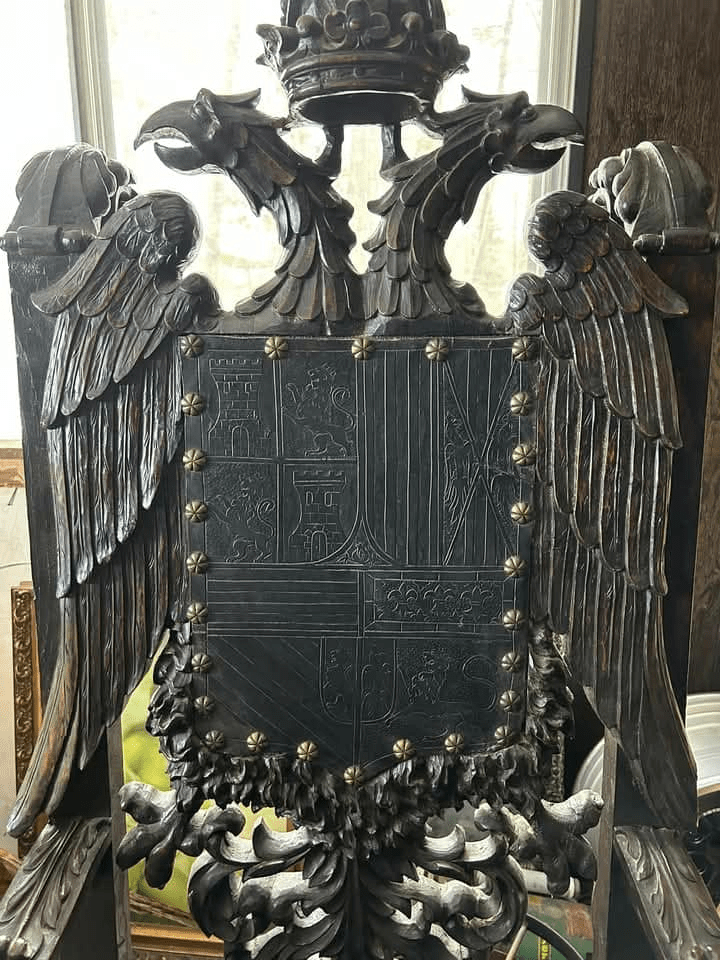
The Albanian flag, which is a black double-headed eagle with a red background, is narrated by Marin Barleti (A Catholic priest from Shkodra) describing the Albanian rebellion of Skanderbeg against the Ottomans.
According to Marin Barleti, Skanderbeg raised a red flag with a black double-headed eagle over Krujë on 28.11.1443 when he declared war against the Ottomans, this flag and this eagle were heirlooms that the Albanians had fanatically guarded since ancient Illyrian-Dardan times.
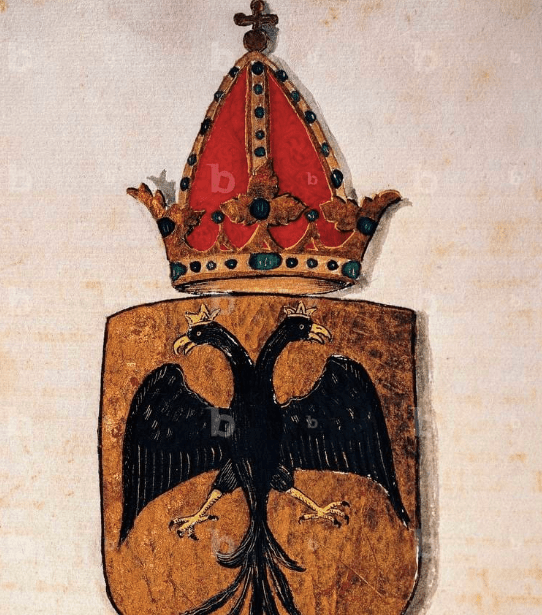
The black double-headed eagle was the emblem of the Kastrioti family, a noble Albanian family (the Skanderbeg family) and was portrayed as the main battle flag of the uprising during the Albanian rebellion by Barleti, which is why Albania today has it as its national flag since 28.12.1912, the day when Albania declared its independence.
Many Albanian noble families had eagles as their family emblem, this because of its prestigious meaning and symbolism that was present during the Dardanian Empire, which was unfortunately called Byzantine.
So the eagle itself was fanatically preserved from generation to generation since ancient times by the Arbër nobles, while Albania today has the double-headed eagle with a red background due to the representation of Skanderbeg (our national hero) and his rebellion.
It was said that at first there was a white field in the background, but when the earth was red with blood, Skanderbeg said let’s make it red for the sake of those who fell for freedom. Peoples like the “Greeks” and the Slavs claim that we Albanians borrowed our double-headed eagle from Byzantium, the Roman Empire, which when it was divided, because it was one-headed, it became two-headed.
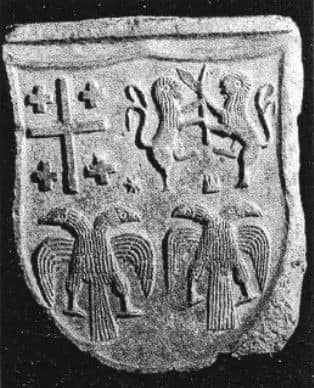
First, the facts that I have about the Roman Empire, Byzantine, etc. refute this whole lie. The second Roman Empire and the Byzantine Empire were Dardanian Empires and had no connection with the Roman one. These, in order to invent a new identity, dropped the name Dardanian Empire and named it Roman and Byzantine.
Archeological findings
Research and References testify that the artifact you are describing is likely a stone carving or a relief depicting an eagle with a distinctive and stylized shape. These types of eagles are commonly found in Illyrian-Albanian art and symbolism, especially during the 2nd-4th centuries AD.
Illyrian-Albanian eagle symbolism
In Illyrian-Albanian culture, the eagle is a revered symbol, often associated with strength, courage, and freedom. These eagle artifacts often display a distinctive curved beak and a stylized geometric body shape, which may appear “alien-like” to modern eyes.
Dardanian connection
Given the geographical location of the find in Croatia and the time period (2nd-4th centuries AD), it is possible that this artifact is related to the Dardanians. The Dardanians were an Illyrian tribe that inhabited the region of Dardania, corresponding to parts of modern Kosovo, North Macedonia and southern Serbia.
BLAGOJE GOVEDARICA, BERLIN
Abids 8. Necropolis Rihić bei Bihać, Japodische Umea (6-4. Jh. v. Chr.)
Mostly small rescue excavations were carried out at already known sites. From this period, Dimitrije Sergejevski’s excavations in the Japodian necropolises of Ribić, Ripać and Jezerina stand out.
There, unique stone urns from the 6th-4th centuries BC with figurative representations in the Archaic and Venetian styles were discovered (Fig.)
Further excavations were also carried out in the Donja Dolina settlement, in the medieval towns of Doboj and Blagaj.
In the architecture and sacred roads of the Roman Empire period. More attention was paid to site inspections and further archaeological research, in order to collect a lot of data on new objects, which will be important for research in the following period.

 Balkan Academia