
by Lulzim Osmanaj. Translation Petrit Latifi
The first people we know by name on the land of Upper Austria are the Illyrians. Their language and culture dominated a large area that included southern Germany, the Sudetenland, the Eastern Alps, the western Balkans and the opposite coast of the Adriatic. Within this region, Upper Austria formed an inland district, very similar to the German-speaking world today.
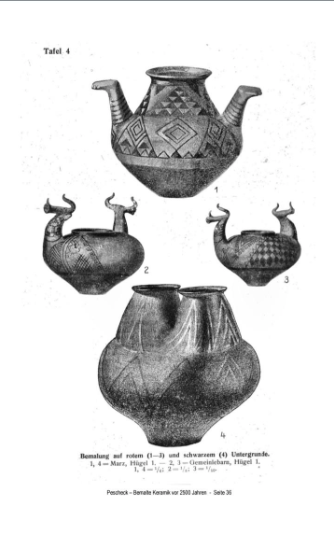
Remnants of the Illyrian language in Upper Austria are rare, but present: the name of the river Agista, today Aist; the tribal name Narister, or Varister, which referred to the inhabitants of the Mühlviertel region; the place name Tergolape, today Schwanenstadt; and finally, the root Adra-Atter in Attergau, Attersee. Upper Austria has the distinction of having given its name to the culture that the Illyrians developed so prominently: the Hallstatt culture.
From 400 BC onwards, Celtic warriors and farmers, the closest relatives of the Germanic tribes, descended on the Danube in dense masses. They migrated in numerous waves along the Danube valley, gradually spreading from there into the Alpine interior and north. In the north, they encountered another great migration of their own people, the Boii, who had conquered the Sudetenland.
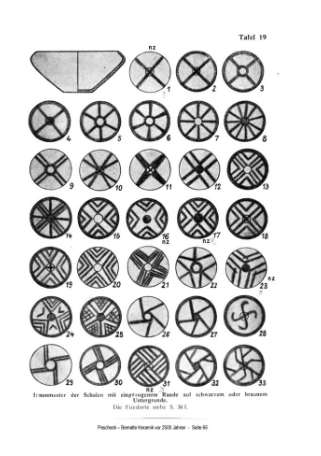
Downstream, the Celts conquered Lower Austria and Burgenland, while strong clans settled in Hungary and the Balkans. This Celtic migration closely resembles the later Germanic-Germanic migration, sharing with it the eastern edge of the adjacent territory, as well as the vast linguistic islands in the Carpathian Basin and the Balkans, and the occupation of the Sudetes.
The Celts brought about a significant increase in the population of Upper Austria on both sides of the Danube, as well as a cultural change, as the Hallstatt culture was gradually replaced by the Illyrian one in theirs, which, according to a Swiss archaeological site, is called La Tène. This La Tène culture, in all its phases, is represented in Upper Austria, as is the Hallstatt culture.
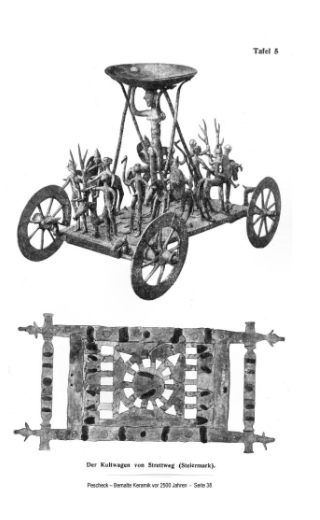
Celtic blood can be considered a valuable contribution to the development of the population of Upper Austria. Numerous geographical names are of Celtic origin, such as the names of the rivers Agira-Ager, Anisus-Enns, Epia-Ipf, Isla-Ischl, Matuca-Mattig, Truna-Druna-Traun, as well as the cities in the Danube valley: Boio-durum, which means “castle of a Boius”, and Innstadt near the border of Upper Austria.
Reference
Rudolf Egger. Jahrbuch des Oberösterreichischen Musealvereins (JbOÖMV) Band 95 (1950)pp. 133-134.

 Balkan Academia