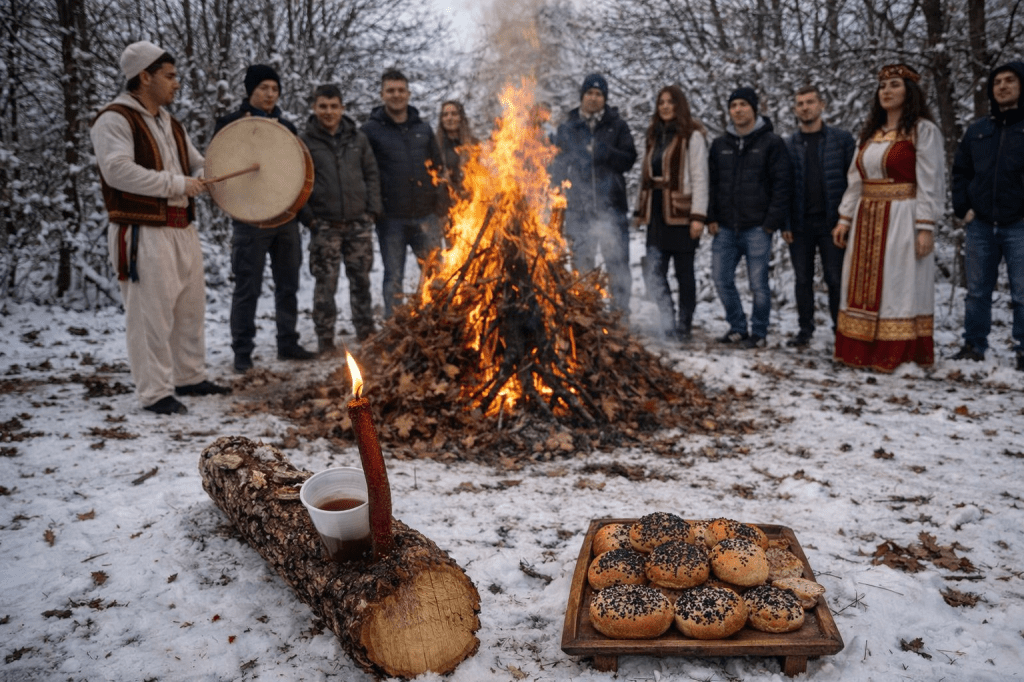

The Feast of Buzmi, or as it is also called, the Generous Buzmi, is one of the oldest Albanian traditions, stemming from pagan beliefs and a close connection to nature and its cycles. Associated with the winter solstice on December 21, this holiday symbolizes the resurrection of the sun god, as after December 22, the day begins to lengthen, bringing hope of revival and a new life cycle. For the peoples of the north and for Albanians, this period marked the moment when the sun “returned” and its warmth began to be felt again
In Albanian territory, this holiday is widely known by various names, including “nata e buzmi” in the Nikaj-Mërtur areas, “Kshnellat” or “Kërshëndellat” in Mirditë, and “mëdiisi i ditir” in Luma. This wealth of names testifies to the wide spread and importance that the holiday had across generations and regions. Despite the Church’s efforts to replace this ritual with the feast of the Nativity of Christ, many Albanians continue to celebrate it according to ancient Illyrian-Arbër traditions.
The buzmi, a large wooden log, is the central symbol of the holiday. It was placed on the hearth and lit to bring warmth, light, and spiritual purification to the family. It was believed that the fire of the buzmi symbolized the sun and its life-giving power, bringing protection from evil and prosperity for the new year. In some areas, the buzmi was celebrated and “eaten” as a human being, giving a vivid dimension to its symbolism as a source of life and prosperity.
This holiday had great importance for the community, including rituals such as prayers, songs, and dances around the fire, as well as the sharing of symbolic foods among family members. In Dukagjin and Malësia e Madhe, the rituals also included ancient stories and wishes for abundance. For Albanians, the Buzmi festival was a moment of unity and commemoration of the close connection with nature.
The Buzmi festival, even today, retains a special place in Albanian culture. At its core, it celebrates the cycle of life and nature, keeping alive the ancient beliefs that connect us to our ancestors and the universe around us.
Sources
“The Night of Buzmi or the Solstice (solstice)”. Dardania Press.
Toska, Ergi (2021-03-14). “The Calendar of Traditional Albanian Pagan Holidays”. Dyrrachium City News.
“Albanian Buzmi, Pagan or Christian Ritual?”. Latest News – Zëri.

 Balkan Academia