
Abstract
This historical narrative recounts the life and resistance of Mustaf Koka, an Albanian teacher and insurgent from the village of Kokaj, Kosovo. Trained in Albania both academically and militarily against Yugoslav occupation, Koka returned to Kosovo and began teaching in Remnik, where he married. Persistently pursued by Yugoslav security forces (UDBA), he ultimately rejected cooperation with them, killing two agents who sought his allegiance. Escaping with his wife back to his home village, he evaded capture by hiding in cherry trees, as instructed to his mother. According to testimonies, Koka, alongside fellow fighters Hasan Remniku and Agush Bresalci, never surrendered and was likely killed attempting to cross into Albania. The account illustrates resistance against oppressive authorities during the Kosovo conflict.
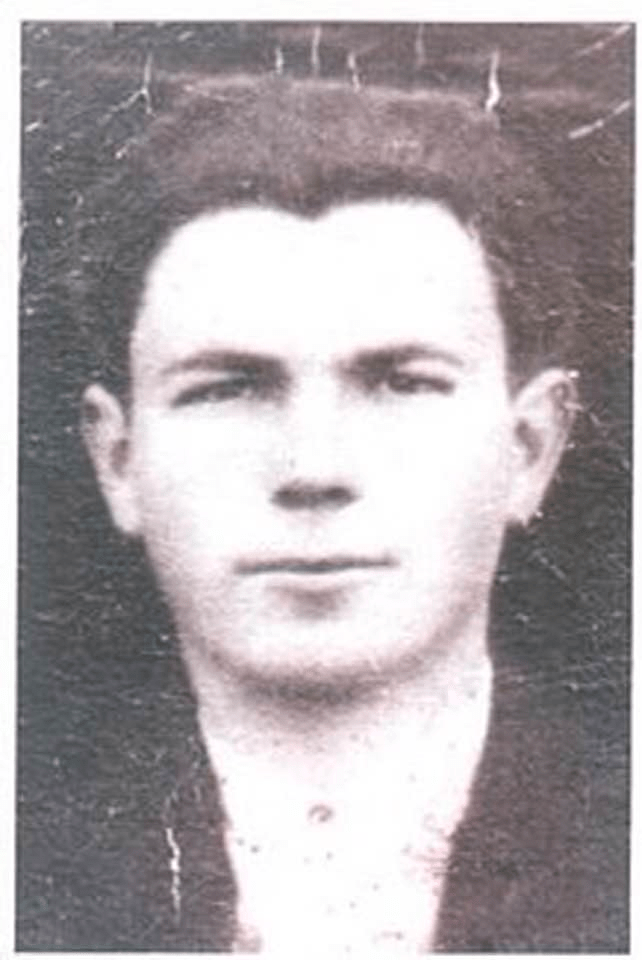
Mustaf Koka
Mustaf Koka was born in Kokaj in Gjilan, the son of the sworn outlaw (kaçak) Hetë Koka. After being educated in Albania as a teacher and receiving military training against the occupying Yugoslavia, he returned to Kosovo to act for the cause for which he had been trained.
He was employed precisely in the village of Remnik in Vitia, where he also married a woman from the same village. While being followed step by step by the UDBA, they came to the school where he worked.
After trying to convince him that he had no other choice but to cooperate with them against the brave men, such as Hasan Remniku and many other activists, Mustaf Koka drew his revolver from his belt and killed both UDBA agents, one of whom was Albanian-speaking and the other a Chetnik.
As soon as he carried out this national and manly act, he took his wife from there and headed toward his birthplace, Kokaj. There he asked his mother to prepare a pershesh as quickly as possible, while he knocked down part of a wall where he had hidden several other weapons of war.
After eating the pershesh, they left the house, instructing his mother that police patrols would arrive very soon, and that without hesitation she should tell them that he had taken the weapons that were hidden in the wall, and tell them that they were a few meters above the house, in some cherry trees that had only just begun to ripen—so she should not lie at all.
As soon as they climbed into the cherry trees, the police arrived at the house, and his mother told them exactly as Mustafa had instructed her.
I heard this story 50 years ago, when I was a child, as it was also told by an Albanian policeman who had been with the Chetniks at that time. One of them asked the commander that they should move uphill toward the house where the cherry trees were, and perhaps they could kill him, but the commander replied:
“But if we don’t catch him, what can we do?”
Then they returned to the police station and filed a report stating that they had not found him at home.
From that moment on, Mustafa Koka, Hasan Remniku, and Agush Bresalci never surrendered alive. There are several versions of their execution through betrayal, and one of them claims that they were killed while crossing the border into Albania.
Sources
Ramadan Asllani – Hasan Remniku: The Last Kaçak of Kosovo
An extensively cited historical series documenting Albanian anti-Yugoslav resistance in eastern Kosovo (Karadak–Gollak region), including Mustafë Koka, Hasan Remniku, and Agush Bresalci.
Nijazi Ramadani – The Patriotic Fate of the Albanian Teacher Mustafë Koka A biographical-historical account focusing on Mustafë Koka as one of the first Albanian teachers educated in Albania and his subsequent persecution by UDBA.
Prointegra (Switzerland) – Patriot Hasan Ali Remniku (1910–1951)
Published by an Albanian diaspora research organization. Provides corroborated historical context on armed resistance and Yugoslav security operations.
Wikipedia (English): “Insurgency in Karadak–Gollak (1941–1951)”
Provides regional and historical background on Albanian insurgency against Yugoslav authorities, listing Mustafa Koka, Hasan Remniku, and others as resistance figures.
Human Rights–oriented historical analyses of Yugoslav State Security (UDBA) English-language studies on Yugoslav repression document UDBA tactics such as infiltration, forced collaboration, and extrajudicial killings in Kosovo after WWII.

 Balkan Academia