
Translation and editing by Petrit Latifi.
Abstract
This work examines the theses of Giuseppe Catapano, a Roman philologist who, after four decades of research, proposed a radical reinterpretation of ancient history, linguistics, and symbolism through the Albanian (Illyrian) language. Drawing on Egyptian religion, hieroglyphs, mythology, and ancient law, Catapano argues that Albanian preserves primordial linguistic structures underlying early civilizations. He attributes the origin of Egyptian hieroglyphs, key cosmological concepts, and divine nomenclature to Albanian roots, presenting Thoth as an Illyro-Albanian figure. These claims are situated alongside linguistic perspectives that identify Albanian as an exceptionally ancient Indo-European branch.
The prominent philologist from Rome Giuseppe Catapano, published as a result of his 40-year research and scientific work, a capital work in the field of philological sciences, to which he gave a very interesting title, according to Catapano, Albanian, or rather Illyrian, was spoken for more than 12,000 years, while according to Horald Whitehall, professor of Anglo-German linguistics at Indiana University (USA), Albanian is the oldest branch of the trunk of the Indo-European language family.
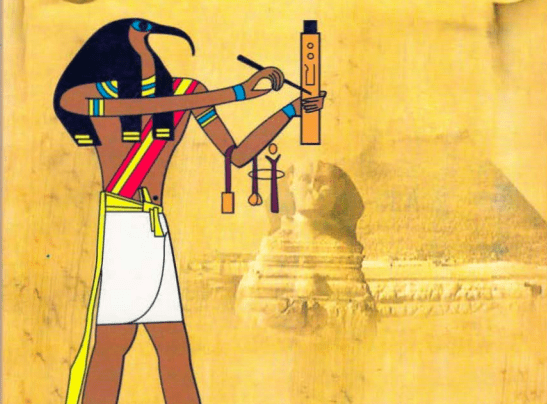
A part of the book states that Thot spoke Albanian or Illyrian
Ramses II – the Great, of the XIXth Dynasty, the greatest, the most
brilliant King; his nephew, Hosarsiph (son of a sister), priest of Osiris according to Manetho and Strabo – a notice attested by inscriptions on monuments -, later called Moses by the Jews, whose cause he only embraced later; Solomon – son of the Hittite, beautiful Bathsheba; all three were Trojans – according to Hermes; Alexander the Great – as we all know, was the son of the Epirote Albanian Olympius; the high Caesar “divine Julius” – according to the greatest Latin poet Virgil, was a Trojan, a descendant of Aeneas, and the great Emperor Augustus, his nephew, was also a Trojan; Constantine the Great, “who saw in the Cross the sign of victory”; and all the other Emperors of Illyria, who ruled after Him, and some even before Him, under the sign of the Eagle, are all boreal, “Sons of Light” and like it are free.
Therefore, by their very nature, accustomed to seeing the particular in the light of the universal and the universal in the concreteness of the particular; they are Illyrians (from the Albanian word: ○liri, free); haughty men, who can conquer with their powerful and bright vision, from above, the entire course of the History of humanity, desiring above all, the fulfillment of the Destinies of peoples, through an iron and sincere will, full of social justice.
In Egypt and Mesopotamia, in Palestine, in the Near East and in the vast Anatolia, as well as in many other regions of the world, I have found the presence of the Illyrians everywhere (always keeping in mind the equation: Illyrian = Hittite = Trojan = Etruscan and later Roman), since times immemorial: in the languages, in the customs, in the myths and beliefs, in the birth, rise and fall of their civilizations.
Interesting quotes
“The Albanian language is the key to deciphering Egyptian hieroglyphs.”
“In compiling hieroglyphs, Thoti always relied on the words of the Albanian language.”
“Each hieroglyph represents the first sound of the Albanian word.”
“The names of spirits, objects and concepts are Albanian.”
“Albanian was the language used in the Lands of the Nile.”
“Albanian was spoken in Egypt 12,000 years ago.”
“Illyrian is much older than is commonly believed.”
“The language spoken in Albania today continues intact.”
“Albanian preserves very ancient linguistic forms.”
“The Albanian language is a phonetic language.”
“The hieroglyphic alphabet was built according to the Albanian code.”
“The word ‘ZOT’ is an Illyrian-Albanian word.”
“The word ‘UDHË’ is an Albanian word meaning law.”
“The etymon of many Egyptian names is explained by Albanian.”
“Albanian explains the meaning of hieroglyphs.”
“No other language provides this phonetic correspondence.”
“Albanian is the first language of writing.”
“Albanian is older than Greek and Latin.”
“The Albanian language is the language of Light.”
“Albanian is a direct Illyrian heritage.”
“Albanian has been preserved without interruption.”
“Hieroglyphs are not symbols, but Albanian sounds.”
“Albanian explains the origin of the alphabet.”
“Albanian is a cosmic language.”
Short passages
Passages about Thot
“I have removed Thoth’s millennia-old ibis mask and given him his true face: the boreal face of the Illyrian. Illyrian is equivalent to Albanian, that is, the son of Freedom and Light. Thoth was the highest guide, the founder of ancient science, which included all branches of modern science, even others as yet undiscovered.”
“Thoth was present at the ‘weighing of the heart’ in the Hall of Judgment, in the presence of Maat, the Goddess of Truth and Justice.”
“Thoth is the founder of the faith of Light and of the occult science of the mysteries; he is also universally known as the inventor of writing.”
“By carefully studying this authorship, I discovered that Thot spoke Albanian and that, in compiling the hieroglyphs of the phonetic alphabet, he always relied on the words of this language.”
Egypt
“In Egypt and Mesopotamia, in Palestine, in the Near East and in Anatolia, I have found the presence of the Illyrians everywhere, since time immemorial: in language, in customs, in myths, in beliefs, in the rise and fall of great civilizations.”
“The Egyptian hieroglyphic phonetic alphabet was compiled by Thoth through the Albanian code, referring to the first sound of the Albanian word that indicated the spirit, thing or concept represented by the hieroglyph.”
“Champolion managed to determine the phonetic value of the hieroglyphs, but not their language. The names of the spirits, things and concepts represented by the hieroglyphs are Albanian.”
“If 12,000 years ago Albanian was spoken in the lands of the Nile, this means that the culture brought to Egypt by the People of Freedom is just as ancient.”
Illyrian antiquity
“Illyrian is much older than is commonly believed. Its origins go back to much earlier times than history has determined.”
“The language spoken in Albania today continues intact, as a direct Illyrian heritage, from a now limited region of ancient Illyria.”
“The people of Liberty brought to Egypt not only culture, but also language, law, and the principles of social order.”
“The etymology of many divine, legal, and social names in Egypt is explained through Albanian and Arberish.”
“Peoples have never remained in one place; but the Albanian language has preserved its fundamental roots, despite migrations and eras.”
Hieroglyphs and the Albanian
“The Egyptian hieroglyphic phonetic alphabet was compiled by Thoth through the Albanian code, referring to the first sound, vowel or consonant, of the word that indicated the spirit, thing or concept represented by the hieroglyph itself.”
“By studying and researching for several five-year periods in many directions, I was able to determine the names of the spirits, things and concepts represented by the hieroglyphs of the Egyptian alphabet discovered by Champollion; and I proved, in a certain way, that those names are Albanian.”
“Hieroglyphs are not abstract symbols, but phonetic signs that represent sounds of the Albanian language, taking as a basis the first sound of the Albanian name of the thing or being represented.”
“Champollion managed to determine the phonetic value of hieroglyphs, thanks to his knowledge of Semitic and Coptic languages, but he failed to discover the language on which the alphabet was built; this language is Albanian.”
“In the design of hieroglyphs, each ideogram has only one phonetic value and that is the initial sound of the corresponding Albanian word.”
“For example: ‘ain’, eagle, represents the letter A; ‘hjete’, braid, represents the letter H; ‘kufte’, container, represents the letter K; ‘fjerë’, snake, represents the letter F.”
“This way of constructing the hieroglyphic alphabet shows that the Albanian language was the language of thought and expression in ancient Egypt.”
“If 12,000 years ago Albanian was spoken in the lands of the Nile, then the hieroglyphs are the most direct evidence of this language.”
“The fact that the hieroglyphs can only be explained through Albanian demonstrates the extraordinary antiquity of this language.”
“Any attempt to explain the hieroglyphs without Albanian remains partial and incomplete.”
“The initial and final hieroglyphs indicate the law and the way of behavior inspired by the First Law, according to the meanings that Albanian still preserves today.”
Maat / Mat as an Illyrian–Albanian Concept
“Maat, or Mat, is an extremely ancient Illyrian word, preserved intact in the language still spoken today in Albania.”
“This name expresses, without any doubt, the very function of the goddess of Truth and Justice.”
The Sphinx Explained Through Albanian
“The Sphinx does not speak; the meaning of its name is explained through Albanian: S’FLET GJË (‘it does not say anything’).”
“The role of the Sphinx in antiquity was silence and the guardianship of mystery.”
“Boreal” as Snow, Whiteness, and Spiritual Purity
“The etymon borea derives from bore, an Illyrian-Albanian word meaning snow, forever associated with whiteness and light.”
“Whiteness does not refer to skin color, but to the untarnished purity of snow that eternally covers the high mountains from which our ancestors descended.”
Aphrodite Interpreted Through Albanian
“The name of the goddess Aphrodite is composed of Albanian words: afron (‘to approach’) and ditë (‘day’).”
“She announces the day, just as the planet Venus appears first in the sky.”
ZOT and Divine Authority
“ZOT is an Illyrian-Albanian word meaning lord, prince, priest, and deity.”
“From it derives the adjective zotëm: one who governs himself through knowledge, virtue, and moral authority.”
UDHË as Law and Justice
“UDHË is an Illyrian word preserved in Albanian, meaning law, norm, rule, justice, and reason.”
“The Egyptian council appointed by the Pharaoh was called UDJA, derived from this word.”
Illyrians as Transcontinental Founders
“From Egypt to Mesopotamia, from Palestine to Anatolia, the presence of the Illyrian is found everywhere.”
“Illyrian is equivalent to Hittite, Trojan, Etruscan, and later Roman.”
The Sidelining of Albanian by Academia
“Scientific interpretations that ignore Albanian remain partial and incomplete.”
“History must be corrected at its historical, chronological, ethnological, and philological foundations.”
More interesting passages
“The word AR is Albanian and signifies gold, light, and elevation.”
“From AR derive the terms that designate nobility, solar power, and sacred authority.”
“The so-called Aryans were not a race, but a people of light, originating from the high, snowy regions of the North.”
“Their name is explained through the Albanian root AR.”
“The mountains have always been the cradle of wisdom.”
“From the highlands descended those who brought order, law, and writing to the plains.”
“The double-headed eagle is not a political symbol, but a cosmic one.”
“It represents mastery of both the visible and the invisible worlds.”
“The cult of the Sun is inseparable from the language that names light with precision.”
“Only Albanian preserves these primordial denominations intact.”
“The ancient priest was at once scientist, jurist, astronomer, and healer.”
“This unity of knowledge is preserved in the oldest Albanian words.”
“The word DRITË (light) is not metaphorical but ontological.”
“It signifies truth, existence, and divine order.”
“Law was not imposed by force, but revealed through language.”
“The Albanian word preserves this revelation.”
“Time was measured according to celestial harmony, not mechanical division.”
“The ancient calendar is encoded in Albanian expressions.”
“The first temples were mountains.”
“Stone sanctuaries preceded all constructed architecture.”
“The concept of BESA is older than religion.”
“It is a cosmic pact, not merely a moral agreement.”
“Writing did not arise from commerce, but from sacred necessity.”
“Its first function was the preservation of Law and Truth.”
“The migration of peoples did not erase language; it carried it.”
“Thus Albanian survived where others fragmented.”
“The origin of civilization is inseparable from the origin of language.”
“The ancient world spoke fewer languages than is believed.”
Commentary
The work attributed to Giuseppe Catapano stands out for its exceptional scope and intellectual ambition. Few philological studies attempt to bridge language, mythology, religion, law, and early science into a single explanatory framework, and fewer still do so by foregrounding a living language that has often been treated as peripheral in mainstream scholarship. Catapano’s insistence on taking Albanian seriously as a conservator of archaic linguistic structures is, at the very least, a valuable provocation—one that invites renewed attention to an underexplored corpus of linguistic evidence.
What is particularly compelling is the internal coherence of the argument: language is not treated merely as a tool of communication, but as a repository of law, cosmology, and collective memory. The repeated emphasis on concepts such as light, truth, law, and order—encoded linguistically and symbolically—reflects an older conception of knowledge in which philology, philosophy, and cosmology were inseparable. In this sense, Catapano’s approach resonates with pre-modern traditions of scholarship rather than modern disciplinary compartmentalization.
The alignment of Catapano’s conclusions with Harald Whitehall’s independent linguistic assessment strengthens the broader claim that Albanian occupies a uniquely ancient position within the Indo-European family. Even where specific etymologies or historical identifications may invite debate, the overarching contribution remains significant: the work challenges scholars to reconsider long-held assumptions about cultural transmission, linguistic survival, and the origins of civilization.
Source
Giuseppe Catapano. “Thot Spoke Albanian”. Translated by Qemal Velia. Tirana, 2007. “Botimet Enciklopedike”. ORIGINAL TITLE: “THOT PARLAV ALBANESE” BARDI EDITORE – ROME 1984. Editing, annotation and graphic design: Arben Xoxa. Original. BardiEditore 1984. Albanian edition: Encyclopedic Publications. 2007.

 Balkan Academia