
by Jahja Drancolli. Translation Petrit Latifi
This article discusses the contributions of Euro-American and NATO powers to stop the Serbian war crimes and ethnic and religious cleansing in Bosnia and Kosovo.
Slobodan Milosevic chose Kosovo as the territorial and historical-national focal point (omphalos) for the official proclamation of his ideal of savior of the Orthodox population of Kosovo. His position as a national leader was especially sealed on 24/IV/1987, when he assured the agitated Serbian masses in Fushë Kosovë that “no one will beat you”.
With this, Milosevic established himself as the defender of pride, national dignity and moral convictions of Serbianism. From an Orthodox perspective, religious support for Milosevic varied between explicit sanction of his political decisions and implicit disapproval.
The Serbian Orthodox Church, at that time caught between religious doctrine, which in social and political life was supposed to be positive (the proclamation of peace and interreligious tolerance), and the nationalist and chauvinistic euphoria initiated by the Memorandum of the Serbian Academy of Sciences and Arts (1986), in a way chose the path of the politics of the day.
Thus, through the press and publications, it justified military actions in Croatia, Bosnia and Kosovo. Orthodox views were modified to a certain extent or very slightly when the violence committed in the Bosnian War (Srebrenica, etc.) and Kosovo (Reçak, etc.) became clear and as such cannot be ignored?! In this context, it became necessary to coordinate Euro-American and NATO actions to stop the ethnic and religious cleansing in Kosovo by S. Milošević (1989-1999).
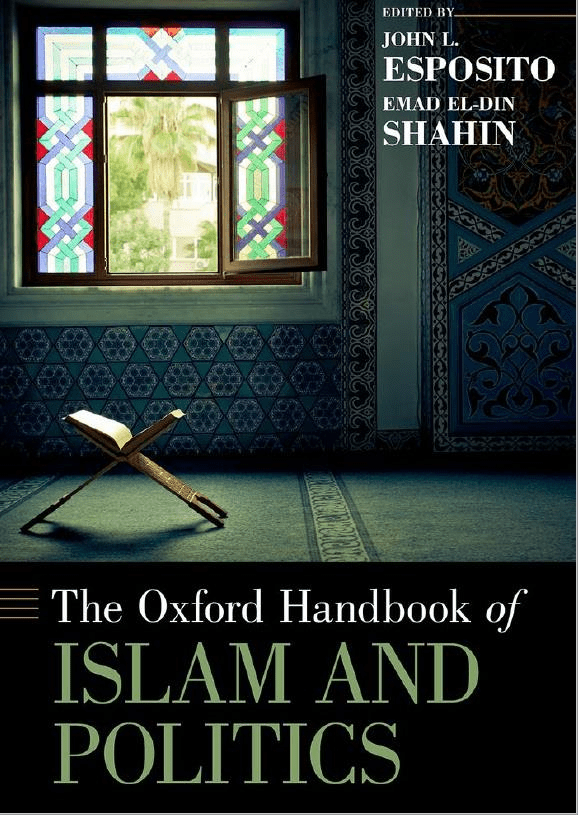
This important issue has long attracted the attention of two of the most credible scholars of the University of Oxford regarding the issue of comparative religions, namely the problematics of the interaction of religion and politics. For illustration, one should read this passage from the original text of the book, which we have posted below:
“The fall of the Iron Curtain in 1989 made it possible for many Eastern European countries to join the European Union. Some of these, like Yugoslavia and Albania, constituted the biggest historic challenge to the stability of Europe since World War II. In that same year, 1989, Slobodan Milosevic was elected president of Yugoslavia and the country soon faced an accelerated ethnic disintegration centered on Kosovo and its Muslim population.
This crisis manifested itself in the lack of a unified European defense identity able to settle conflicts in the neighboring former communist countries. Europeans could not do it alone, so the Americans and North Atlantic Treaty Organization were called upon to stop Milosevic’s ethnic cleansing in the Balkans. That eventually led to air strikes in Serbia and Kosovo in March 1999 and thus revealed continued tensions within Europe itself aggravated by hundreds of thousands of refugees-most of them Muslim-fleeing to neighboring countries in the European Union”.
Reference
The Oxford Handbook of ISLAM AND POLITICS. EDITED BY. JOHN L. ESPOSITO EMAD EL-DIN SHAHIN

 Balkan Academia