

By Jusuf Buxhovi. Translation Petrit Latifi
Information gathered from “O Chrysostomus Grill: “The Serbian Messianism of Bishop Velimirovic” (Serbischer Missianismus des Bischof Velimirovic), published by “Erzabtei” in Munich.

The German cleric, Krystostomus Grill, published a voluminous study on the work of Bishop Nikola Velinirović, which shows the role of the Serbian Orthodox Church in the creation of the myth of Kosovo, which during the first Serbian imperialist wars in the Balkans served to nourish the idea of creating a Greater Serbia through “holy blood”, but which at the same time served as a platform for Milošević and his like-minded people to start the war against the Croats, Bosniaks and finally against the Albanians, a war with the same parameters and goals.
It has long been said that the Greater Serbian hegemonism was nourished by the activity of the Serbian Orthodox Church, which played the role of an insurmountable factor of “spiritual mobilization”. Serbian bishops, not infrequently, have not only turned churches into “logistics” centers, into weapons depots, but at the same time they have participated with rifles in hand at the head of Serbian campaigns to inspire the Serbian people in the “holy” war for the creation of a new messianism, where, according to them, “Serbs would be sacrificed not only for the homeland, but also for the defense of Christianity from the new antichrists, who are not only in the ranks of Islamic fundamentalists, but also within Catholicism and other Christian factions”.
Who needs the new “messianism”?
The German theologian Chrysostomus Grill, before the German and European public opinion, came out with an extensive dissertation study, where he reveals in detail the determination of the Serbian Orthodox Church in the service of Serbian politics and violent ethnic cleansing in Bosnia and Herzegovina and Kosovo, with claims that from there the factor of Albanian, since according to the views of this church, “Serbs have the right of God to possess Kosovo spiritually and physically and to keep it as sacred”, since “there they have developed one of the bloodiest and most decisive deeds in defense of the Serbian being, but also of genuine Christianity and world civilization…”
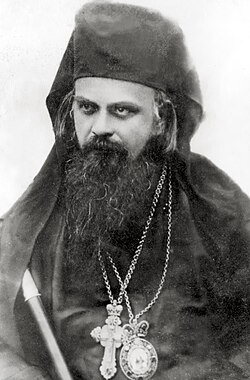
Grilli was motivated by the fact that in Rome in 1956 the book of Serbian bishop Nikola Velimirović “Serbian Messianism and Europe” was published, reprinted in 1993, where he sees the Kosovo war of 1389 as a reference for the “renewal of all the peoples of the world”. In this pamphlet, as Grilli calls it, the Serbian Orthodox Church continued the tradition of speculation and manipulation with the myth of Kosovo, which has an anti-civilizational and anti-Church character due to the fact that it is built on the foundation of a lie.
But also because this lie was then instrumentalized for political and hegemonic purposes, to become an impetus with which Serbia, from the Balkan wars onwards, continued the practice of expanding southwards “to protect the devils” so that this battle could resume at the end of the eighties with the new Serbian crusade against the Albanians, which was announced in 1989 with Milošević’s well-known speech in Kosovo, which was made on the occasion of the 600th anniversary of this battle, when he made it clear that “the spirit of this battle will continue to guide the Serbs to realize the great national and civilizational ideals”.
Patriarch Velimirović participated in the Balkan wars with a rifle
Referring to Velimirović’s book, which Grill says served as an inspiration not only to Mihajlović’s Chetniks, but also to their descendants who massacred defenseless Bosniaks and Croats in Knin, Slavonia, Bosnia and, most recently, in Kosovo, who still continue to kill “with God’s blessing”, he reveals the fact that Patriarch Velimirović participated in the Balkan wars with a rifle in his hand.
“As a volunteer” he passed through Kosovo and went all the way to Ohrid, to “bless” the monasteries “usurped by the antichrists” so that for several years, practically in Kosovo and Macedonia, as Patriarch of the Ohrid diocese, he would lead projects for the greatest possible ecclesiastical conversion of the “old Serbian lands”.
The myth of the “Serbian Golgotha” or the “Serbian retreat”
He was even one of the authors of the creation of another myth – the so-called “Serbian Golgotha” during the Balkan Wars, where the Serbs, again, in their fight against the Ottomans and Germans, sacrificed themselves for European civilization and thereby justified the “god’s” right to forever possess Kosovo and Macedonia as the “cradle of the Serbian soul”.
Grill says that this was just one of many Serbian propaganda lies with which the later Serbian imperialist wars were supposed to be given a Christian “halo”, while the truth is different and contrary to the principles of Christianity and elementary civilization. “During the Balkan Wars and later”, says Grill, “there was no Serbian Golgotha, but an Albanian Golgotha”, because Albanians were massacred by Serbian troops and forced to abandon their lands.
The author states that hundreds and thousands of Albanians were forced to move to Anatolia and elsewhere, and this was done with the tacit approval of several European powers, which during the Balkan and World Wars were allies of the Serbs, and as if they had nothing to do with the fact that the Serbian Orthodox Church, with its propaganda, saw the relationship between “Christ and Antichrist” through the prism of confrontations between the alliance of the three Caesars (the fathers of Istanbul, Vienna and Berlin) and their opponents who started from the center of Europe and went all the way to Moscow.
The Albanian Golgotha, says Grill, continues today and every day, in the eyes of the world, and that it cannot be viewed separately from the prism of the “traditional frictions of Christ and Antichrist”, of the clichés seen according to the platform of Velimirović, where the Franco-Russian alliance is foreseen as an extraordinary prospect in which the Serbian factor will be an insurmountable knot?
The Albanian Golgotha continues.
The continuation of the Albanian Golgotha on the traditional Serbian platform, where the role of the Serbian Orthodox Church is extremely large, is also discussed by the book’s reviewer, Rudolf Grylih, who is also the author of the book’s preface.
Grylih, who has sued the Serbian Orthodox Church for instigating the Serbian hegemonic war of 1991 and for the direct participation of several Serbian bishops in it, assesses that Chrysostomus Grill’s book represents an extraordinary contribution to the recognition and demystification of the role of the Serbian Orthodox Church in the tragic Balkan processes.
Grylih says that one of its most incriminating facts is the genocide committed against non-Serb peoples: Bosniaks and Albanians, a genocide that is still being carried out today and every day, sometimes with perfidy and sometimes through direct military actions, aimed at ethnic cleansing, as was done in Bosnia and Herzegovina and which served as further agreements for its practical division into two parts, half of which was given to the Serbs.
In this context, Grylih sees the most serious form of genocide against the Albanian population in Kosovo in the continuous and concrete actions of the Serbian Orthodox Church for the violent conversion that is being carried out with the construction of Serbian churches in 100% Albanian settlements – Gjakova and others, as well as the demolition of mosques, Catholic churches and other religious buildings of Albanians, which took place this summer in all Albanian localities included in the Serbian offensive.
Grylih considers that the Serbian Orthodox Church cannot pretend to be for “peace in Kosovo”, when it imposes Orthodox temples there, demolishes Albanian temples. Therefore, in this context, Grylih evaluates Grill’s book “The Serbian Messianism of Bishop Velimirović”, published by “Erzabtei” as a clear message not to defend the “new Serbian messianism”, but to protect oneself from it as soon as possible.
Reference
Serbischer Messianismus und Europa bei Bischof Velimirovic (1956). Dissertatione.

 Balkan Academia