
by Elton Ligu. Translation Petrit Latifi
Summary
Theodoros Kavaliotis (1718–1789) was a prominent Greek scholar of the 18th century, educated under Evgenios Voulgaris and later a leading figure at the New Academy of Voskopoje. Raised trilingual in Greek, Aromanian, and Albanian, he played a key role in education and Orthodox culture in the Balkans. In 1770, he published Protopeiria, a trilingual Greek–Aromanian–Albanian dictionary containing 1,170 words, printed in Venice. The work aimed to support the Hellenization of non-Greek-speaking Orthodox Christians and was later reprinted in 1774 by Johann Thunmann with added Latin translations.
Theodoros Kavaliotis (1718–1789), also known as Theodoros Anastasiou, was a Greek scholar and one of the most significant intellectual figures of the 18th-century Greek world. He was born in Kavala, from which he derived the name Kavaliotis. Because of his exceptional ability and passion for learning, the Chalcidian Society sent him to Ioannina, where he studied under the renowned scholar Evgenios Voulgaris.
After a period of study, Kavaliotis followed Voulgaris to Kozani and later settled in Voskopoje, where he spent most of his life. Between 1743 and 1769, he served as a professor and, from 1750, as director of the New Academy, one of the most important Greek educational institutions of the 18th century. Later, he was appointed preacher by the Patriarchate of Justiniana Prima in Ohrid.
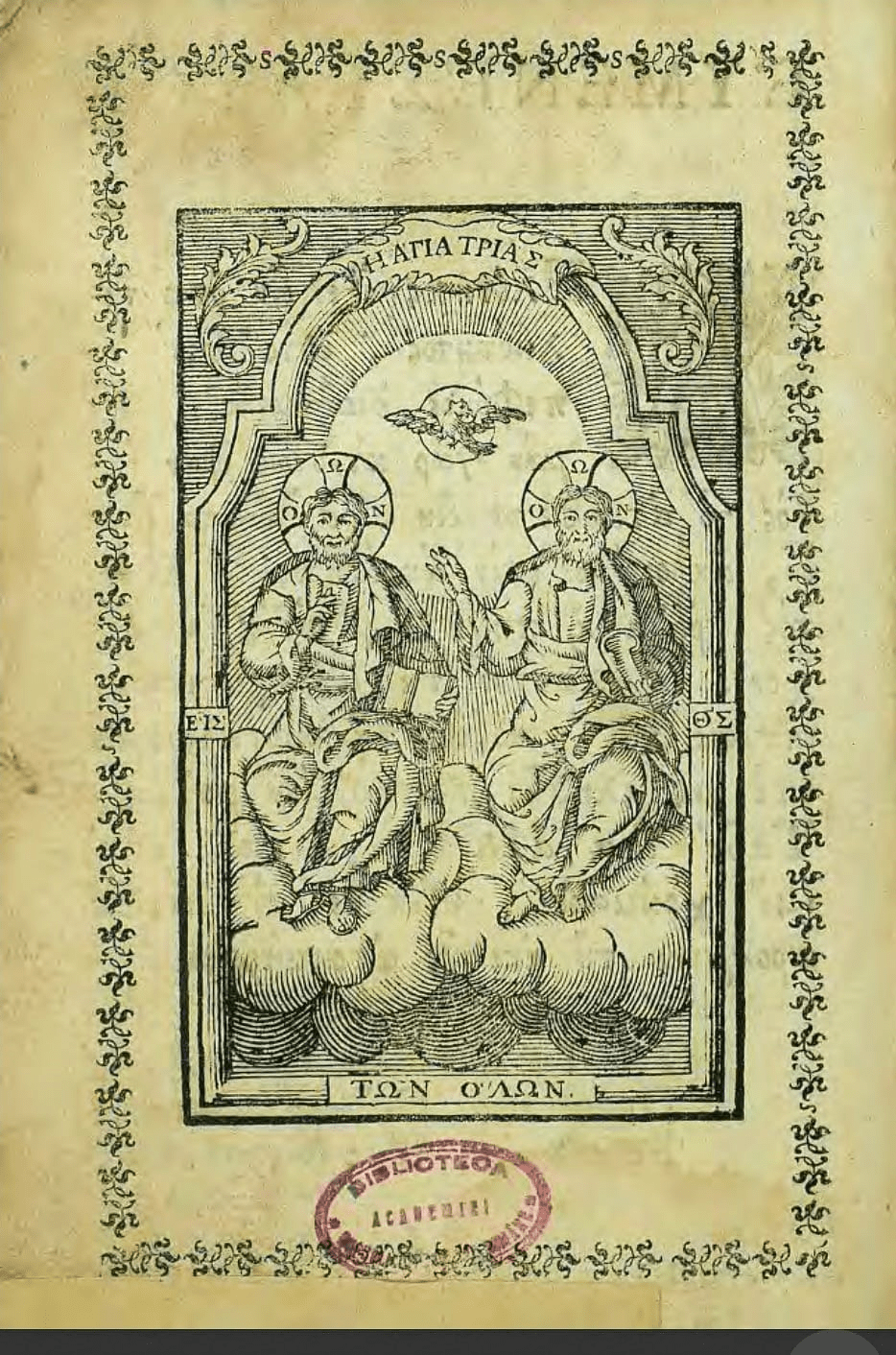
Kavaliotis grew up trilingual, speaking Modern Greek, Aromanian (Vlach), and Albanian. He authored several Greek works on philosophy and grammar and, in 1770, published Protopeiria, a trilingual dictionary containing 1,170 words in Greek (Romaika), Aromanian (Vlahika), and Albanian (Albanitika). The dictionary was printed in Venice at the press of Antonio Bortoli and was intended to promote the Hellenization of non-Greek-speaking Orthodox Christian communities in the Balkans.
In 1774, the lexicon was reprinted by the Swedish scholar Johann Thunmann of the University of Halle-Wittenberg, who added Latin translations to the Greek, Aromanian, and Albanian entries.
Reference
Theodoros Kavaliotis; Protopeiria (Venice, 1770); Johann Thunmann, reprint edition (1774).

 Balkan Academia