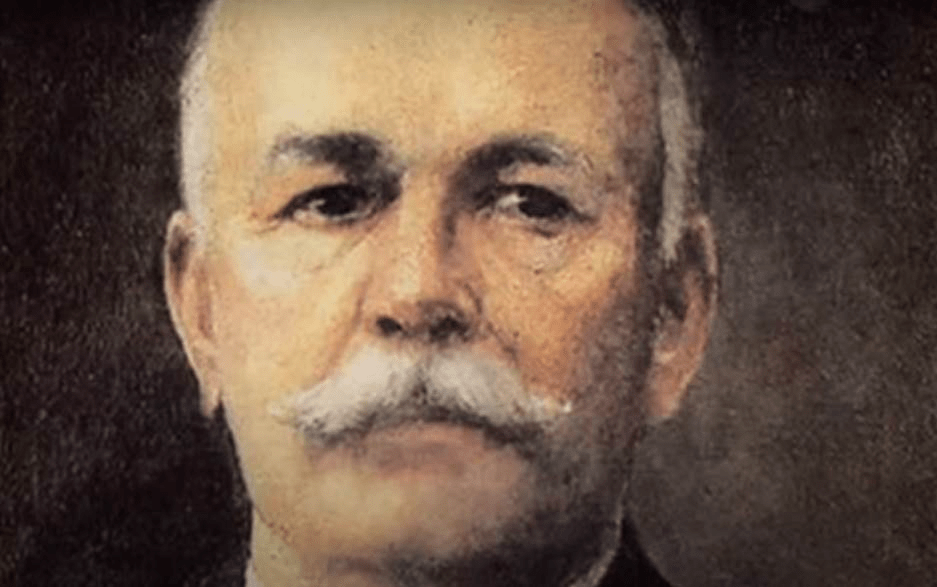

by Shefqet Cakiqi-Llapashtica. Translation Petrit Latifi
Abstract
Simo Matavulj, a Serbian writer, highlighted the concept of “Serb” as inherently tied to Orthodoxy (pravoslavlje), a view shared by many intellectuals in the 19th century. He argued that on the Balkan Peninsula, especially in Illyricum, being a “Serb” primarily meant being an Orthodox Christian. This religious affiliation transcended ethnic and national identity, which was especially evident in the case of Montenegrins, who identified as “Serb” in terms of religion, while distinguishing themselves ethnically as Montenegrins. The historical evolution of the term “Serb” also ties back to the social class of peasant serfs in the Middle Ages, encompassing various ethnicities, including Albanians, Vlachs, and others. Additionally, the historical and linguistic relationship between the peoples of the Balkans and the Slavic language further complicates the region’s identity.
In this article we review publications by various Slavic authors who write that the term Serb usually meant “Orthodox” and not an ethnicity.
Simo Matavulj
Serbian writer Simo Matavulj (1852-1908) 112 years ago ascertained what many scientists, writers and intellectuals of the 19th century had also ascertained. On the Balkan Peninsula in Illyricum, the concept of “Serb” had the meaning of Orthodoxy (pravoslavlje): “Discover a little and on the coast Srbin was only Orthodox. – Serbianism meant only Orthodoxy, as in these places (in the east) it still means today.” (Notes of a writer, Matica srpska i SKZ, Novi Sad – Belgrade, 1969, p. 40)”
Translation “From the beginning, even on the coast, Serbia was only Orthodoxy. – Serbianism meant only Orthodoxy, as in these places (in the east) it still means today.” (Notes of a writer, Ama srbe LShS, Novi Sad-Belgrade 1969).
Josef Holecek
That the name Serb is a religious term is evidenced by the Czech historian and writer Josef Holecek, who in 1876 emphasized: – If you ask a Montenegrin what his religion is, he will tell you “Serb”, while if you ask him what his nationality is, he will say that he is Montenegrin.
(Serb is a religious term, witnesses Czech Josef Holeček, Prague 1876, (“If you ask him what he is by religion, a Montenegrin will say that he is a “Serb”, and if you ask him what he is by nationality, he will say that he is a “Montenegrin”)
The continuation of the letter, the card says:
“Therefore, by my great and immense love for people bestowed on our forefathers and grandfathers to rule this Serbian land, and God ruled over people for their good, not wanting human destruction, and appointed me a great župan, named in holy baptism Stefan Nemanja…“
Serb (Serv) as a social concept fo peasants
The concept and name “serv”, “shkja” and “sklavius” in the Middle Ages were religious and social concepts for the class of peasant serfs, “kmets” consisting of many ethnicities such as Vlachs, Albanians, highlanders, who have also started to be called Montenegrins from a German and Russian translation of the word Malësi, Malizi, montenegro, and Crnagora.
No toponym of any mountain or mountain exists as Crna Gora, or Montenegro – the French military L`adjudant-commandant Baron de Mériage in 1811 in the informative correspondence for Napoleon for Montenegro refers to Male&Si, or the languages of the then region “Brda” and “Brdjani” an incorrect translation of Malësi in Montenegro in Monte Negro and later in Crna Gora ).
Servi– in Latin meant: Slaves, Servus and Sklavus just as the word Islam is understood today – The word “Islam” in the religious dictionary means submission, humility, obedience and peace, not resistance in the sense of God but also the ruler Caliph. In the religious aspect, submission to God and in the social aspect, submission to the ruler. Until recently, even Albanians had the term Serb-Servus-Skja for all Orthodox, whether Greek, Bulgarian, Serbian, Macedonian or Montenegrin.
In his article “Montenegrins are natives”, Miroslav Qosoviq in Analitika 2015, writes:
Translation:
“We are the ancient inhabitants of Illyria who finally adopted the Slavic language from the end of the Middle Ages, after the year 800-900 (from the 8th/9th century to the end of the 15th century) manifested by the fact that our ancestors had adopted the Scriptures Holy in the Slavic language (the first Slavic language was nominated by Cyril and Methodius in the 9th century). For example, today almost all Scots have English as their native language, while their native language (one of the Celtic languages) is spoken by only a small percentage of Scots today. It is the same with the Irish. “
Original quote:
(Original „Mi smo starośedioci Ilirika koji su finally primili slovenski jezik krajem srednj vijeka, after 800-900 godina (od 6./7. do kraja 15. vijeka) …. koja je manifestovana time što je našim precima Sveto Pismo bilo dsutto na slovenskom jeziku (slovenski jezik su prvi književno normirali Ćirilo i Metodije, u 9. vijeku. Isto tako, danas je skoro svim Škotima maternji jezik engleski, a najhoim odvím izrivnim jezikom (jedan od keltskih jezika), danas govori par percentage Škota.” (Piše Miroslav ĆOSOVIĆ, Analitika 2015).
From this it follows that Hilandar itself is the center of Albanian Orthodoxy. It is not by chance that the brother of Skenderbeu Reposhi served as a priest there, and that Gjon Kastrioti bought Pirgun Arbanas in Hilandar and donated 2 villages to Hilandar. Even Gjon Kastriot and Reposh Kastriot (the grandfather and brother of Gjergj Kastriot Skanderbeg) are buried there. On the grave of Stevan Nemanja in Hilandar it is written that he was the Zhupan of the Arbanashi (magnum albanese).

 Balkan Academia