
Originally published in the newspaper “Koha Ditore” on February 11, 2017. Written by: Shasivar Kabashi. Translation Petrit Latifi
Abstract
This article examines the reports of Ottoman journalist Ahmet Şerif, published in 1910 in the Istanbul daily Tanin, focusing on his observations from Mitrovica in the Vilayet of Kosovo. Sent to report during a period of political unrest, martial law, and Albanian uprisings, Şerif provides a detailed account of the city’s ethnic composition, social relations, education, administration, and everyday life. His writings portray a multiethnic society marked by coexistence between Muslims and Serbs, strong Albanian social cohesion, and deep concern over governance and education. At the same time, the reports reflect the political stance of the Young Turk centralist regime, particularly in their portrayal of conservative Albanian figures such as Isa Boletini. Through Şerif’s journalistic lens, the article offers valuable insight into Kosovo’s social realities and Ottoman perspectives on the eve of major political transformations in the Balkans.
Ahmet Sherifs report in 1910: Albanians of Mitrovica have a national culture and deep education
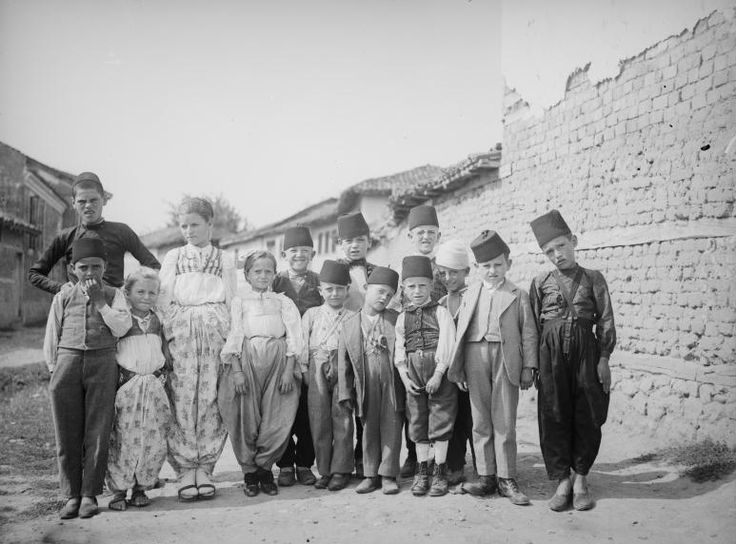
“Among the Muslims, Albanians are the majority, but there are also a few Turks and Bosnians. In the customs and traditions between these there is a diversity that distinguishes them from each other. Their clothing is different. After the Muslims come the Serbs. Also coming from Bosnia, there are forty to fifty Bulgarian families. Muslims and Serbs get along well with each other, to the point that they even know each other’s languages. Serbs also have the feeling of being Ottoman citizens and are proud of it…”, Ahmet Sherif would write in his report from Mitrovica
He had been sent from Istanbul to the Vilayet of Kosovo to report. The editorial office of the daily newspaper published in Istanbul, “Tani”, had appointed Ahmet Sherif, a very capable correspondent of this newspaper, to this task. On May 27, 1910, the train would leave him at the Ferizaj railway station, thus beginning his daily reporting for several months in a corner of the newspaper, which the editorial staff had titled “Arnavutluk’ta Tanin” (Tanin in Albania).
Among the many centers of the vilayet, he would also visit Mitrovica. We will cross the Ibar Bridge that today separates Albanians and Serbs along ethnic lines in the carriage that accompanied the journalist from the former capital. We will go deep into the alleys and neighborhoods of Serbs and Albanians to trace their reports; we will walk through the city center and cross its rivers.
We will enter schools and institutions, and even the offices of the kajmekam… We will talk about the nature, architecture, docks and customs of this city, through the eyes of an Istanbul journalist…
The news of Isa Boletini’s escape to Montenegro
On June 17, 1910, after having toured the main centers of Dukagjin, with a carriage that he had rented for a fee, he headed towards Mitrovica. After a difficult journey in bad weather, when he had reached his destination, he had these words for the editorial office: “As we approached Mitrovica, the ground began to improve (from the rain).
There was less mud. Finally, we saw the town and, picking up speed at 12:00, we finally entered, after more than 14 hours of rocking in the cart. We were tired and our clothes were all muddy. But, scenes like these have been repeating themselves for a year, but I am not worried at all, because tomorrow I am sure that thanks to the good weather I will walk the unexplored land.
Anyway, the first thing I had to do as soon as we got here was to find a newspaper that I had not had time to pick up, to understand what was going on in the world.” The next day, June 18, perhaps because he had considered it the most important piece of information, for which he had probably spent the whole day, he would write only these two sentences for his column: “I am in Mitrovica. I received the reliable news that Isa Boletini with his 30 armed loyalists has fled to Montenegro.”
We forgot to mention that, in these days, the Vilayet of Kosovo was under martial law, as the Minister of the Interior had declared a state of emergency in this Vilayet, due to the uprisings that had erupted throughout the country, over taxes and the removal from the throne that had been made to their beloved sultan – Hamid. In fact, the journalist had come together with the Minister of War, Mahmut Shefqet Pasha, and with several military camps.
The Young Turks of the centralist wing, after having finished their work with the sultan in Istanbul, had begun a witch hunt against his conservatives and loyalists, and one of this list and of the many in this vilayet who had served the sultan in the guard of honor in the “Yëldëz” palace in Istanbul was Isa Boletini. And for this fact, perhaps the happiest was Nexhip Bey of Dragaj, the modernist and Young Turk from this city, who had a glimmer of hope in his eyes for the famous captain. But the correspondent would also write about Isa…
“Albanians have a national culture, a deep education…”
On June 19, after having spent almost a week traveling around Kosovo, he would write from Mitrovica his impressions of the Albanian people:
“I have been traveling around Albania for almost a week. One of the things I have seen and that has caught my attention is that Albanians have a national culture, a deep education. Both the peasant and the one who lives in the city have this culture. This education that Albanians have makes them simple, removing them from arrogance and hypocrisy, and there are friendly relations between all social classes.
There is almost no difference in the way of life, in customs between a poor person, a middle-class person and a rich person. These are always in contact and on good terms with each other. Even a poor peasant goes in and out of a Serbian place in every place. Small children are found among the adults. The Albanian treats the little child as if he were an adult, shaking his hand like an adult.
So, with a deep culture like this, under equal living conditions, the national character has been preserved. Thanks to this, the Albanian has been able to remain Albanians. These people, who have an unprecedented love for freedom, are closely tied to their word, and are harsh towards anyone who crosses the line. Until now, the government that had the strength and power had not tried them in these parts.
The obedience and obedience they have towards their agallars and beylers is a principle of these men, which constitutes a great power. For this reason, there are many influential people among them, whose one word can gather more than a hundred thousand armed men (tribe). It is a power that has, so to speak, officers within them. Between death and mercy, they choose the latter and do not surrender….”
“Serbs also have the feeling of being Ottoman citizens and are proud of it”
The longest report on this city dates back to June 20, in which the author, as far as his eye could see, left nothing undescribed. He begins with the inhabitants and the feeling of being a stranger in an unknown place: “Mitrovica is a kaza center with an estimated three thousand houses… Just as I am a foreigner, who came from Gjakova and Peja, here, among the people, the way of life and the environment are not much different.
In Mitrovica, both from the security facilities that are located, and from passers-by, there are people who observe and look at you with suspicion…” As for the social structure of this city, the journalist had closely observed all the ethnic and religious groups of this country, analyzing the clothing, traditions, customs, level of education and the relations between them.
“Among the Muslims, Albanians are the majority, but there are also a few Turks and Bosnians. In the customs and traditions between these there is a diversity that distinguishes them from each other. Their clothing is different. After the Muslims come the Serbs. Also coming from Bosnia, there are forty-fifty Bulgarian households. Muslims and Serbs get along well with each other, so much so that they even know each other’s languages.
Serbs also have the feeling of being Ottoman citizens and are proud of it. Everyone carries the religion. Trade is not only in the hands of one subject; both Muslims and Serbs work in this regard. But, nevertheless, the Serbs have a greater zeal and pedantry. The Muslim schools are not in the desired condition, on the other hand, the complaints we have made about the schools are improving day by day.
With seventy to eighty students there is a special mejtep ibtidaie (primary school). Here the little Qamarans read the newspapers with pride. The Serb schools are more regular and meet the conditions and needs of the time. Among the Serbs you can rarely find those who cannot read and write.”
Two dangerous rivers
It seems that he liked the climate and nature of Mitrovica very much. He could make comparisons about this more easily since he had reported from different places of the Ottoman state and knew very well the climate of the different regions that were under this state. Also, his eye should not have missed a single detail in the checks in each alley of the different neighborhoods, and thus to make comparisons about which of the ethnicities are the most pedantic.
“The air of Mitrovica is clean, the waters are also abundant and clean. For this reason, perhaps, you do not see people who have diseases here, as is the case in other places of our homeland (read: the Ottoman state). Within the city there is a small river called Lushta and another with a larger bed – Ibri. These two rivers have from time to time posed a danger to Mitrovica.
In the past, these two rivers have overflowed their banks, flooding the center and destroying buildings that usually belonged to the poorest. They have also been severely damaged in terms of material. There is also a wood processing factory on the Ibar River. Floods also bring large trees from the mountains, which increase the risk even more. Mitrovica is constantly under heavy rain, so they always create a risk.
The neighborhoods where the Serbs are located, unlike those of the Muslims, are cleaner and more orderly. When you pass through the Muslim neighborhoods, as we have already become accustomed to, the alleys are dirty and unclean, what they clean in the inner courtyards they throw outside at the door, where they then become canals and turn into a sea of mud.
In general, the shape of the houses built is not based on health conditions… opposite the Ibar is the Sarajit neighborhood, which seems to be separate from Mitrovica. Because it is located in a slightly higher position, the air is cleaner, and the alleys are well-maintained. The houses here are also well-maintained. All the newcomers from Bosnia settled in this area and gradually built their own houses.
The newcomers from there initially settled in paid inns and guesthouses, and with all the money they had brought with them, they bought land and built houses. These immigrants are hard workers and very quickly proved themselves in this country…”
Disappointment with the government and education
The greatest disappointment he had encountered in this city was precisely with the institutions and administration. He would also describe the government buildings with gloom and pessimism. The Young Turk Revolution and their new centralist government had further deepened the misgovernance and inefficiency of the administration, which was already very weak at the beginning of this century.
“According to the general situation in Mitrovica, the government administration should be well prepared. The government’s work is said to be going well, and let’s pray that it remains so! However, it is not a favorable climate for work here either. Considering the models of administrations that I have described in the letters from Anadolu (from Anadolu reports, as a correspondent for the newspaper “Tanin”), this one in Mitrovica is the same.
So, despite my expectations, this was a disappointment for me. Just like in those deserted Anatolian kazats, here too, the prisons are under the stairs of the administration, in a darkness, a small hell. In a word, we can even call them a grave. It gives you a sad feeling when you see them so many down there. As soon as you enter the door, the impression that this sad sight leaves you with gives a bad meaning to everything you see next.
The stairs take you up to the place where the kajmekam stands, and as soon as you take a look at the environment, that sight and impression of the entrance again gives you a blur in your head. Opposite the administration building is the post office and the telegraph office. To send a letter somewhere else, you are forced to visit these facilities. Walking through the official administration buildings, the working environment is gloomy.
Faced with this disappointment, the ideal is broken by reality and when you think of revolting in the face of all this, remember that all these stagnations and wastes are a legacy from the past (The author alludes to the rule of Sultan Abdulhamit II), and in order for our government of Meshrutiyet (Constitution) to progress, we pray from the heart for better days…”
His greatest concern and worry was with education, which he saw as the pillar of the future:
“After you leave here, you remember the future of our country, and it comes to your head ‘you should visit the schools again… but, you understand that you have limited time and you are forced to forget it…”.
Above we told you something about Isa Boletini, and at this point the journalist from Istanbul seems to have a little bit of his subjectivity, where he stands with the government, in the face of conservatives like Boletini. And when we add the fact that he had Husejn Xhahit as his newspaper director and editor, the most the pen fortress from the centralist government of the Young Turks, whose head was demanded by conservatives in the “Sultanahmet” square in Istanbul during the counter-revolution of 1909, much becomes even clearer.
For this he had written: “The towers of Isa Boletini are located around Mitrovica, the fesatxhiu operates here. He himself has sufficient wealth in Mitrovica. Now the machine gun company is staying in his house. Earlier in these parts, the stories about the way of life, the monthly tribute and the benefits he received, have not stopped.
From the information we have received, I previously said that the order for execution was given by the state of emergency court in Ferizaj, it is understood that the qatipi of Idriz Seferi and another in Gjilan were executed by hanging. From the military action that was carried out in Gjakova, Malesi and Has, there were clashes with the army and conservative forces, where two officers and five soldiers were wounded.
These difficult people, although they opened fire on the state forces, this time the army did not retreat. But they will understand the truth and sincerity of this government and will submit and become like lambs. The life of this government promises happiness in our society…” The correspondent would make the last description of Mitrovica on June 22, 1910 by Jeni Pazari, after he had settled in and had begun his adventure to the northern cities.
“We emphasized that Mitrovica differed very little from Peja and Gjakova. When you get inside, you can distinguish it more easily in every aspect. This morning at nine o’clock (5 am) we are leaving Mitrovica. The city was already waking up and life was starting like every day. We crossed the Iber Bridge, gave the Saraj Mahalla our last greetings and salutations, to continue on the newly paved road, where green fields accompanied us on both sides…
We were following the Iber riverbed and enjoying the surrounding fields. After half an hour I felt the first drop of rain and suddenly all dreams of a rainless adventure were extinguished. This was our fate, to walk this land in this weather. To reach Jeni Pazari we had no choice but to follow this path..” He would continue his journey to other cities such as: Berane, Tergovishte, Kolashin, Akova and up to Tashlixha, for whom all these areas were ‘Arnavutluk’.
This article was published in the newspaper “Koha Ditore” on February 11, 2017.

 Balkan Academia