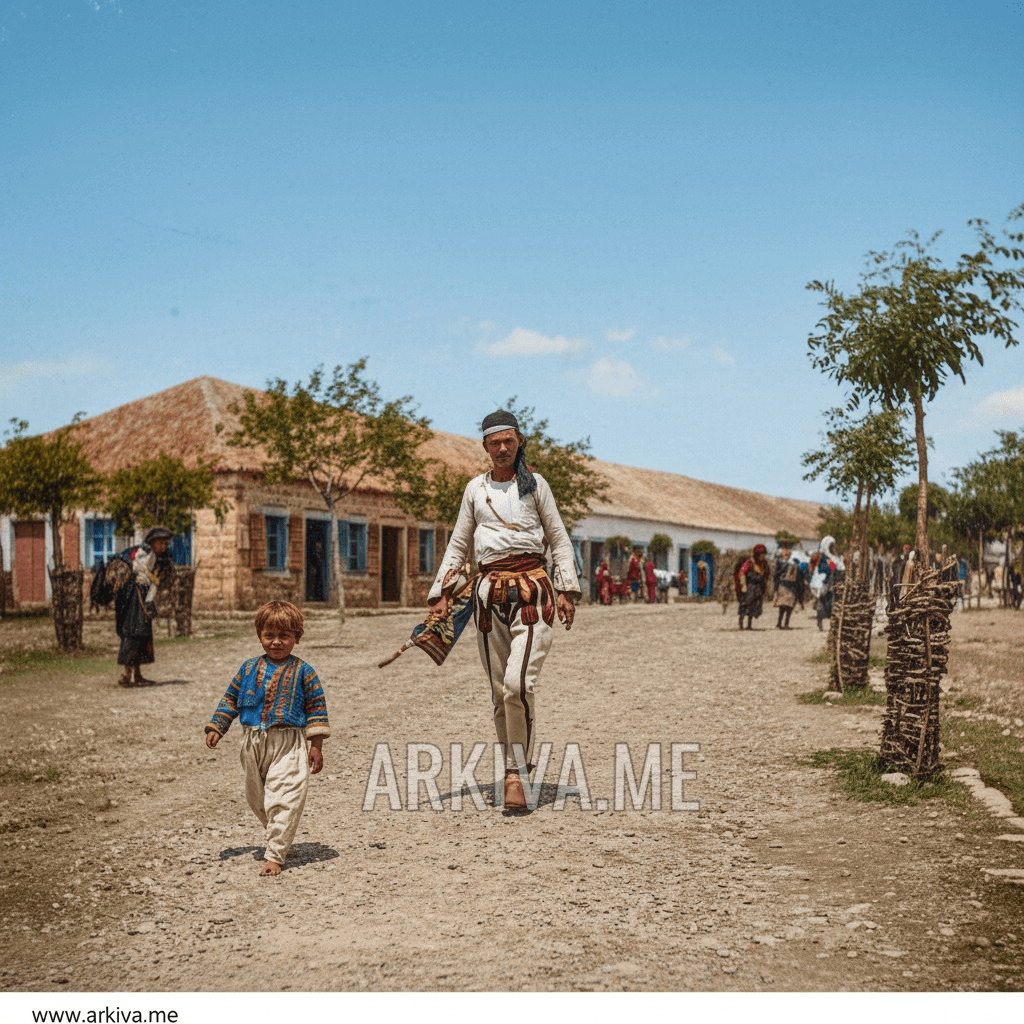

Discovery by Artur Vrekaj. Translation Petrit Latifi
Abstract (English)
This passage describes the Montenegrin capital, Cetinje, its geographical setting, and its limited urban character compared to other regional centers. It reflects on Montenegro’s perceived separation from “Europe” in local understanding and highlights the celebration of the four-hundredth anniversary of the first Slavonic printing press established in 1493. The text also portrays public festivities in Cetinje, focusing on traditional dances, costumes, and social customs, offering insight into Montenegrin political life, cultural identity, and historical memory at the turn of the modern era.
Abstract (Albanian)
Ky fragment përshkruan kryeqytetin e Malit të Zi, Cetinën, pozicionin e saj gjeografik dhe rëndësinë e kufizuar urbane krahasuar me qytete të tjera të rajonit. Teksti thekson perceptimin lokal të Malit të Zi si të ndarë nga “Evropa” dhe përshkruan festimet për 400-vjetorin e shtypshkronjës së parë sllave, themeluar në vitin 1493. Gjithashtu, paraqiten festat popullore, vallet tradicionale dhe veshjet, duke ofruar një pasqyrë të jetës kulturore, shoqërore dhe politike të Malit të Zi në këtë periudhë historike.
This section, extracted from the publication “Montenegro and its Borderlands” gives us a valuable insight into the life of the Albanians of Podgorica.
Cited:
“[…] the village of Njeguš, there suddenly comes into sight over the dreary wastes of rock in the foreground a view of welcome beauty—range after range of the distant Albanian mountains never free from snow, and at their foot the broad expanse of the Lake of Scutari. The next large basin holds Cetinje, the capital. A collection of 200 small houses on each side of one long street, the village has few qualifications for a metropolis.
It lies in one corner of the principality. It is not as large, nor as important commercially, as Podgorica or Nikšić. The only reason adduced for keeping it is, that to leave it for Europe is so easy. I use the word “Europe” deliberately; for, according to local usage, Montenegro is not in Europe, nor are the Montenegrins Europeans. When I reached the capital last July, the whole country was preparing to celebrate the four hundredth anniversary of the establishment of the earliest Slavonic printing press in the country.
In 1493, before either Oxford or Cambridge had a permanent press, the Montenegrin ruler, Crnojević, set up a printing establishment at Obod. Books were printed there at that date, some of which I came across by accident in the old monastery church at Cajnica, just over the Bosnian frontier.
In honour of this anniversary, universities and learned societies of Europe, the University of Oxford included, sent addresses of congratulation, while the Clarendon Press gave to the Prince the appropriate present of a collection of books as specimens of modern English printing.
During these fêtes the centre of attraction was the square opening out of the main street of Cetinje. On one side is the modern palace of the Prince; on the other stands the old palace, the usual name for which—“the Billiard Saloon”—is a lasting evidence of the impression left on the minds of the people, when their late Prince Danilo imported a billiard-table and played on it in this building.
Between these two palaces stands a large tree, beneath which the Prince displays himself every afternoon, and administers justice to his subjects. In this square, and in the streets as well, the populace were singing and dancing for a week. Of the dances there were three varieties.
One, the “zetsko kolo,” was danced by Albanians from Podgorica; fifteen of them, standing in an incomplete ring, slowly circled round, singing the words of a song in honour of Albanian prowess, composed by the Prince to satisfy his new subjects after the war.
All these dancers were in full dress, the most remarkable part of which is a petticoat reaching to the knee, made of white linen, 60 yards in width. The weight of this costume—and I speak from personal experience—is very great; but the more yards in the garment, the greater dandy is the wearer.
Another dance, the “crmnicko kolo,” consists of a ring of men or women with linked arms, who circle round, singing and jumping simultaneously into the air. Of this, the most complicated form, which I have only seen once, consists of two rings of men, one inside the other, with a third on the shoulders of the inside ring, who […]”
In Albanian (Shqip)
“[…] fshati Njegush, papritmas shfaqet mbi shkretëtirat e zymta shkëmbore në plan të parë një pamje bukurie mikpritëse – varg pas vargu të maleve të largëta shqiptare që nuk janë kurrë të lira nga bora, dhe në këmbët e tyre shtrirja e gjerë e Liqenit të Shkodrës. Pellgu tjetër i madh përmban Cetinjen, kryeqytetin. Një koleksion prej 200 shtëpish të vogla në secilën anë të një rruge të gjatë, fshati ka pak kualifikime për një metropol.
Shtrihet në një cep të principatës. Nuk është aq i madh, as aq i rëndësishëm komercialisht, sa Podgorica ose Nikshiqi. Arsyeja e vetme e përmendur për ta mbajtur atë është se ta lësh për në Evropë është kaq e lehtë. E përdor fjalën “Evropë” qëllimisht; sepse, sipas përdorimit lokal, Mali i Zi nuk është në Evropë, as malazezët nuk janë evropianë. Kur arrita në kryeqytet korrikun e kaluar, i gjithë vendi po përgatitej të festonte katërqindvjetorin e themelimit të shtypshkronjës më të hershme sllave në vend.
Në vitin 1493, përpara se Oxfordi ose Kembrixhi të kishin një shtypshkronjë të përhershme, sundimtari malazez, Crnojević, ngriti një shtypshkronjë në Obod. Librat u shtypën atje në atë datë, disa prej të cilave i hasa rastësisht në kishën e vjetër të manastirit në Cajnicë, pak më tej kufirit boshnjak.
Për nder të këtij përvjetori, universitetet dhe shoqëritë e ditura të Evropës, përfshirë Universitetin e Oksfordit, dërguan adresa urimi, ndërsa Shtëpia Botuese Clarendon i dha Princit dhuratën e duhur të një koleksioni librash si shembuj të shtypjes moderne angleze.
Gjatë këtyre festave, qendra e tërheqjes ishte sheshi që hapej nga rruga kryesore e Cetinjës. Nga njëra anë është pallati modern i Princit; nga ana tjetër qëndron pallati i vjetër, emri i zakonshëm për të cilin – “Salloni i Bilardos” – është një dëshmi e qëndrueshme e përshtypjes së lënë në mendjet e njerëzve, kur Princi i tyre i ndjerë Danilo importoi një tavolinë bilardoje dhe luajti mbi të në këtë ndërtesë.
Midis këtyre dy pallateve qëndron një pemë e madhe, poshtë së cilës Princi shfaqet çdo pasdite dhe administron drejtësinë ndaj nënshtetasve të tij. Në këtë shesh, dhe në rrugë gjithashtu, populli këndonte dhe kërcente për një javë. Nga vallet kishte tre lloje. Njëra, “zetsko kolo”, kërcehej nga shqiptarë nga Podgorica; pesëmbëdhjetë prej tyre, duke qëndruar në një unazë të paplotë, rrotulloheshin ngadalë rreth e rrotull, duke kënduar fjalët e një kënge në nder të aftësisë së shqiptarëve, të kompozuar nga Princi për të kënaqur nënshtetasit e tij të rinj pas luftës.
Të gjithë këta valltarë ishin të veshur me veshje të plota, pjesa më e jashtëzakonshme e së cilës është një fund që arrin deri në gju, i bërë prej liri të bardhë, 60 jardë i gjerë. Pesha e këtij kostumi – dhe flas nga përvoja personale – është shumë e madhe; por sa më shumë jardë në veshje, aq më i guximshëm është ai që e vesh.
Një tjetër valle, “crmnicko kolo”, përbëhet nga një unazë burrash ose grash me krahë të lidhur, të cilët rrotullohen rreth e rrotull, duke kënduar dhe duke kërcyer njëkohësisht në ajër. Nga kjo, forma më e ndërlikuar, të cilën e kam parë vetëm një herë, përbëhet nga dy unaza burrash, njëri brenda tjetrit, me një të tretë mbi supet e unazës së brendshme, të cilët […]”
Source
“Montenegro and Its Borderlands”. W. H. Cozens-Hardy. The Geographical Journal Vol. 4, No. 5 (Nov., 1894), pp. 385-405 (25 pages) Published By: The Royal Geographical Society (with the Institute of British Geographers).

 Balkan Academia