
by Ismet Azizi. Translation Petrit Latifi
At the end of the 19th century, the Novi Pazar and Sanxhak was a restless border region where the authority of the Porte was often limited. The descriptions emphasise the peripheral nature of the area and the fact that real power on the ground often relied on local leaders, large families, and armed tribal structures, which produced frequent conflicts and insecurity.
At the end of the 19th century, Novi Pazar and Sanxhak was a restless border region where the authority of the Porte was often limited. The descriptions emphasize the peripheral nature of the area and the fact that the real power on the ground often relied on local leaders, large families and armed tribal structures, which produced frequent conflicts and insecurity. Such an environment indicates strong local autonomy and tribal organization, including Albanian (Muslim) communities that are linked in the sources to Bihor, Peshter and the wider Polje region.
Tribal conflicts and the Albanian role on the Ottoman-Montenegrin border
In this border zone (Bihor–Pešter–Kolašin and beyond), sources record a mixed population and complex local identities, with connections and overlaps of linguistic and confessional characteristics. It is particularly important that local perceptions often prioritize religion and status over “modern” ethnic categorization.
The example of Tregovishte-Rozhaje illustrates well how much caution is needed: a French geographer (from the pre-1913 Belgrade environment) describes Rozhaje as an “Albanian oasis” , while an Ottoman journalist from Istanbul claims that it is a Slavic-speaking Muslim population . Both fail to notice the bilingualism/multilingualism of the local people, which could have been a practical strategy (e.g. in military service).⁴
It is precisely such examples that explain why in some regional literature the term Muslims is sometimes used “interchangeably” – for both Albanian Muslims and Slavophone Muslims – which can obscure the ethnic structure if one does not work strictly according to the sources.
The Albanians of Sandžak in the uprisings against the Ottomans (1908–1912)
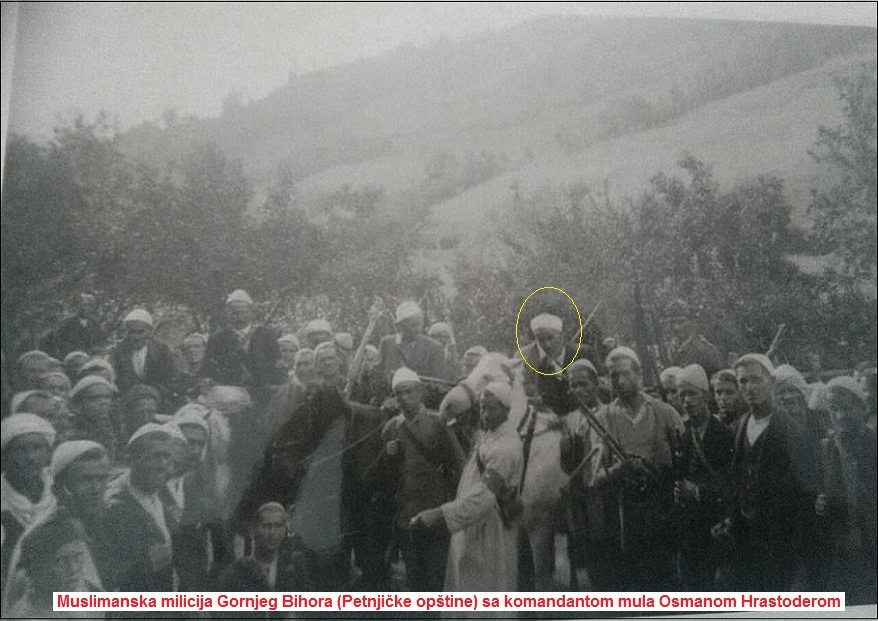
After the Young Turk Revolution (1908), tensions increased, especially over issues of taxation, disarmament, and the state monopoly of force. In the analysis of the late Ottoman space, it is emphasized that local communities in the border regions (including Bihor/Peshter) maintained a high degree of autonomy and relied on networks of local intermediaries and armed structures, which influenced the dynamics of violence and resistance.
In the summer of 1912, a wider wave of insurrection in Kosovo and northern Albania had an echo in the Sandžak regions: peasant and tribal networks reacted through refusal of obedience and through armed mobilization, which made Sandžak part of a wider zone of rebellion on the eve of the Balkan Wars.
In summary (1885–1912): The Albanians of Sandžak (including Bihor) appear as communities that: maintain tribal autonomy vis-à-vis the Ottoman administration; operate in a border zone where identities are often read through religion, status and language, so terminological substitutions in the sources are frequent; enter a period of intensifying tensions and mobilizations in 1908–1912, as part of a broader process of disintegration of the late Ottoman security structure.
Source


 Balkan Academia