
Abstract
Ottoman parliamentary debates from the 1860s provide valuable insight into the defensive role of Albanian kullas along the Ottoman–Montenegrin border. These fortified stone towers, inhabited and guarded by local Albanian populations, were regarded by Ottoman authorities as crucial protection against Montenegrin border raids and territorial expansion. Discussions focused on the vulnerability of key fortresses near Lake Shkodër, including Lesendra, Germish, Manastir, Maksud, and Tugla, and warned that their loss would endanger surrounding towers and settlements. The debates illustrate how kullas functioned as integral elements of Ottoman frontier defense, maintained through local agency rather than centralized military presence.
Fortified Albanian–Ottoman Stone Houses and Kullas as Protection Against Montenegrin Raids in the 1860s
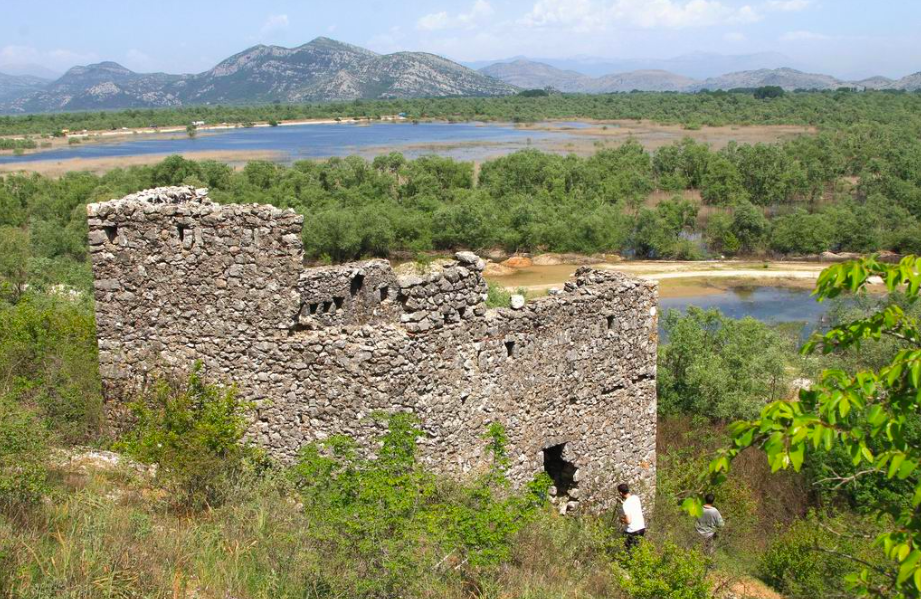
In the 1860s, the Ottoman government discussed Montenegrin territorial claims and the fortified towers (kullas) along the Ottoman–Montenegrin border, which were inhabited and guarded by Albanian locals. In the transcribed debate, government officials stated that these towers served as defensive structures against Montenegrin border raids. They further noted that the fortresses of Lesendra, Germish, Manastir, Maksud, and Tugla, as well as Banjo, Durmish, Virish, and Vranina near Lake Shkodër, were under threat from Montenegrin forces.
Cited:
“The fortresses and walls of Lesendra, Germish, Manastir, Maksud, and Tugla, towards Lake Skadar (Lake Shkodër), must be defended against Montenegrin border attacks. If they were ceded to Montenegro, the towers of Banjo, Durmish, Virish, and Vranjina would likewise be endangered.”
Other kullas and fortified sites in the region are also mentioned in the Ottoman Turkish debate, including:
“The towers of Dervish Pasha (second and fifth), Ismail Pasha, Pazarişta, Bron, Bluçe, Serdar, Hıfzıye, Avniye, Aziziye, Şevketiye, Çengel, Soğuksuy, Stenoglaf, Maksud Kırmıjur, Manastir, Tugla, Rebnak, Çırnıkan, Belibrık, and Ploja, as well as the towns of İspuji, Zibyak, Kıriba, Dilâm, Levşan, Menşık, Vidanik, Leşkopole-i Zir, Leşkopole-i Balâ, Kokot, Lefik, Gırbafçe, Kokça-i Zir, Korpoçe, Bunar, Bâniye, Durmişe, Yeriş, and Vira…”
Sources
Türk parlamento tarihi Meşrutiyete geçiş süreci I. ve II. Meşrutiyet · Volume 1. İhsan Güneş , 1997.
Glasnik Rijaseta Islamske zajednice u Bosni i Hercegovini. Volume 63, 2001.

 Balkan Academia