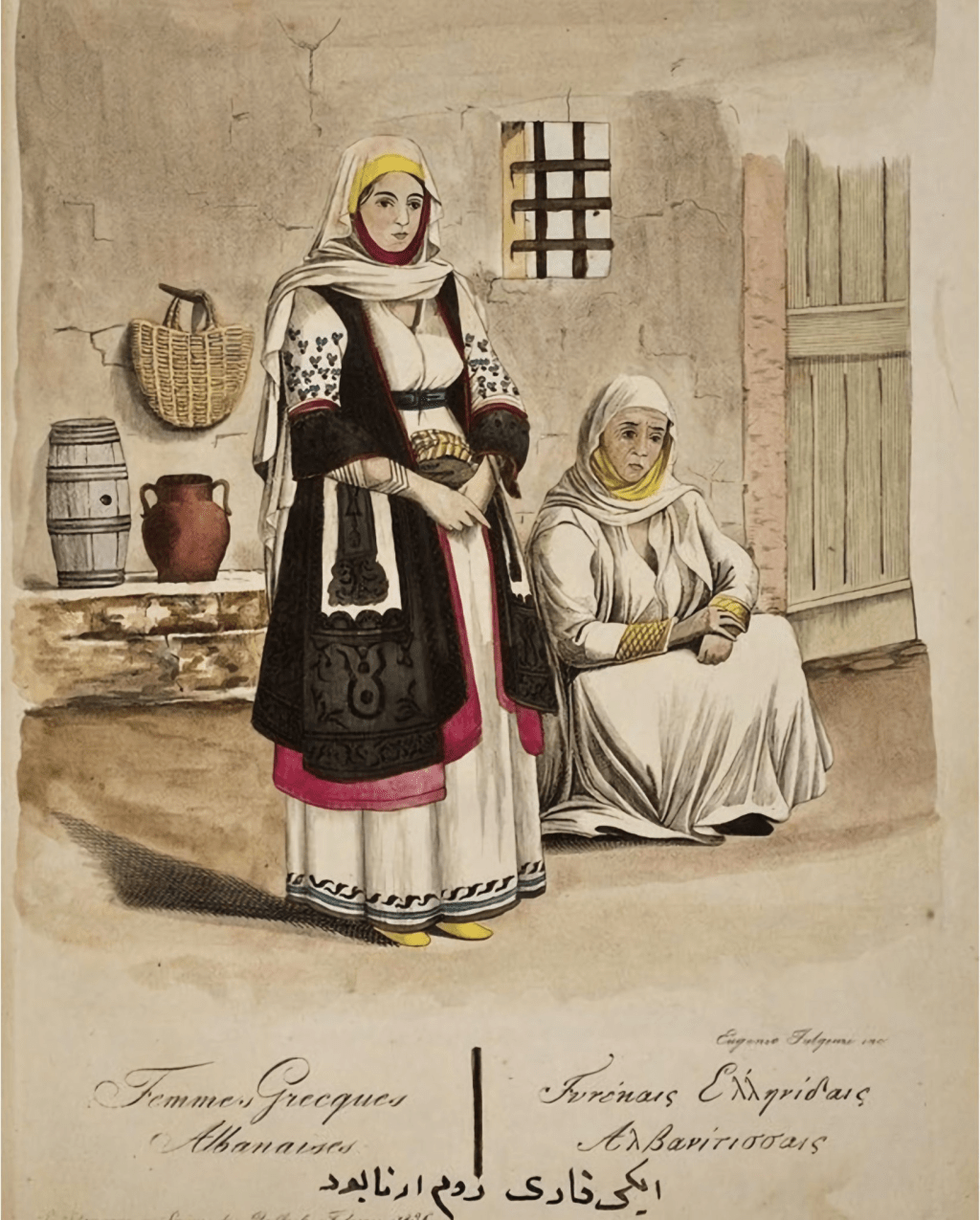

This document states that the Albanians (Arber) of Greece were plentiful, according to Bellusci, part 4.
“In the arboretum villages of Morea
In the book “Ricerche e studi tra gli arbërori dell’ Ellade” I recounted a permit that was issued to us by the Greek authorities, when my friend Kaparelli and I, in 1970, had gone for ethnographic research in Greece.
That document stated:
Permission
“Stefanos Metropolitan Trifilias from Olimpia. Cyprus, 12/09/1970
Priests of the Arbëro villages in: Kotomeri, Koloçi, Ano Amfithea, Dhorion, Agios Georgios, Christochorion, Haloà, Ano Psari, Dimandra, Sirizo, Stasimo, Rista, Sitochori, Arosapighi (Kokla), Kefalovrisa, Mouzaki, Aetos, Ano Sulimano, Kouvalla.
We inform you that: Archimandrites Pope Jani Kaparelli and Pope Antonio Bellusci from Italy will come these days to the Arbëro villages in Morea, to gather songs and services in the Arbëro language, because their fathers (first, great-grandfathers) were Hellenic-Arvanites from Morea. They want to get to know the land of Morea, from where their parents left in 1534.
You are blessed, Stefanos Metropolitan of Cyprus”.
I was amazed when I saw how many Arbër villages there were in that region and, laughing, I said to Father Jani Caparelli:
– Wow, brother Jani, how many Arbër villages are here! We don’t have a whole year to see them.
While I was reading that permit, I turned back to Jani and said to him:
– Do you know, brother Jani, that the permit we have is the first Greek document, which states that many villages are Arbër and that Moreja is Arbër and not Greek?
Jani, let’s keep this permit tightly and carefully!
We were both happy about this permit, because it was the first document issued by the Greek authorities. But this joy did not last long, because the next day, on September 13, 1970, the police arrived at the square in Hrisohorjan, which was packed with people speaking and telling stories in Arbër.
We explained that Mr. Stefanos Mitropollitis had given us permission and we emphasized the fact that we were Arbëresh and had come to meet our brothers; we told them that we were ethnographic researchers and our job was to collect Arbëresh songs and folklore.
We insisted a lot, but it was useless to talk, because their beliefs were rooted in the brutal policy of the Greek government. In Greek culture, if you are not Greek, you are considered anti-Greek. So they withdrew our permission and did not allow us to continue.
The Arvanites who had come there dispersed, because the policy pursued by the Greek government had terrorized them. The police knew me, because they had often detained me on all kinds of charges; they had even considered me a spy and agent of Enver Hoxha. When I remember this accusation, I laugh ironically”.
Source
The Journey of an Arbëresh. Life, Works, Memories. Antonio Bellusci
Interlocutor and Reviewer: Ornela Radovicka, Editor: Elona Qose. Publisher: Tirana, Maluka. 1970.

 Balkan Academia