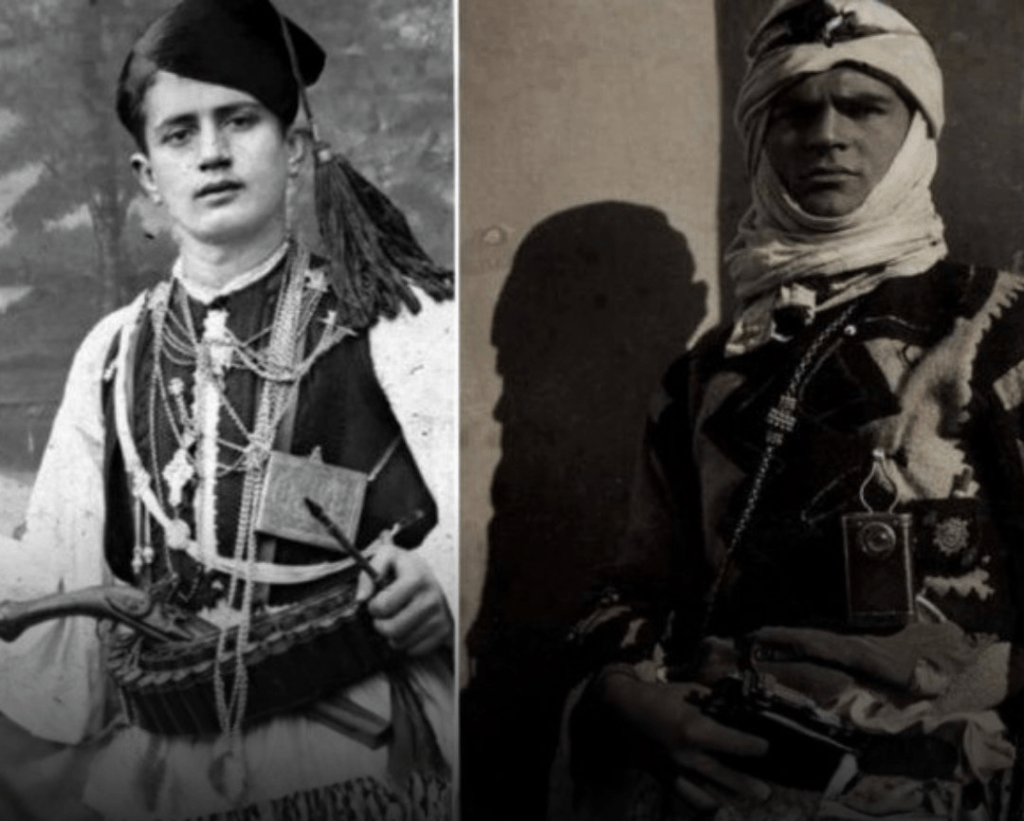

Taken from Lajme Javore.
On June 27, 1914, from the Hotel Albania in Vlora, the British scholar and traveler Edith Durham sent a letter to her friend, the journalist Henry Nevinson, describing with shocking realism the situation of Albanian refugees expelled by Greek forces after massacres, looting and burnings in southern Albania.
The letter belongs to a crucial period: a few months before the outbreak of World War I, at a time when Prince Wilhelm zu Wied (whom Durham calls “King”) was visiting Vlora, while Albanians harbored great hopes for the return of Kosovo to natural Albania.
Administrative chaos and disappointment with the Great Powers
Durham harshly criticizes the Dutch officers sent by the Great Powers, describing them as irresponsible and openly pro-Greek, with the exception of a few rare figures. She emphasizes the lack of real authority, the confusion of orders and the failure of international mechanisms to protect the Albanian civilian population.
Prince Wied’s visit to Vlora
The visit of the princely couple is described as extremely enthusiastic by the people: large crowds, a hand-drawn carriage pulled by hundreds of people, mountaineers fanning them with handkerchiefs. However, Durham expresses concern about the influence of pro-Greek beys, especially the family of Syrja Bey, to whom – according to her – the queen mistakenly trusted, even giving them funds that were intended for refugee women and children.
The human tragedy of the refugees
The most shocking part of the letter is the description of the situation of the refugees: paralyzed women, skeletal children dying of hunger, entire families exterminated. Durham mentions massacres committed by Greek forces also against Albanian Orthodox Christians, who were killed because they refused to declare themselves Greek.
She warns that over 33,000 Albanians were at risk of dying if Europe did not intervene urgently. Hope for war and appreciation for the Albanians
At the end of the letter, Durham writes one of the strongest historical assessments of the Albanians:
“In terms of today’s fighting and intelligence, the men of Kosovo, together with the loyalists of Korça, are the pinnacle of the Albanian race.” According to her, these men would have been able to stand up to the Greeks, had it not been for the revolt organized by Esat Pasha Toptani in Shijak and Tirana.
A priceless historical testimony
Edith Durham’s letter remains an extraordinary historical document: not only as evidence of the crimes and suffering of the Albanians in 1914, but also as a rare international assessment of the strength, dignity, and political and military potential of the Albanians, especially of Kosovo and Korça, at one of the most critical moments in national history.

 Balkan Academia