
Abstract
Mathieu Aref, an Albanian-French historian born in Cairo, has dedicated over fifty years to researching the origins of the Albanians and the Pelasgian civilization. Educated in literature, fine arts, law, architecture, and ancient history, he earned his doctorate at the Sorbonne with a thesis arguing that the Pelasgians were the ancestors of the Albanians and the foundation of early Greek civilization. Through multidisciplinary studies in linguistics, archaeology, anthropology, and ethnography, Aref has analyzed language, mythology, and material culture to reconstruct pre-Hellenic history. His work has been recognized with Albania’s “Naim Frashëri” order for his contributions to Albanology and Balkan historical scholarship.
Mathieu Aref
Mathieu Aref was born in Cairo, Egypt, is an Albanian-French historian. His parents were born in the province of Mati in Albania. He now lives in France and has been dedicated for years to researching the history of the origin of Albanians. He defended his scientific thesis at the University of Sorbonne on the origin of Albanians from the Pelasgians.
A few days ago, he was decorated by the President of the Republic, Bujar Nishani, with the title “Naim Frashëri”. In 1961, he traveled to France, where he has lived since then. He has graduated in various fields, such as “Literature, Fine Arts, Architecture, Law of Societies, and Ancient History”. In 2003, 2004 he published two books in French and later translated into Albanian: “Albania (history and language) or the incredible odyssey of a pre-Hellenic people”, “Greece (Mycenae = Pelasgians) or the solution of an enigma”.
On January 3, 2012, Mr. Aref received his Doctorate degree in the “History and Ancient Civilizations” department at the Sorbonne University. He defended his thesis: “Research on the Pelasgians, as the origin of Greek civilization”. Dr. Mathieu Aref has just left the “Presidency”, where the President of the Republic, ours, decorated him with the “Naim Frashëri” order.
He is settled in a hotel and, of course, he is tired from the road and from the many meetings he has had, from the President, to anyone else who actually knows his fame, even takes pride in it, but few people know the work, that magic that has raised him to the highest peak of the science of Albanology, especially of its ancient roots, which go back to the Pelasgian language.
We find him in the lobby, in a stoic attitude, after having stayed with some of his friends and escorted them. He awaits us with the calmness of a great man. He knows that the guests who ask to meet him are not random. Now it is the turn of a journalist, who is served by a friend of his, not just his opinion. Mathieu Aref is Albanian.
He is one of those Albanians that we have only been able to ascertain through ideals, that we could not meet him otherwise. In fact, we, the Albanians of Albania, are not even allowed to see such an Albanian in our dreams. It is forbidden that we are threatened by the pesive models of politics, the screen, the state, power, theft, robbery and even the denial of living in this country.
Professor Mathieu, who is already the “Doctor of Pelasgjishte” is modest. He speaks of Albanians as if they were his blood. He is happy that the President of the country of his ancestors has decorated him. He rejoices like a child to meet people in his Albania, and even grieves that the time of his stay with us and in our country is so short. He lives in Paris.
There, where the entire academy of that country surely forgives him, (because they know what is valuable and what is not) while here, the media did not have time to broadcast any sequence from his meeting with the President of the country. Of course, the professor does not see such trifles, nor does he even think about them, since he is so great that any screen, newspaper, or even any institution that interferes in such cases would only do honor to themselves.
Professor Aref has raised to the highest peak of science the flag of our existence, origin and autochthonousness, which for more than two thousand years has been destroyed by foreign and local invaders, enemies and “friends” of all kinds. The Pelasgians and Pelasgianism are foundations, and Professor Mathieu Aref has shown this fact with scientific evidence to the whole world.
Even the Sorbonne University has submitted to him and his thesis: The Pelasgians are the ancestors of the Albanians. Our professor has facts, evidence, and not a little, but half a century that he has been scientifically tracing this thesis. He devoted 50 years of his life to the Pelasgian, until he made it known in the highest ranks of the French academy and he is even convinced: “No one in the world can say the opposite of what I put in my thesis about the Pelasgians.”
Meeting the Pelasgians
“My father always told me: Son, you are a Pelasgian! Don’t forget!” This is how the Pelasgian identity was conceived in the professor. He fixed only this fact and it seems to have served as a divine calling for him the moment he arrived in France. Even there, in her heart! He came across somewhere in the bookstores of the street “Zeus” who spoke the language that the professor knew.
From that moment on he says: I started digging!
And that is exactly what happened. From that moment until today, he has not stopped for a moment thinking about the Pelasgians, the Illyrians, the Albanians and the whole world, where their feet have stepped.
Confronting the stupid professor. It seems like a big library where you are offered a multitude of files that pass before your eyes and you have to catch the main one, the right thread that leads you to the decomposition of the whole. In fact, it is impossible! No thread can be caught, because he is like a “globe” with strange parameters. He is so dear, my listeners r, who does not recognize the “I” only when he needs to with Albanians, those who do not like to accept scientific theses, but only what they learn from the tables of national and international gossip and above all, he is very human.
He speaks of his and his parents’ longing for Albania with a language of incredible pain for a man of science. The Albanian language, even that Gheg, sits so beautifully and majestically with him, as if they were a whole world inseparable from nothing! In fact, the professor speaks and knows several languages perfectly, otherwise his scientific undertaking in search of the origins of Albanians and the Albanian language would have been quite difficult.
His theses leave you speechless, while his research has taken him all over the world, everywhere scientific research has taken him to confirm what is already his. When he speaks, he has a deep gaze. It seems as if he is devouring you, just as it seems as if he sees in you the next proof of the Pelasgians. He seems to be studying, doing a scan and himself seems like the next “test” in front of him: “You’ve seen that some people still retain the features of the Pelasgians. Yes, yes, they have round heads, they are white and have blue eyes. That’s how the Pelasgians were”.
That’s where anthropology comes into play, and the professor can talk endlessly, endlessly about all the cranial typologies of the races. Surprisingly; he is not just a researcher, but in the service of his thesis he has become; an anthropologist, archaeologist, historian, linguist, a very good connoisseur of geography, ethnography and even a very good connoisseur of many languages.
His patents are all in the service of Albanians and the Albanian language, and consequently, of the history of our existence: “History is not written with guesses” – says the professor, as he begins to list his theories, where neither hours nor days are enough. Where it doesn’t take you, it knocks you over and then brings you back to the table, where it makes sure that not even a speck of sugar remains spilled from the long-decayed holders that are served in Tirana’s bars, where the Illyrians whose language and deeds the professor knows well may have stayed!
“We” – our race!
“The Pelasgian-Illyrian race was originally a white, pure race, therefore, not mixed. Nowadays, due to the numerous mixtures and the change of social mentalities, it is difficult to force our children to choose their girlfriend regardless of race or color. Parents can only give them the education and ancestral principles of their millennial ethnicity, so that they can choose freely and make sense of things.
But we must admit that it is difficult today to preserve the purity of an ethnicity. Today and since the invasions and colonizations of Albanian lands, this original and very old race has been significantly changed due to numerous mixtures due to various invasions, the ease of population mobility and mixed marriages. The Pelasgian-Illyrian tribe had four essential characteristics: white ethnicity; light skin, blue or green eyes, blond or chestnut, the shape of the skull (brachycephalic or mesocephalic), plano-occipital (squeeze behind the skull but today it is disappearing), large stature.
There are still some samples of this type that have survived various mixtures. It is thanks to their isolation in inaccessible regions (in the north and northeast) that some Albanians have maintained ancestral characteristics and I will add some aspects of their DNA. Unlike these, in coastal areas, accessible valleys, plains and low-lying cities, mixtures have been much faster and more frequent.
So today the only precise link between Albanians is their language and ancestral traditions”. This is what the professor says, while explaining our tribal ties, since at that time, specifying that Illyria never existed, but that the Pelasgians were called free people.
Thanks for the appreciation
Professor Aref does not hide his great joy from the appreciation given to him by the President of his country. There he gave a short speech reminding us all how proud he felt, although in fact he has long deserved this appreciation for the rare value of his studies: “First of all, the honorable Mr. President, Bujar Nishani, I greet you with respect and thank you endlessly for this decoration that is sacred to me, a decoration that has been named after one of the greatest Albanian Relindas: Naim Frashëri! Today I also thank the Albanian state, the country of my ancestors.
This day and this event will be remembered and will be unforgettable for me and this is a pleasure, a great honor, an appreciation, a gratitude and a praise for the 50 years dedicated to the scientific, historical and linguistic studies that I have carried out to bring the Pelasgians out of oblivion and nothingness and especially for the reconstruction of the historical and linguistic truth. These Pelasgians were the ancestors of the Thracian-Illyrians and the ancestors of the my ancestors of the nation Cypriot and Albanian-speaking countries.
My late parents would be proud and happy today to see their son greeted and praised by the President of the Republic of Albania and by all Albanians. Thank you, honorable president, for this extraordinary decoration for a scientist and a man like me who has dedicated a large part of his life to the country of his ancestors. Thank you!”
Interview
Corsica and the Basque region also have polyphony. Part of Dr. Alef’s long story, how the “battle” with the world for the Pelasgians and the Albanian language began.
Professor, how did the idea to research the Pelasgians come about?
It was a moment in France. In fact, my father always told me; son, don’t forget that we are Pelasgians. Our ancestors are Pelasgians. Even though we were in Egypt, Albanian has always been spoken in our family. A lot of Albanian. Then we learned other languages that depended on the place where we stayed, which is Arabic, French as the language of the place where I lived and worked and of course English as the language of all doors.
From Herodotus I learned that the Illyrians were a free people. They were called; people beyond! Then I came across the Iliad and the Odyssey. They were the great reinforcement. Then I started searching. I hesitated for a long time and then decided to rest. It is that moment when a person enters into a war with himself. I began to confront my theory and do the opposite. Yes, yes. For six months I fought with the opposite, trying to find something that would not fall into my enterprise. I could not do it. I said yes; now is the time.
Then…?
Then? Work, endless work. I have dedicated my whole life to this research. Believe me, 6 years of uninterrupted work (10/15 hours a day). I lived alone as an ascetic without a wife, some of the children were married or each in their own house. I kept my dog. Only with him did I relax. When he (the dog) died, I cried. I cried a lot because he understood me.
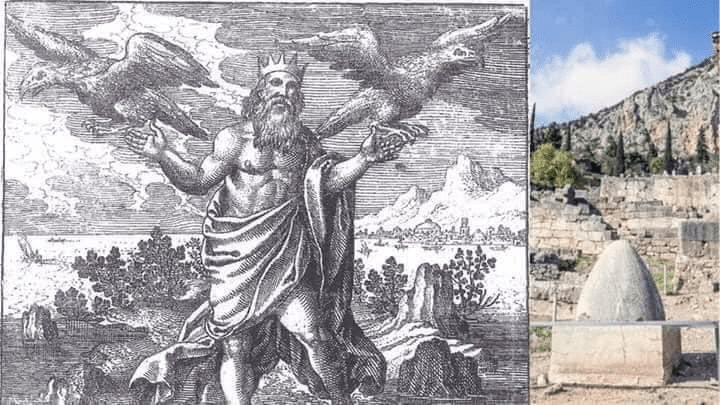
Initially, I dealt with the Greeks. The idea was to find proof that we were descendants of the Pelasgians. Then I knew that I would do the right thing. Because it has always been done badly and against this fact. History is not made by guesswork. For example, in the Iliad there are Pelasgians in both camps! In the Iliad there is also Achilles’ prayer to “Zeus”: “Zeus king, Dodonas, ancient god, Pelasgian, who reigns over Dodona, in this harsh land of the Sellians, of prophets with never washed feet and who sleep on the ground…”.
That is, Zeus was definitely Pelasgian! As for Zeus, the essential element of his ethnic origin, in addition to the linguistic similarities with today’s Albanian and the numerous epithets of Homer, describing the divine Pelasgians and his story of being born in a “Cave” on Mount Ida in Crete (a word derived from the Ge’gian “Kre, kretë” i.e. Tosk: “krye, kre, krerë, or kokë”), is that phrase mentioned in the Iliad which proves the Pelasgian origin of the Iliad (the only phrase saved from various insertions and that has escaped the manipulations of Greek logographers).
This phrase reminds me that Zeus was not “Greek” (as I had learned, since my childhood) in various books and encyclopedias but was Pelasgian.
What was Homer in the history of your thesis, professor?
The Iliad and the Odyssey are epic poems of the Pelasgian oral tradition and not Greek. But to further support this strong conviction I was forced to undertake other multidisciplinary studies in an attempt to find the “squaring of the circle”. And I was forced to start intensive studies in archaeology, anthropology, linguistics, paleontology, prehistory, mythology, etc.
So my thesis presented at the Sorbonne is the culmination of all these studies and research, a 50-year fixed work. Thanks to the Iliad and the Odyssey, conveyed by the Pelasgians described as divine in the Iliad, to the new Hellenic invaders, today we know what language the autochthonous peoples spoke, who inhabited the land that would become Greece. This is taken from Herodotus. It is not an invention made in vain.
This language of the Gods “different from that of men” i.e. of the Greeks as Homer called it, the language of the “Pellagian and Dodonian Zeus” is more than alive: the Albanian language of today, preserved almost intact, for millennia, in the unconquered mountains of the Albanian-speaking regions, the hearth of which is today’s Albania and its Albanian-speaking lands.
Isn’t there a kind of living fossil there, which brings us proof that these Pelasgians were precisely the ancestors of the Thracian-Illyrians and their last descendants, the Albanians of today?
The Albanian language manages to decrypt or decipher most of the names of mythology (so-called Greek) as well as the theonyms, eponyms, toponyms, oronyms and anthroponyms of the Iliad/Odyssey and of a large part of Europe and in particular the Danube-Balkan-Aegean region!
Are you saying that the Pelasgians also crossed Europe?
Yes, of course! I have found traces and scientific facts, not just by guesswork. No one can prove the opposite to me. For example, the remains The megalithic or cyclopean archaeological sites, which are found not only in the Balkans, the Aegean or in Asia Minor, but also in Western Europe, the fortifications of Mycenae, Argos, Tiryns or Pylos and the Pelargicon (the first surrounding wall of the Acropolis of Athens) and other remains, have not been confirmed by archaeology.
However, it has been said that there is nothing Greek there! In addition to the settlement, we also have the language and tradition. Linear B is nothing other than the proto-Ionian language, i.e. the ancient Pelasgian, from which the Ionian, Aeolian and Arcadian-Cypriot dialects, predecessors of the Greek language, derive.
Since Chadwick and Ventris (the decipherers of Linear A) it has been believed that this script was ancient Greek. Look closely at another fact. Who in the world has polyphony? You know that besides us, the province of Corsica and the Basques in Spain have it. There is no one else. You see, the Basques, as a people, have no resemblance to the rest of Spain.

 Balkan Academia