
Summary
David Brawer writes: the three maritime islands flourished through grain trading fleets and by breaking the British blockade during the Napoleonic Wars, with Hydra becoming especially wealthy and architecturally impressive. This prosperity declined after Napoleon’s defeat due to falling grain prices, currency devaluation, and an abundant harvest in 1820, creating economic pressure that made revolution appealing. The islands also differed in population and character: Psara was settled by Greeks from Asia Minor, while Hydra and Spetses were populated by Albanians. Contemporary observers described the Albanians as strong, enterprising, and often mercenary, contrasting their rough, insular temperament with the more adaptable and humane character of the Psariotes.
David Brawer
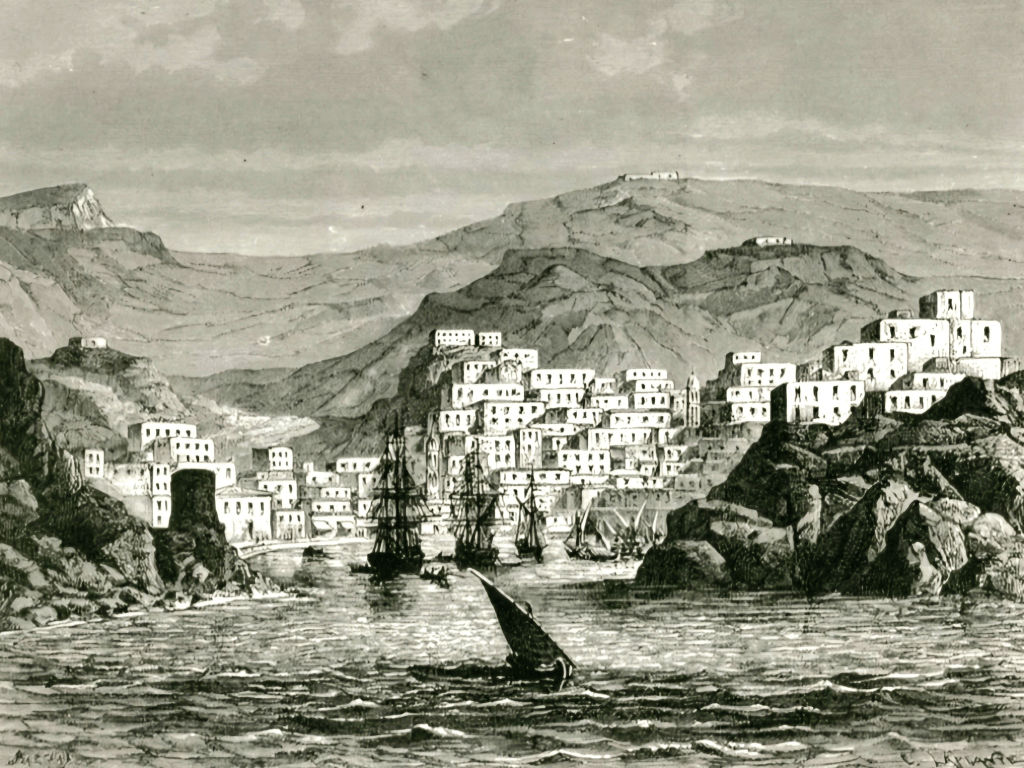
The three maritime islands had prospered thanks to their grain-carrying merchant fleets, which they had built up during the previous century, and later by the breaking of the British blockade of the southern French coast during the Napoleonic Wars. On Hydra, the richest of the three, this wealth had been invested in magnificent houses, which still stand, and in a lavish lifestyle.
The city of Hydra was described by Gordon as “one of the finest cities of the Levant, and infinitely superior to any other in Greece: the houses are all built of white stone; and those of the nobility, built at extraordinary expense, paved with costly marble, and magnificently furnished, might be considered palaces even in the capitals of Italy.”
However, this prosperity was now under threat. The decline in the value of the Turkish piastre was reducing profits. Napoleon’s defeat brought not only the end of the great profits from the breach of the blockade, but also a sharp fall in the price of grain in Europe, while a particularly good harvest in 1820 brought down the price even further. The revolution offered a way out of the economic slump.
The temperament of the islanders reflected their origins: Psara had been populated during the previous century by Greeks from Asia Minor, while Hydra and Speca by Albanians. The Albanians were generally considered strong, intelligent and industrious, and were willing to emigrate to follow their fortunes.
They were inclined to serve as mercenaries for whoever paid them best and, during the war of independence, found themselves on both the Greek side — earning the admiration, mixed with annoyance, of Byron — and the Turkish side, as an integral part of the Greek enemy, known as the “Tourkalvani”.
Contemporaries regularly commented on the distinctly Albanian character of the inhabitants of Hydra and Spes, and compared it with the Greek temperament of the Psariotes. According to Gordon, “the Hydrates and Spesariotes are of the pure Albanian race, rude, noisy, uneducated, given to excess, and, with a few exceptions, uncivilized: they are fanatics and have an aversion to foreigners.
The Psariotes, Asiatic Greeks, although distinguished among their countrymen for spirit and initiative, have a more humane, lively, and malleable temperament.”
Making a similar comparison, the English traveler George Waddington wrote that “the liveliness, ease, and arrogance attract and amuse one in [the Hydrates], and these differ greatly from the calmness, pride, and almost impudence of [the Hydrates].”
Reference
The Greek War of Independence, 1821-1833. David Brewer. Publisher: The Overlook Press. Woodstock & New York, 2001

 Balkan Academia