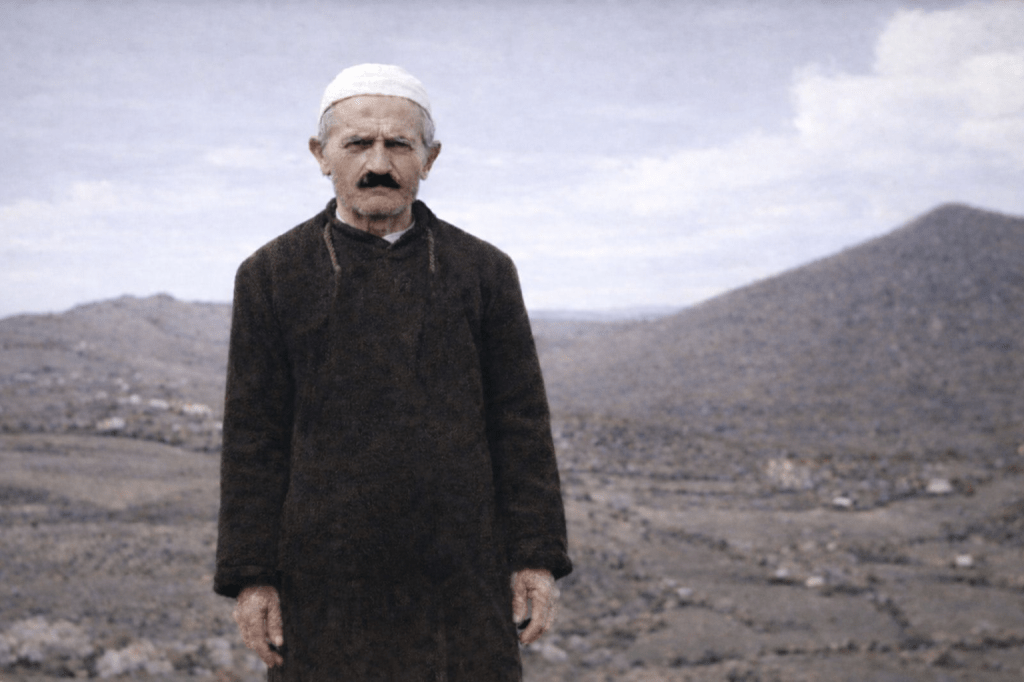

By Prof. Dr. Sabile Keçmezi-Basha. Translation Petrit Latifi
Summary
This study examines the life, leadership, and patriotic activity of Ahmet Selaci (1894–1947), a key figure in the Albanian resistance in Kosovo during and after World War II. Born in Shala of Bajgora, Selaci emerged as a respected military and political leader, serving as mayor of Bare and participating in major battles across northern Kosovo and surrounding regions. He played a central role in the Second League of Prizren, the National Democratic Albanian Movement (NDSH/LNDSH), and the organization Besa Kombëtare, contributing to the formation of volunteer units and structured armed resistance against Yugoslav rule. The paper highlights Selaci’s role in major assemblies, including the Fifth Congress of NDSH, his appointment as commander of the Iber Division, and his commitment to the unification of Albanian lands. His execution in 1947 symbolizes the violent suppression of Albanian nationalist resistance in postwar Yugoslavia.
Albanian hero Ahmet Selaci (1894-1947)
The great patriot, Ahmet Selaci, was born in the village of Selac in Shala of Bajgora, in 1894. He was born into a family whose grandfather and great-grandfather had patriotism, manhood and loyalty in their DNA. After the capitulation of Yugoslavia, in 1941, seeing his wisdom, fighting and organizational skills, Ahmet Selaci was elected mayor of Bare. He remained in this position until the end of 1944 and also led all the battles that took place in Kolashin, Shala e Bajgora, Pazarit i Ri, Rozhajë, Tuti and even Bihor.
After the formation and founding Assembly of the Second League of Prizren (September 16, 1943), with the commitment of Ibrahim Lutfi, Bedri Gjinaj and Asllan Boletini, in October 1944 an Assembly was held in the village of Kovaçicë in Shala, in addition to supporting the decisions of the Central Committee of the League of Prizren, a position was taken to form groups, platoons, volunteer units, as well as to mobilize the population in several areas of Shala and beyond.
It should be noted that Ahmeti Selaci, Adem Voca and Ukshin Kovaçica had a significant influence on the formation of these volunteer units. For the best preparation and organization of this war and resistance, in addition to the Assembly of the Second League of Prizren and the Assembly of Kovaçica, other assemblies were held, such as: the Assembly of Bare (September 1944), the Assembly of Vidishiq (January 25, 1945), the Assembly of Mrizishta (between Kovaçica and Vesekovci) August 11, 1946, etc.
Also, a significant influence during the years 1941-1945 was given by the following personalities: Ahmet Selaci, Bislim Bajgora, Mehmet Rexhep-Selaci, Riza Rexhep Selaci, Imer Tahir Selaci, Bajram Mehmet Selaci, Mursel Igrishta Selaci, Tafil Pajazit, Asllan Isufi, Faik Boletoni, Ukshin Kovaçica, Adem Hetem Voca, Mulla Mustafa, Kadri Bistrica, Rexhep and Rifat Dedia, Haradin Vidishiqi, Qerim Ibrahim Shupkovci, Shaban Mujani, and many others.
An important role in the Albanian resistance was also played by illegal organizations operating at that time that organized the Albanian population in defense of the country, such as: Albanian National Democratic Organization, National Besa, Organization No. 2 of Ajet Gërgur and several other smaller ones. The situation created both inside and outside the borders influenced the NDSH organization to hold three congresses within a year.
The V Congress was called to be held on July 25, 1946 in the Lipovica (Blinaj) mountains in Drenica, but in order to lose track of the Yugoslav security organs, it was announced that it would be held in Kozmaç. Over 250 delegates participated in the congress, making it the most massive in the history of ONDSH. During the development of the works at the congress, two political currents, which articulated specific ways of war, would come into conflict.
The first current was represented by Osman Bunjaku, who considered that a patriot is a fighter who does not leave Kosovo, and here he waged war; while the second current was represented by Ajet Gërguri, who considered that in the post-war years there were no conditions to wage war in the homeland, therefore one must prepare for war from abroad and with the support of democratic forces in an organized manner return to the homeland to continue active resistance.
The leader of the Congress was Ajet Gërguri, the president of ONDSH was elected after the assassination of Prof. Ymer Berisha, while Gjon Sereçi was the secretary of this congress. Over 100 people participated in the Congress, including Ahmet Selaci, Aziz Zhilivoda, Ismet Boletin, Osman and Shaban Bunjaku, Feriz Bici, Ukshin Kovaçica, Shaban Dobreva, Azem Bellaqevci, etc. Ahmeti Selaci was a participant in the 5th congress of NDSH that was held in Blinaj, Drenica.
All the work that was done to organize the congress was done under the supervision of the chairman of the Komorani NDSH committee, Sokol Ibrahim Haxholli from Zabeli i Poshtëm, who was involved in the government at the time, as an advisor to the Komorani municipality.
For the protection and security of the delegates and other participants, the organization had engaged Ahmet Selaci, who, with his comrades, and with all the weapons he had, would participate in securing the congress’s work. In addition, Ahmet Selaci’s comrades were instructed to take food with them for the delegates, which he did with pleasure.
At the Congress, it was also decided to form the “Iber Division” of the National Army for the Protection of Kosovo and Ahmet Selaci was appointed commander. The “Iber Division”, led by Ahmet Selaci, consisted of five regiments and each regiment had its own commander.
The commander of the I Regiment was Faik Boletini,
of the II Regiment- Osman Bunjaku,
of the III Regiment- Ukshin Kovaçica,
of the IV Regiment- Avdi Tashefci,
of the V Regiment- Ilmi Zatriqi.
Each regiment had four battalions, each battalion had its own commander.
It should be mentioned that, even after the end of the LDB, the illegal organizations that began to operate in Kosovo had a They were based on their programs, which were mainly based on the demands of the Albanian League of Prizren. The organization that carried out its patriotic activity during the years 1945 to 1956 was the LNDSH. It extended its activity to Kosovo and the Eastern part of Macedonia, being determined for armed struggle against the new Yugoslav captivity and the formation of an Albanian state with its own territories.
It had a pro-Western national and democratic policy, and was mainly led by prominent patriots and intellectuals such as Ymer Berisha, Halim Spahiu, Selman Riza, Gjon Serreqi and many others. Its program was composed of five points which completely coincided with the points of the LSHP.
The patriotic organization “Besa Kombëtare” was formed on November 28, 1944, in the village of Abria e Epërme, in the municipality of Skenderaj, in the building of the primary school of this village. Professor Ymer Berisha, with many patriots and many students of the Normal School-Gymnasium “Sami Frashëri” had come from Prishtina, to organize and hold: The first Assembly of the organization “Besa Kombëtare”
This Assembly was held as a result of the preparations made since the Constitutive Assembly of September 12, 1943, held in Peja. The Drenica Assembly was attended by many delegates of the “National Faith” as well as guests and invitees, among whom were distinguished: Colonel Sylejman Vuçitërna-Shkoza, tribune Shaban Polluzha, Bislim Bajgora, Ukshin Kovaçica, Ahmet Selaci, Adem Voca, Haradin Vidishiqi, Mulla Mustafa Fazliu, Sherif Tërstena, Aziz Zhilivoda, Lahë Lubovec, Ismail Murtez Lushta, Miftar Bajraktari, Mehmet Gradica, Ndue Përlleshi, Qazim Bajraktari of Astrazub, Zef Gjidoda with his fighting squad, Marije Shllaku, who also kept the minutes of this Assembly, as well as gave a speech, Mehmet Gradica, Ukë Sadiku with his squad provided the guards for the smooth conduct of this Assembly.
There were also Sadik Lutani, Rexhep Gjeli, Sadik Zeneli, Hamit Emini – “Doktorri”, Alush Smajli – “Qerrataja”, Feriz Boja, Mulla Ilijaz Broja and many others, especially representatives of Upper Drenica. Other guests were also invited to the Assembly, so the number of participants in this Assembly reached 243 people. In this large gathering, it was decided to work for the separation of Kosovo and other Albanian territories from Serbia and Yugoslavia; to sabotage the disarmament of the Albanian people by the new invaders, which would join the future Albanian National Army.
Here, in this Assembly, the Presidency of the “Besa Kombëtare” Organization was also elected, with prof. as chairman. Imer Berishen, secretary Ismail Ymer Thaçi from Zakut i Podujeva, and a clear national program was approved and the directions of organization were determined for its organizational expansion, especially among the Kosovar youth
The departure of Prof. Ymer Berisha from Pristina to Drenica, was aimed at developing political and military activity in those villages, but also at activating the old ties of the joint war of Drenica and the Dukagjini Plain, but also of Mitrovica, Vushtrri, Shala e Bajgora and Llapi. While in Pristina he had also established ties with Adem Gllavica, because he was the chairman of the committee. Prof. Ymer Berisha in Pristina made the necessary preparations: he provided the necessary weapons and people who would go to Drenica.
In these circumstances of occupation, in Kosovo and in all Albanian territories across the border, a savage military dictatorship was implemented led by groups of Chetnik commandos and Slavic communists. Especially, the terror and genocide against the innocent Albanian population came and increased after the murder of Milladin Popovic (March 13, 1945), which was a good alibi, which OZNA openly justified the terror and liquidation of intellectuals and the Albanian population.
The leaders of the National Defense and the Albanian volunteer units, who had escaped prosecution, made continuous efforts to gather and consolidate the political-military forces of the Albanian forces for the formation of the Albanian People’s Democratic Army. In the meantime, the patriots aimed to connect all the anti-communist forces, which would later be transformed into an army with a national Albanian character.
After the meeting that Prof. Imer Berisha had with Pashka Biba, on July 20, 1945, in the village of Vogovë, near Gjakova, the activity that was later carried out by the members of the movement was undeniable. After returning from the meeting, the professor met with his friend and idealist, Ukë Sadiku, who was considered the most influential person in the Kosovar underground.
It was also at this meeting that they agreed that the two of them would represent the underground groups at the gathering, which was scheduled to be held in September in the town of Mirditë, in northern Albania. It was there that the position was taken to form a political organization, or rather to reorganize the work in the underground-political organization of the NDSH. After this meeting, couriers were sent to each underground group to send representatives to the meeting to be held in Doberdol.
In these circumstances, the historical moment made it necessary to hold an Assembly of the Albanian underground, where all these groups-movements would be united, with a leading military-political center for national actions-the unification of the Albanian lands. From a preliminary meeting of the leading units, the place was determined – the village of Dobërdol, and the date of the meeting was 4-5 August 1945.
In conversation with Ukë Sadiku, prof. Imer Berisha had set the meeting between the leaders of the underground for August 1945, in the village of Dobërdol, in the mountains of Martin Pjetri. On August 24, the great gathering of the underground began. 19 groups with their followers participated in it, including representatives from Rozhaje and Pazar i Ri, a total of 158 people.
There, leaders such as: Ukë Sadiku, Ahmet Selaci, Demë Ali Pozhari, Ndue Përlleshi, Zef Gjin Doda, Zeqë Sokoli, Qazim Bajraktari, Shaban Sadik-Rama, Sadik Lutani, Alush Smajli, Ferat Kotorri, Adem Shala, Njazi Alishani, Zhukë Haxhia, Islam Tabaku, Rexhë Xhela, Mulla Ilazi, Biko Drešević (who had also brought with him four fugitives from Sandžak), and many others met.
Ukë Sadiku solemnly opened the Assembly. He greeted the attendees and introduced Prof. Imer Berisha as the ideological initiator of the movement and creator of the “Besa Kombëtare” organization, and the professor himself spoke about the political situation. He told the attendees that “The political situation is very difficult and with the help of allies, great changes are expected, but he emphasized that we must be ready to take power at the right moment.”
It was requested that we also mobilize the masses properly in the field, and that they be ready for concrete actions. The Dobërdoli Assembly lasted two days, the moderator of this large and important gathering was Marie Shllaku, from Shkodra. During the entire time, the gathering was very well secured, because it was guarded by prominent fighters, at one point the entire village was on guard, but Smajl Hajdari, Halil Sadria, Zef Përlleshi, Martin Pjetri and other fighters of Ukë Sadiku and Ndue Përlleshi stood out.
After electing the military leaders, the Assembly decided to attack the “UNÇ” units in Drenica and the Trepça mine, where the Chetnik forces had been incorporated after their rehabilitation. This war was a heavy blow to the enemy. At this assembly, a position was also taken to form the illegal political-military, patriotic organization “Besa Kombëtare”, which would be led by a leadership composed of 12 people.
Ahmet Selaci was elected a member of the Presidency of the illegal organization “Besa Kombëtare” and at the same time was a member of the Presidency of the KNDSH for Shala, which operated illegally under the command of Prof. Ymer Berisha. The Assembly elected Ukë Sadiku as the leader of the military sector, while Prof. Ymer Berisha was appointed as the leader of the political sector. Both of them were members of the close circle of the organization’s Leadership Staff.
It was the first time that commissioners were appointed among the ranks of illegal patriotic groups. This was also a guarantee that the groups would be activated and would act even more in the field according to the directives of the central leaders. In addition to these, the assembly also elected the leaders of the sectors according to the territorial principle, not leaving unappointed there, in addition to the military leaders, also the political leaders.
Since Kosovo and Dukagjini were divided into 12 sectors and 12 commanders and the same number of political commissars were appointed to have even greater authority in the military-political field and to be closer to the people, this group was called the “12 Advisors”. After the assembly, the groups left one after the other, without having the slightest problem. All the delegates dispersed with the best impressions, especially feeling a great sympathy and trust towards Professor Ymer Berisha.
The political-patriotic organization “Besa Kombëtare” during its activity managed to have an organizational structure that adapted to the conditions and circumstances in which it operated. In addition to the Leadership Headquarters, which was composed of 12 people, four other groups actively operated within its framework: Loyal Guards; Order-givers; Assassins and the Cleaning Hand or the Assassins’ Hand. The position was that these groups would also operate in the sector headquarters, which were included in 16 districts.
For the Prizren district, the political leader was Njazi Alishani, while the military leader was Ali Riza, captain; In Gjakova, Mehmet Agë Rashkoci was appointed, the military leader – Demë Ali Pozhari; In Rahovec, Alush Ismaili and Qazim Bajraktari were appointed; In Peja, Zef Gjin Doda and Ndue Përlleshi were appointed; In Rugova, Islam Tabaku and Zhukë Haxhia were appointed; in Istog, Azem Shala and Feriz Bojaj; In Drenica, Mulla Ilazi and Sadik Lutani were appointed; In Suhareka, Sali Rama and Mehmet Sherifi were appointed; For Sandzak, Sadik Radovci and Bik Dreshoviqi were appointed; For Prishtina, Ismail Gorani and Luan Gashi were appointed; For Mitrovica, Vushtrri, and Podujevo, Ahmet Selaci was appointed, while for r Ferizaj, Gjilan and Kaçanik was assigned to Adem Glavica.
It is worth mentioning that the work that was done in the field was not known to the organs of the OZN, although they were constantly tracking numerous groups and had a large number of spies in the field, who had engaged them to discover them.
The goals of the entire Albanian resistance were and remained unity in organization and action, but political circumstances imposed a special activity of the groups. Because the possibility of interaction was impossible, even though the supreme goal of all organizations was the unification of all Albanian lands, to create an Ethnic Albania. The goal of the entire illegal was to include the broad popular masses in the resistance groups. The programs of all illegal organizations were only one, that is, the national program without ideological overtones.
The Albanian illegal, in addition to the connections it maintained with foreign missions in Tirana and other countries, had even more frequent connections with internal groups and distinguished national personalities. How important Ahmet Selaci was for the Albanian resistance is evidenced by the letter Prof. Ymer Berisha sent to Ahmet Selaci. Here is what the professor wrote:
“Our organization “Besa Kombëtare” has long been interested in recognizing all good Albanians here and there and I have valued you as a rare and brave patriot for the wars you have waged in Shala i Bajgora against the enemies of the Albanian nation… Get in touch with your other collaborators and let us know in writing how many fighters, in the event of war, can come out with weapons in your district and municipality, because the assembly of the nobility from Old Albania will know this”
Patriot Ahmet Selaci was a determined fighter and faithful to the oath given for the re-creation of Ethnic Albania. After a strong resistance with the Yugoslav military forces and the OZN, he was liquidated in the mountains of Bistrica e Shala, on February 19, 1947, together with Bajram Selaci, Imer Selaci, Mehmet Selaci, Isuf Boletini and Faik Boletini. After the murder, the bodies of the murdered were exposed by the Yugoslav authorities for several days, at the Ibri Bridge, in Mitrovica. Even today their grave is unknown.
References

 Balkan Academia