
by Medvegja SOT.
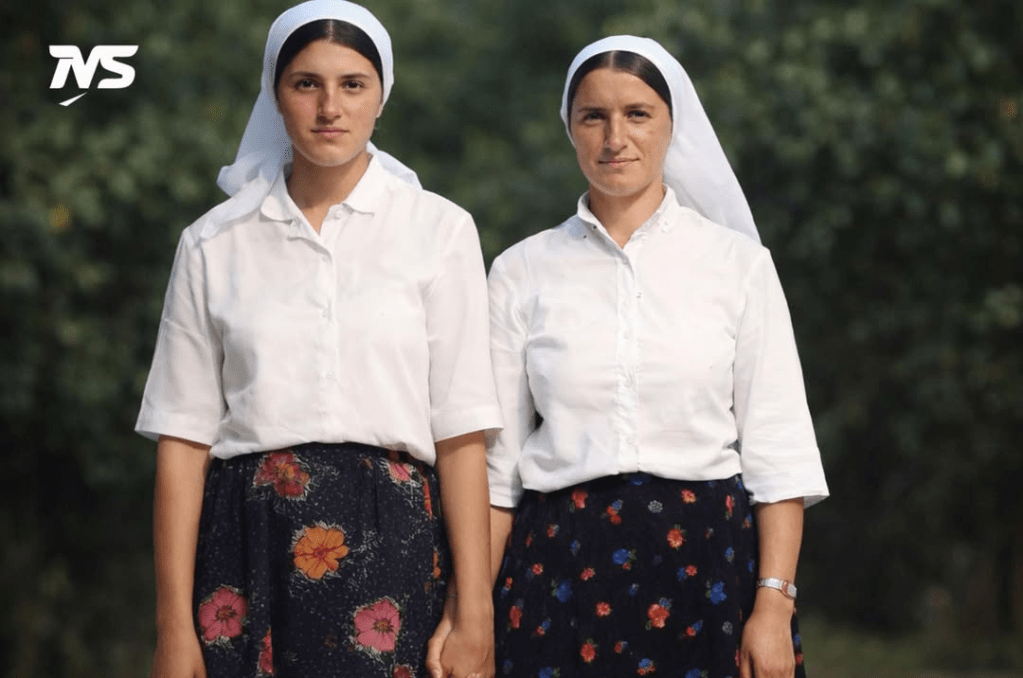
The traditional clothing of Albanian women from the Medvegja region constitutes a special cultural asset, which has unfortunately been treated very little in ethnographic studies. It was not simply a form of covering or adornment, but a silent language that clearly indicated the age, family status and social position of the woman within the community.
In the traditional society of this region, clothing was a code known to everyone. Through it, the young girl, the single girl ripe for marriage, the young bride, the married woman and the elderly woman were distinguished. Every change in family life was also reflected in clothing.
Clothing of single girls
Single girls, especially those considered “in line for marriage”, wore simple, but clean and symbolic clothing. They usually wore a white shirt, which represented purity, honesty and virginity. The headscarf was necessary, tied neatly, without excessive embellishment, showing modesty and family upbringing.
White socks were an integral part of everyday and festive clothing, maintaining harmony with the shirt. During the winter season, girls wore black mittens, which served as protection from the cold, but at the same time maintained the seriousness and simplicity of their appearance.
Differences by age and status
With age and changing family status, clothing underwent noticeable changes. Young girls were distinguished by their simplicity and light colors, while after marriage, clothing became more closed and darker in color. Married women wore headscarves tied differently, while the white elements were gradually replaced with darker colors, as a sign of family responsibility and maturity.
Older women wore even simpler and more serious clothing, reflecting the wisdom, experience and respect they enjoyed in the family and in society.
Cultural significance
These traditional clothes were not accidental. They were built on strong social and cultural norms, inherited from generation to generation. Through them, the Albanian identity of Medvedja was preserved and the sense of national belonging was strengthened.
Today, this heritage is in danger of being forgotten. Therefore, the documentation and publication of these values is necessary to preserve the historical and cultural memory of the Albanian women of this region, who through their clothing have conveyed dignity, culture and identity.
The writing and photographs are published in the book by the author Rrahman Hyseni, “Albanians of Medvedja through the centuries”.
The published materials cannot be copied, reproduced or used in any form without the prior permission of the author, Rrahman Hyseni.
In the photo: Ajshja and Shukrija.
We are very grateful to the author of the biography “Bojniks through the centuries”, Emrush Osmani – Bojniku, who often helps us with names, but also with photographs.


 Balkan Academia