
Summary
H. V. Arndt and Dr. Ludwig Klüber argued that Albanian is among the most ancient languages in Europe. They claimed that no older language can be shown to have been spoken in the region before it, except possibly that of the Iberians, who they believed must have lived in Albania in very early history. Arndt, drawing on comparative linguistic work compiled under Pallas and Klüber’s writings, suggested that Albanian shares notable similarities with Basque and with languages spoken in the mountainous regions of Epirus, the Pyrenees, and even Scotland (Albanach).
According to Arndt, these similarities point to a very ancient common population spread across distant parts of Europe. Although Albanian has changed over time and absorbed many foreign words, he emphasized that it has preserved its ancient character more faithfully than neighboring languages. From comparative word analysis, Arndt concluded that Albanian shows particularly strong affinities with Celtic languages of Western Europe, despite the great geographical distances involved. He suggested that the roots of these linguistic connections may reach back beyond the earliest known history of Europe.
H. V. Arndt and Dr. Ludwig Kluber writes the following:
“The albanian language was considered the most ancient of the european space. no older language could show that it had been spoken in those countries before it, only that of the iberians, who, it follows, must have been in albania in their earliest history. the language of the epirotic mountains is similar to that of the albanians of albanach [scotland]”
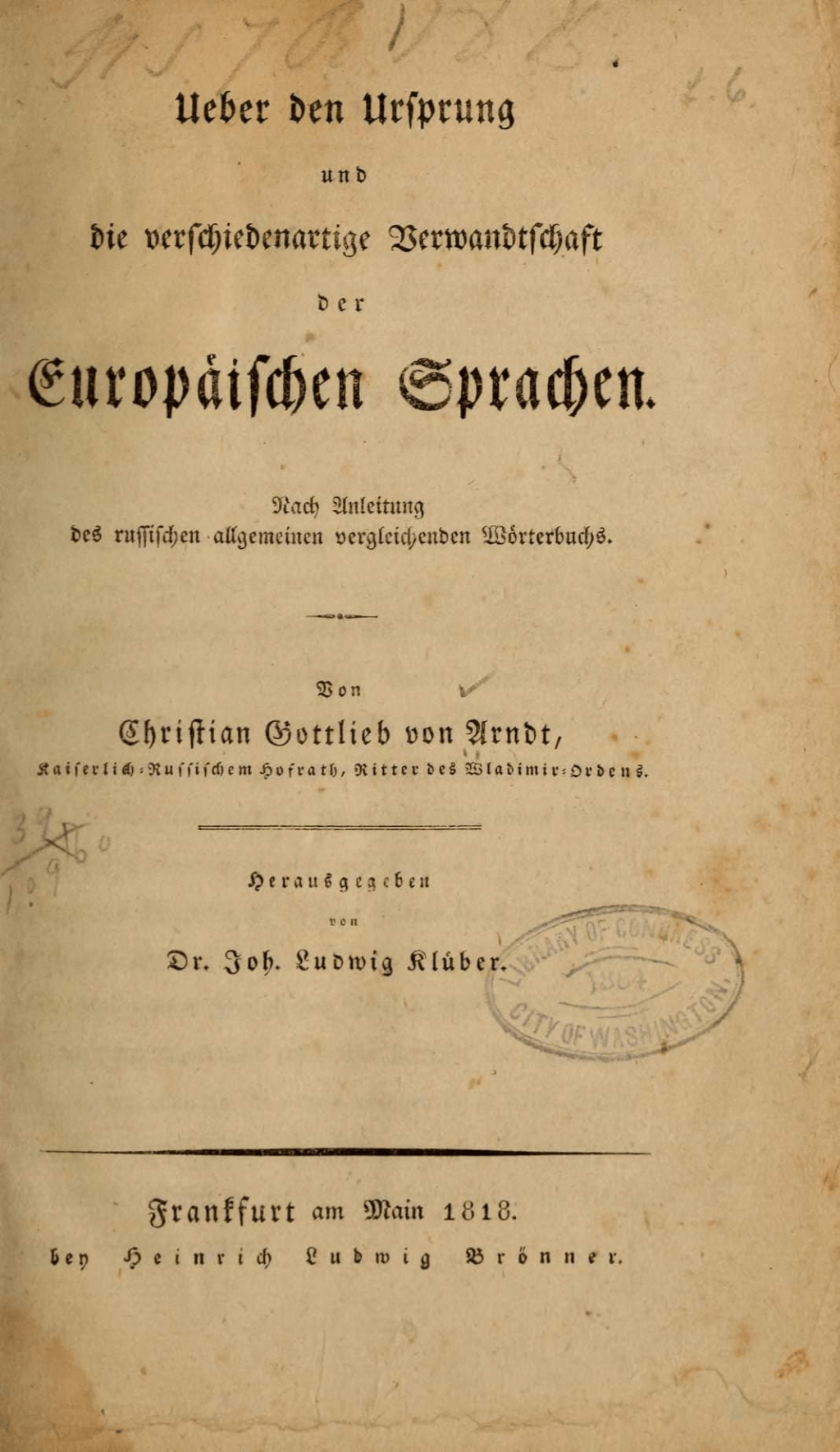
Hofrath v. Arndt, gave us in his early study, on the elaboration of the comparative dictionary, which was compiled under the direction of Pallas for Empress Katharina, from which he had taken the most important part, and also some interesting content from the published writing of the state councilor Klùber: “Ueber den Ursprung und die verschiedenartige Verwandschaft der europàischen Sprache”, where he essentially says about the Albanian language:
“The Albanian language was considered the most ancient of that space, since no older language could show that it had been spoken in those places before it, which did not at least leave it to be denied, that it had to be only that of the Iberians, who, consequently, must have been in Albania in their most ancient history, because it also allowed to explain the similarity of so many words of the Albanian language with those of the Basques, or perhaps the ancient inhabitants of the mountains of Epirus and the Pyrenees, to have belonged to one and the same the same ancient people.”
“This old Albanian language or Alpine language, on the other hand, like all other languages of Europe in the course of time, seems to have changed a lot, and many foreign words have been borrowed by it. The difference, which prevails between it and the languages of its neighbors, I want to emphasize here, is that it more than the others has remained faithful to their old traditions.” – From the comparison of the extracted words, he came to the conclusion:
“That the Albanian language showed more similarity to the Celtic languages of Western Europe, when we must consider the great distance of the Epirote mountains from those of Scotland, (the country of the Galich-Albanach) and from the Pyrenees mountains. The basis of the apparent similarity of these remaining languages, may perhaps extend much further than the limits of the oldest history of Europe.”
The photos being posted here are those from the publication: “Ueber den Ursprung und die verschiedenartige Verwandschaft der europàischen Sprache”, which also shows the similarity of the language of the Albanians of Albanach (present-day Scotland) and the Basques with Albanian. Xylander quotes them from where the Albanian part was taken.
Reference
Die Sprache der Albanesen oder Schkipetaren, Frankfurt am Main: 1835. Author: Josef Ritter von Xylander. Translators: Albert Gjoka, Frida Vokopola

 Balkan Academia