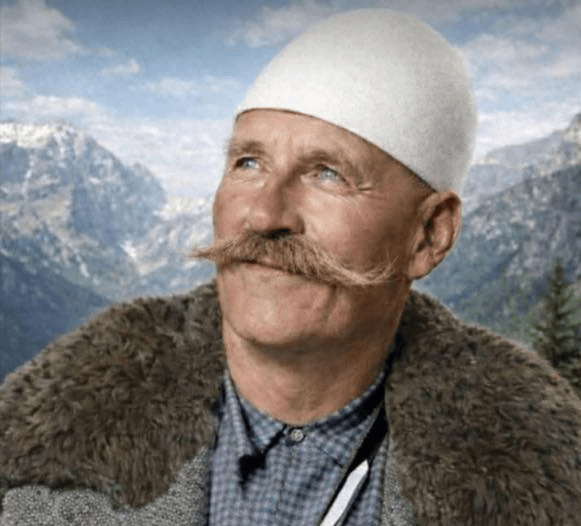

by Mr.Sc. Metush Zenuni – Dura. Translation Petrit Latifi
Abstract
This study examines the life, resistance, and martyrdom of Avdyl Dura (1893–1949), a prominent Albanian nationalist commander from the Kaçanik region, and situates his struggle within the broader historical context of Albanian resistance against Serbian, Bulgarian, and Yugoslav domination during the twentieth century. Drawing on archival materials, eyewitness testimonies, and existing historiography, the text traces the systematic persecution of the Dura family across multiple political regimes, including mass internments, executions, and collective punishment. It highlights Avdyl Dura’s role as a local political leader, guerrilla commander, and symbol of armed resistance, as well as the parallel fate of his closest associate, Rame Beka. Particular attention is given to the period following World War II, when promises of amnesty and cooperation by communist authorities resulted in betrayal, imprisonment, torture, and renewed insurgency. The study argues that the destruction of entire families and the posthumous marginalization of these figures represent a deliberate strategy to erase nationalist resistance from official memory. Ultimately, the article positions Avdyl Dura and his comrades as enduring symbols of sacrifice, resistance, and unresolved historical injustice in Albanian collective memory.
Avdyl Dura and Ram Beka
The history of the Albanian people is filled with outstanding patriotic figures who gave everything they had to bring freedom and progress to their nation, while at the same time becoming symbols of resistance, honor, and guidance for future generations on how one fights and dies for the sacred ideal—the defense, with blood, of lands occupied by foreigners.
The history of the Dura family, from the village of Duraj in Kaçanik, begins in 1912 and continues through the First World War, at a time when Albanian existence—especially that of Albanians in Kosovo and other regions left outside a fragmented and divided Albania by the congresses of the Great Powers in Berlin, London, and Paris—and under the occupation of the Serbo-Croatian-Slovene Kingdom and Bulgaria (1918–1941), suffered violence, expulsions, internments, terror, imprisonment, and killings, perhaps even harsher than under the previous Ottoman occupation.
During this period (1915–1941), the Kaçanik district alternated between Bulgarian control and that of the Kingdom of SHS. Like all occupiers, they sought to subjugate the Albanian population of the Karadak region of Skopje and the Šar Mountains, using murder, violence, displacement, assimilation, and extermination.
Against these occupiers stood Albanian families and leaders who took up arms and fought the Serbo-Bulgarian forces. One such family that never reconciled with any occupier of Albanian lands was the family of Zejnulla Zenuni – Dura, which, due to its resistance, warfare, honor (besa), and hospitality—core Albanian values—was interned and killed in Serbo-Bulgarian camps and trenches.
Who was Avdyl Dura? (1893 – 28 June 1949)
Avdyl Zenuni, known popularly as Avdyl Dua, was the son of Zejnulla and Hatixhe (née Matoshi, from the village of Lower Bitijë in the municipality of Shtërpcë). He was the youngest child after his sister Fatime and his brothers Hajredin (now a National Hero), Neziri, and Metush, also known as Met Dura.
Avdyl Dura was born in 1893 in the village of Duraj, northwest of Kaçanik. Born and raised at the foot of the ancient Illyrian Šar Mountains, he distinguished himself from childhood by extraordinary bravery. The teachings of wise elders in the men’s chambers (oda), who spoke of wars and heroism against Ottoman, Serbian, and Bulgarian occupiers, shaped in him a deep love for the homeland and hatred for the enemy.
Although uneducated, Avdyl at an early age formed a distinct armed group to fight the injustices committed by the Serbo-Bulgarian occupiers against Albanians in the Kaçanik Highlands.
Persecution, repression, and torture of the Dura family (1915–1949)
The large and generous family of Zejnulla Zenuni from Duraj was known throughout Kaçanik, Ferizaj, Vitia, and Shtërpcë not only for bravery, but also for generosity, humanity, and hospitality. At the end of 1915, Serbia on one side and Bulgaria on the other again launched assaults to seize Albanian lands. After the withdrawal of Austria-Hungary, most of the territory was reoccupied by Serbia, now under the guise of the Kingdom of SHS, while Bulgaria took control of Kaçanik.
One evening, Fazli Gaqka—apparently pursued by Bulgarian authorities—knocked on Zejnulla Zenuni’s door. The Dura family hosted him without question, as was their custom. Soon after, Bulgarian soldiers and police arrived to arrest Fazli, but the Dura brothers refused to hand over their guest without explanation. Because of their resistance, the Bulgarians arrested Avdyl along with Fazli Gaqka and Purella, accusing them of sheltering rebels. On the way to Gaqka prison, Avdyl seized an opportunity near the village of Bajnicë and escaped.
The next day Bulgarian soldiers surrounded Met Dura’s house and arrested Metush. A few days later Neziri went to visit his brother and was also arrested. Upon learning that his brothers had been imprisoned because of him, Avdyl surrendered. All three were sent to Ferizaj prison. Their eldest brother Hajredin, who had been in Skopje on business, was also treacherously arrested when he came to inquire about them.
After nearly three weeks in Ferizaj prison, without trial, the four brothers were sentenced to execution. Shortly before their execution, they planned a prison break. Through courage and strength, they escaped. Hajredin was gravely wounded during the escape and was killed between today’s Hotel Luboten and the railway station; his grave remains unknown. The other three brothers escaped into the snow.
In retaliation, Bulgarian authorities looted and burned the Dura home and interned 13 family members—women and children—along with three neighbors, to the Radoviš camp in Strumica. From that camp, only three members survived. Ten family members died, their graves unknown. Entire branches of the family were wiped out.
A new life for the Dura (Zenuni) family
After this tragedy, the surviving brothers—Neziri, Metush, and Avdyl—and their young niece Latife rebuilt their lives. Friends and neighbors helped them. Marriages were arranged quickly to renew the family. Children were born, reviving the names of fallen ancestors.
Despite everything, the Dura brothers never stopped resisting Serbian and Bulgarian occupiers. They became respected leaders in the Kaçanik Highlands.
In 1926, Avdyl was proposed and elected Chairman of the Municipality of Sllatinë, a position he held until 1937. Because he defended Albanian interests, he became a target of the Serbian terrorist organization “The Black Hand”, was falsely accused, and imprisoned for 11 months in Skopje.
Numerous attempts were made on his life—poisoning, ambushes, even a plot involving a trained horse intended to kill him during a race in Belgrade. All failed.
World War II and armed resistance
After Bulgaria’s capitulation in September 1944, Albanians organized to defend their lands. At a mass gathering in Kaçanik, the Albanian flag was raised, and volunteers were sworn in to fight in the Karadak War against Yugoslav partisan forces.
These forces were led by Commander Kacak Avdyl Dura, whose goal was the liberation of Albanian ethnic territories from communist control.
Avdyl played a central role in coordinating nationalist forces across Kaçanik, Ferizaj, Gjilan, Tetovo, and beyond. Meetings were held, alliances formed, and military structures organized under Balli Kombëtar leadership.
Betrayal, arrest, escape, and renewed resistance
Despite promises of safety, Avdyl Dura was repeatedly betrayed by communist authorities. Arrested, tortured by OZNA, and imprisoned, he escaped through a tunnel with comrades. Wounded but unbroken, he returned to the mountains and continued resistance with trusted fighters.
Because he refused to surrender, Serbian-communist authorities imprisoned 25 members of his family—women, children, and elderly—for three years. Many died from illness and torture. Others were permanently damaged.
Rame Beka (1892 – 28 June 1949)
Rame Beka, Avdyl Dura’s right-hand man and closest friend, was born in 1892 in Upper Gerlicë. From a poor family, he shared Avdyl’s fate—resistance, imprisonment, betrayal, escape, and loss. His family too was brutally persecuted.
The heroic fall of Avdyl Dura and Rame Beka – 28 June 1949
Knowing they would never surrender alive, Yugoslav authorities set a final trap. On the morning of 28 June 1949, Avdyl Dura and Rame Beka were surrounded in the fields near Rakaj. Though heavily outnumbered, they fought while singing patriotic songs.
Avdyl was gravely wounded and killed; Rame was also killed while attempting to break through the encirclement. Their bodies were displayed publicly in Ferizaj to terrorize the population, then buried in a mass grave in a Serbian cemetery.
To this day, despite repeated requests, their remains have not been reburied with honor.
Hajredin Fazliu (1917 – 1952)
Hajredin Fazliu, born in 1917 in Duraj, was an educator, patriot, and activist of the National Democratic Albanian Movement (LNDSH). Arrested by OZNA, tortured, and sentenced to 15 years in prison, he died in 1952 in the prison hospital of Sremska Mitrovica. His body was never returned to his family.
Footnotes
- Ramadan Asllani, Avdyl Dura me bashkëluftëtarë për Shqipërinë etnike (Prishtina: 1998).
- UDB Archive, Box no. 11, cited in Gjurime Albanologjike (Prishtina: 2005).
- Vehbi Xhemajli, Rrugëtimi i Ballit Kombëtar në Maqedoni në mbrojtje të Shqipërisë etnike, pp. 64–65.
- Ibid., p. 65.
- “Një jetë për Shqipërinë,” meemira.com, accessed 29 June 2010.
- Muhamet Pirraku, Mulla Idriz Gjilani (Prishtina: 1995), p. 303.
- Oral testimonies of Hajredin Zenuni and Shaban Vogliqi, given to Ramadan Asllani.
- Ramadan Asllani, Avdyl Dura me bashkëluftëtarë për Shqipërinë etnike, pp. 160–165.
- Ibid., pp. 182–183.
- Testimony of Shaban Vogliqi (son of Rame Beka), recorded by Metush Zenuni, June 2010.

 Balkan Academia