
Summary
In 1811, English painter William Innes Pocock traveled from Corfu to Himara and later to Dhermi, where he portrayed the beauty and character of local women and men. The people he met clearly identified themselves as Albanian, not Greek, a fact Pocock faithfully recorded despite his Hellenist background. At that time, later Greek claims and identities had not yet emerged, nor did Greece exist as a state. Himara’s men served in various European armies and consistently affirmed their Albanian heritage and descent from Skanderbeg. Divisions among Himariotes began only after the Greek state formed following the Morea conflict.
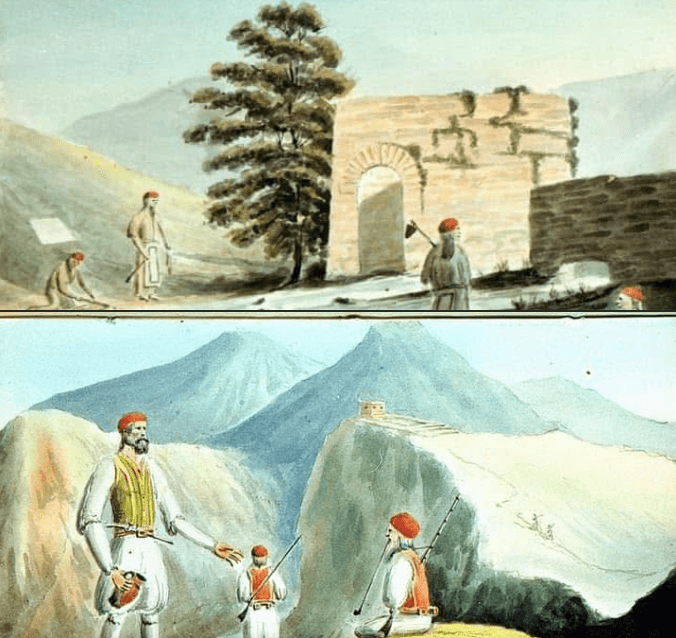
The English painter William Innes Pocock in 1811 went from Corfu to Himara and depicted the beauties of the Albanian women of Himara. He came from Corfu and not from Tirana. The women of Himara, the noble ladies, told him that they were Albanian and not Greek.
From Himara, he went up north and stopped in beautiful Dhermi where he depicted the beauties of himself and the Albanian men of Dhermi. The gentlemen of Dhermi told him that they were Albanian and not Greek. So the English painter, although he was a Hellenist like his father (also a painter), wrote correctly about the Himarjot and Drumadjot, just as the ladies of Himara and the gentlemen of Dhermi proudly told him.
At that time, Beyleri or Belerisss had not yet descended from Progonati, nor had the other “Greeks”. At that time, there was no alms kitchen, but there were brave Albanian men who did not sell their manhood and dignity for a plate of soup, for a Greek passport, or for a pension because Greece did not exist then.
At that time, there were neither land thieves nor gold-thief presidents who, like hyenas, roamed around to snatch a piece of land from the coast. The Himarjë men served in the Kingdom of Naples in the Republic of Venice, later under the Albanian regiment of the Ionian Islands under the French, then on behalf of Russia and later in the fratricidal war of the Albanians in the Morea, and always wherever they went and whoever came to visit them, they proudly said that they were Albanian descendants of Skanderbeg the Great.
Precisely after the fratricidal war of Morea and with the creation of the Greek state in the Peloponnese of the Arbanites, the division and division also begins among a part of the Himariotes.
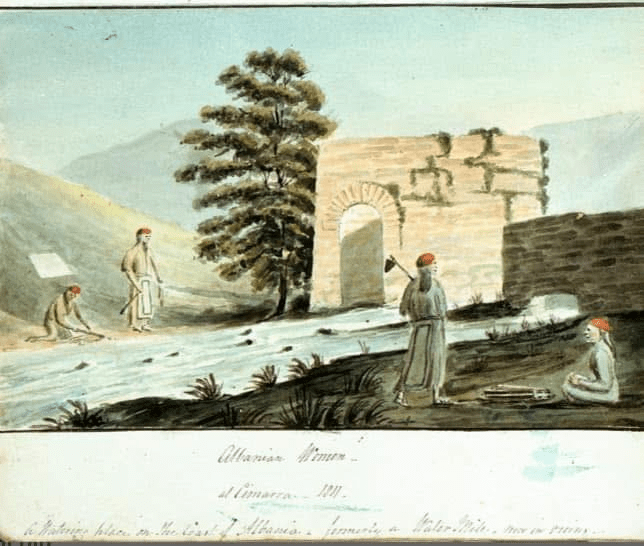
“Albanian women of Himara”

“Albanian men of Dhermi”

 Balkan Academia