
Summary
Naile Canolli Jahiri, known as Gjysha Nole, was an Albanian woman born in 1912 whose life became a symbol of sacrifice, dignity, and unwavering love for family and homeland. During the Kosovo War, on May 22, 1999, she was killed by Serbian forces while walking from Vërbica e Žegoc to Marec to find the grave of her grandson, Bahtir Jahiri, a fallen soldier and Martyr of the Nation. Elderly and frail, she undertook this journey not for revenge or recognition, but simply to mourn him. Her killing stands as an act of martyrdom, representing the silent courage of Albanian mothers and grandmothers who faced death with dignity. Her legacy remains deeply engraved in the national memory as a testament to endurance, love, and sacrifice.
Naile Canolli Jahiri, known by all as Gjysha Nole, was a simple Albanian woman, but with a spirit as great as an era. Born in 1912, she lived a life filled with sacrifice, pain and dignity, becoming a symbol of endurance and endless love for her blood and for the homeland.
During the last war in Kosovo, on May 22, 1999, Naile Canolli Jahiri was killed by Serbian war criminals, just a few weeks before the liberation. But before she fell, she committed an act that today resembles more a legend than a real event.
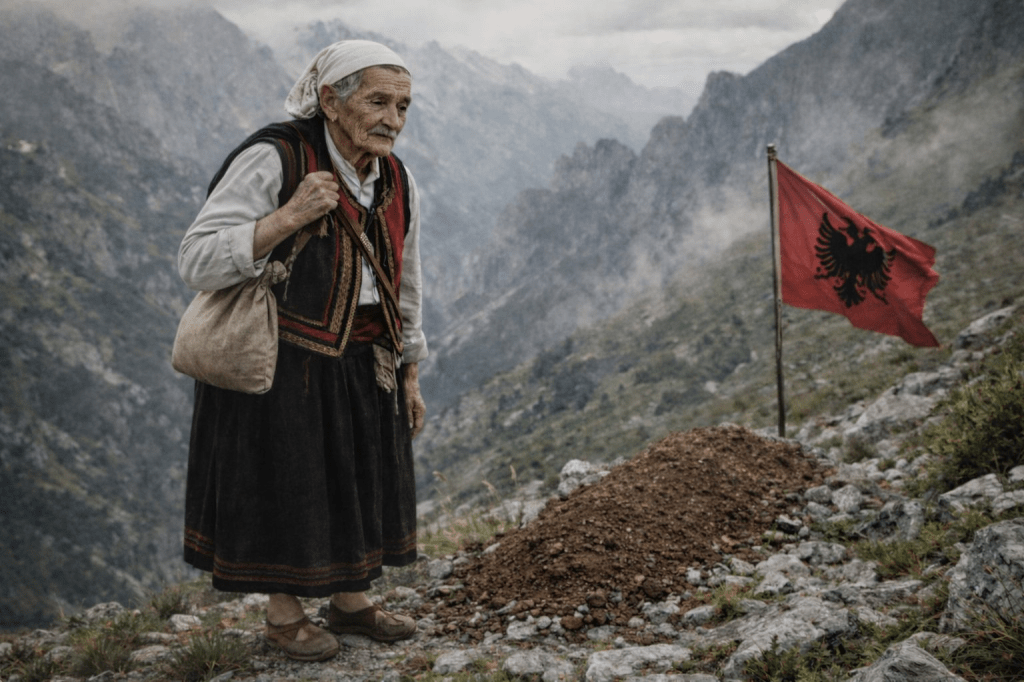
After the Marec offensive, where her grandson, the soldier and Martyr of the Nation Bahtir Jahiri, had fallen for freedom, Gjysha Nole set off on foot from Vërbica e Žegoc to Marec. Old, worn out, with crutches on her feet and a small cane on her arm, she set out for only one purpose: to find the grave of her martyred grandson.
She did not seek revenge, nor glory. She only sought a handful of earth to mourn her fallen grandson. But her path of pain was violently interrupted. Serbian armed criminals killed her, cutting off the life of a woman who had crossed every human boundary for the love of blood and freedom.
Naile Canolli Jahiri’s fall is more than a murder – it is an act of martyrdom. Her story is proof that the war was not fought only by weapons, but also by Albanian mothers, grandmothers and women who walked towards death with dignity, so as not to let the memory die.
Her name remains engraved in the national consciousness as the Martyr of the Nation, while her path to Marec remains a legendary path.

 Balkan Academia