
Abstract
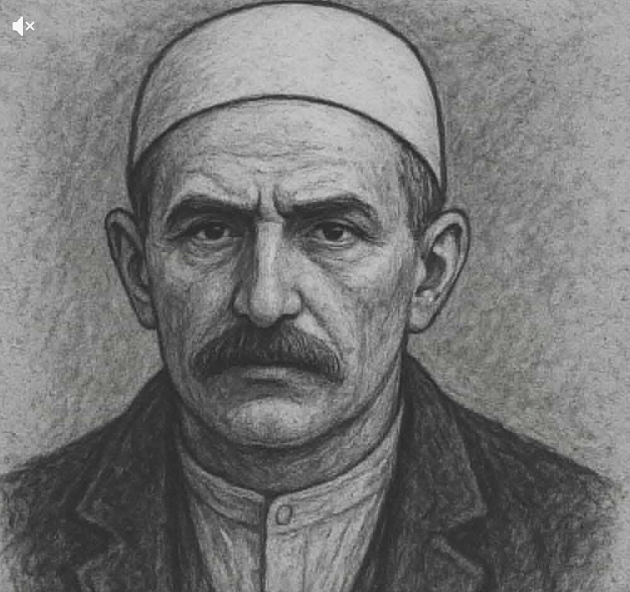
Mal Dula Bajraktari (1851-1914) was a key figure in the defense of the Gjakova Highlands during a pivotal period in Albanian history. Born in Pac Bytyç, he became the leader of the Bytyçi wing, fighting against Ottoman and Slavic invasions. A revered military commander, Mal Dula played an instrumental role in the Albanian League of Prizren, leading forces during crucial battles in the late 19th century, including the defense of Plav, Gucia, and Gjakova. His leadership and commitment to Albanian independence made him a symbol of resistance, patriotism, and the fight for Albanian unity.
Mal Dula Bajraktari (1851-1914)[1] was born in Pac Bytyç in the Gjakova Highlands into a family of high patriotic virtues. In the fourth quarter of the 19th century, he was one of the most important figures in the Bytyçi Highlands – Gjakova Highlands
Mal Dula Bajraktari was one of the central figures of the Gjakova Highlands, and especially known as the leader of the Bytyçi wing in a turbulent period for the Albanian people. Known for his wisdom and bravery, Mal Dula was part of a line of bajraktari who led the northern territories in the face of Ottoman rule and then the threat of Slavic invasions.
He represented a generation of popular leaders who not only maintained law and order in their lands, but were also the shield of Albanian tradition, honor, and the flag. During the time of the Albanian League of Prizren and later in the clashes with neighboring states, Mal Dula represented the voice of men of faith and arms, who never knelt.
One of the seven delegates in the Prizren connection: Binak Alia, Ali Ibra, Mal Dula, Ahmet Sadria, Halil Brahimi , Qerim Delia, Mic Sokoli. [2] In the years 1878-1881 he is the leader of the Bytyci Youth in the defense of the Albanian lands together with over 2000 other forces of the Gjakova highlands, in the defense of Plave and Gucisa, in the defense of Gjakova, Hoti and Gruda together with his nephew Mic Sokoli and other commanders Binak Alia, Ali Ibra, Halil Brahimi, are at the head of the highland forces for the defense of the Albanian lands. [3]
Mal Dula with the Bytyci Youth of Berisha stands out in the battle of Velika as a prominent military leader. Mal Dula, Halil Brahimi, Ahmet Sadria, Tahir Nimani are at the head of the forces of Gashi, Bytyçi and Berisha in the attack against the forces of Knjaz Nikollas of Montenegro. He fought until the end in defense of the Prizren League when it was crushed by force.
During the years 1871 – 1873 we have battles fought against Turkish forces in Gjakova and its surroundings, in Deçan and up to Peja, where the forces of the Gjakova Highlands were led by Mal Dul Bajraktari, Haxhi Brahim Bajraktari, Binak Alia, Man Avdia, etc. The Gjakova Highlands made a notable contribution to the developments of the Prizren Assembly, on June 10, 1978, and in all the battles that the forces of this League fought against the Ottoman and Serbian-Montenegrin powers, who aimed at the division of Albanian lands.
A prominent role in this period was played by Binak Alia and Mic Sokoli, Mal Dula, Halil Brahimi and Ali Hoxha, Ali Ibra and Ahmet Sadria, Shpend Zeqiri, Prel Tuli, etc. The Montenegrins had requested a meeting with the leaders of Reka, Malsija, Peja, Gjakova and Rugova.[4] From Malsia in Gjakova, 7 men went: Ali Ibra, Binak Alia, Qerim Delia, Mal Dula, Halil Brahimi, Ahmet Sadria and Mic Sokoli.
The Montenegrin delegation was led by Teodor Milani (brother of Mark Milani).
On December 4, 1879, the best part of the Montenegrin army of 4 thousand soldiers, under the command of Mark Milan, launched a furious attack in the Nokshiq sector, in the direction of Plava and Gucia. The military headquarters of the League, consisting of Ali Pasha Gucia (chairman), Jakup Ferri, Sulejman Vokshi, Haxhi Zeka, Mal Dula [Bytyçi’s adjutant] Kadri Bajri (Rugov’s adjutant), Filip Çeka, Jusuf Sokoli and others, among whom there were also several career officers, responded by launching an attack with about 2 thousand fighters.
The fiercest fighting took place in the Nokshiq valley, where numerous Montenegrin forces were engaged. The fighters clashed so fiercely with each other that both sides put aside their weapons and drew their yatagans, fighting hand to hand.
The fight continued for several hours. The League’s volunteer forces stopped the Montenegrin army’s attack and inflicted a defeat on it at Nokšić, forcing it to retreat within the borders of Montenegro. Although the data on the losses of both sides are contradictory, it can be concluded that 300 Montenegrins were killed and drowned in the river during the retreat, while 300-400 Albanians.[5]
In the battles for the defense of Albanian lands in Plavë and Guci, in the years 1872 and 1875, about 3,000 warriors from the Gjakova Highlands participated. In these fierce battles, many of the tribes of the Gjakova Highlands were killed, including the bajraktar of Gashi, Haxhi Brahimi.
The Gjakova Highlands made a notable contribution to the developments of the Prizren Assembly, on June 10, 1978, and to all the battles waged by the forces of this League against the Ottoman and Serbian-Montenegrin powers, which aimed at the division of Albanian lands. A prominent role in this period was played by Binak Alia and Mic Sokoli, Halil Brahimi and Ali Hoxha, Ali Ibra and Ahmet Sadria, Shpend Zeqiri, Mal Dula, Prel Tuli, etc.[6]
In the battle of 1871, the volunteers from Nikaj-Mërturi gathered at the old meeting place of the war called “Kodra e Bek Selim” of the Paplekaj. From there, under the leadership of Bash Bajram Perpali, Deli Bekë Vatnikaj, Bek Selim Paplekaj, they passed through Qafa e Kolçit to join the other volunteers who came from Gashi, Krasniqja, Bytyçi and Berisha. The general meeting of the warriors who were leaving for the battles took place at the place called “Vorret e Shalës”, a large meadow located at the exit of Cërnica.
While at the head of the volunteer forces of Gashi, Bytyçi and Berisha, were Halil Brahimi, Ali Hoxha, Adem Selmani, Mal Dula, Niman Uka (the standard bearer of Bytyçi), Brahim Bardhi, etc. The volunteers of these brotherhoods and tribes followed the old road that at that time passed from the Tropoja River to Sylbica, then passed through Dobërdol, Koplava and reached Plava.
At the head of the other forces of Krasniqa and Nikaj-Mërtur were: Man Avdi Mulosmani (standard-bearer of Krasniqa 1863-1885), Binak Alia, Sokol Rama, Ali Ibra, Haxhi Brahim Bajraktari, Mal Dul Bajraktari, Shaqir Curri, Qerim Delia, Hoxhë Dollapi, Bash Bajram Përpali, Deli Bek Vatnikaj, Tahir Progni, Bek Selimi, etc. The forces of Krasniqa and Nikaj-Mërtur followed the other route that passed from the Dragobi Gorge to Çerem, to Qafë Bori, to Vuthaj and arrived at the common meeting point in Guci.
The route from Vorret e Shala to the crown of Ali Pasha Gucia in Plav, at that time, took 5-6 hours. Volunteers starting from Vorret e Shala and from other places in Mirdita, Puka, Has, the Drini Valley, etc., gathered at a place called “Kroni i Ali Pasha Gucia” which is located about 5 km from Plav.
On 21.04.1912, the Assembly of the IV (four) bajraqs was held in Krumë, where 20 representatives from the bajraqs of Has, Bytyci and Reke participated. From Bytyci, Mal Dula Bajraktari, Miftar Matoshi, Ajdin Zeneli, Elez Hoxha participated.
These requested in writing from the upper gate that the Albanians be given back their weapons, military service be done locally, teaching in schools be done in Albanian, the Albanian flag be raised everywhere, employees must know the Albanian language, the release of political prisoners and compensation for the damages caused by the Turkish army during these years.
On 21-28 May 1912, the Assembly of Junik was held, where it was decided that in addition to the decisions taken in Krumë, two other requests of vital importance were also made : The determination of the borders of the Albanian state and the guarantee from the major states. In Junik, it was decided to start an armed uprising that would lead to the final departure of the Turks from Albanian lands.
References
Bytyçi, N. (2020, May 16).
Telegraf, G. (2021, November 25). Nikaj-Mërturi and the Gjakova Highlands in the Battle of Maraça in 1871. Gazeta Telegraf. Retrieved from Gazeta Telegraf.
(2021, November 25). History of the League of Prizren. Prizren Post. Retrieved from Prizren Post.
(2021, November 25). Gashi i Gurit in the Pantheon of the Nation. Bota Sot (in English). Retrieved from Bota Sot.
Haklaj, V. (2021, November 27). The Mountains of Gjakovça in the Albanian National Movement. VOAL – Online Voice of Albanians. Retrieved from voal-online.ch.
Limit (2018, July 19). Plava, Gucia, and the Gjakova Highlands during the 19th Century. Limit.al (in American English). Retrieved from Limit.al.


 Balkan Academia