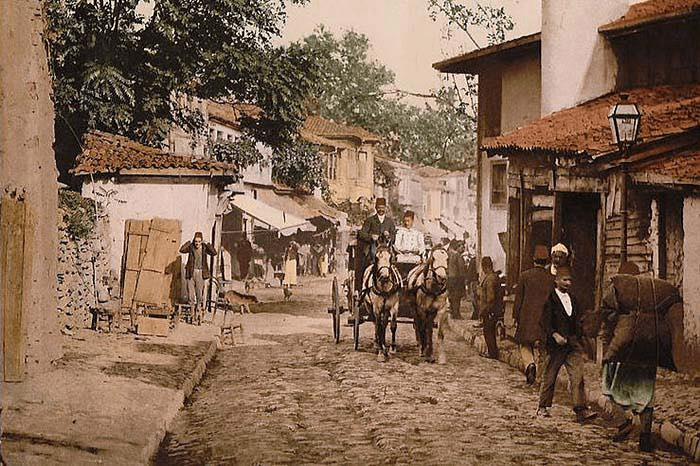

by Prof Nehat Hyseni. Translation Petrit Latifi
Abstract
This study examines the history and social dynamics of the Muslim Albanian community in Vranja and its surrounding region during Ottoman rule. Vranja, incorporated into the Ottoman administrative system as a kaza, occupied a strategic position connecting Morava, Presheva, and Eastern Kosovo, becoming an important military, trade, and administrative center. Muslim Albanians constituted a significant portion of the urban population, maintaining their language, culture, and economic influence. The Serbian conquest of 1877–1878 led to the systematic expulsion of this community, representing one of the earliest cases of ethnic cleansing in the modern Balkans. The research highlights demographic changes, cultural continuity, and the erasure of historical memory.
Vranje in the Ottoman administrative system
After the Ottoman conquest in the mid-15th century, Vranje (Turkish: İvranye) was included in the administrative system of the Ottoman Empire as the center of a kaza, initially within the Sanjak of Vranje, then as part of the Sanjak of Prizren and, from time to time, also connected to the Sanjak of Nish. Its strategic position, at the junction between Morava, Preševo and Eastern Kosovo, made Vranje a key military, commercial and administrative point.
Territorial extent of the Kaza of Vranje
The Kaza of Vranje included a vast territory of villages, nahijas and small rural centers, extending from Masurica and Polanica to the border areas with the Kazan of Preševo and that of Kumanovo. In the administrative framework of the Ottoman Empire, the Vranje Kazaja constituted an important unit of the Sandžak of Skopje, then of Niš and Kosovo, including the city of Vranje and a number of surrounding villages: Masurice, Polanicë, Grdelica, Pçinje, etc.
Urban development and social structure
As an urban and commercial center, Vranje developed in a typical Ottoman model, with a mixed ethnic and religious structure, where the Muslim element played a dominant role in civic life. Within this structure, Muslim Albanians constituted an important stratum of the population of the city and its surroundings, present since the first centuries of Ottoman rule.
Muslim Albanians as a demographic and social factor
The presence of Muslim Albanians in Vranje and its surroundings is a well-documented historical fact, especially for the Ottoman period until the end of the 19th century. They constituted an essential component of the urban, economic and social structure of the city, but almost completely disappeared as a result of expulsions and Serbian state policies after 1878.
Ottoman sources (defter books, tax registers and vakfnames) prove that a significant part of the Muslim population of Vranje was Albanian, identifiable through:
- anthroponymy (Albanian names and surnames),
- toponymy of neighborhoods and properties,
- their role in crafts, trade and administration.
Religious, cultural and linguistic life
Muslim Albanians lived mainly in the urban neighborhoods of the city of Vranje, organized around mosques, mejtepes and vakfne institutions.
They preserved the Albanian language in family and social communication, while Ottoman was used in administration and religious practice.
Interreligious and intercommunal coexistence
Interreligious and intercommunal relations in Kazanë e Vranje were generally good, with Muslim Albanians (who constituted the majority), Christian Albanians (Orthodox and, earlier, also Catholic), Orthodox Slavs and other smaller communities coexisting in harmony.
A special characteristic of this reality should be emphasized: religious affiliation did not necessarily coincide with ethnic affiliation. A part of Christian Albanians, especially Orthodox ones, were exposed to a gradual process of Slavization, while Muslim Albanians, connected to Ottoman structures and the Balkan Albanian network, preserved their ethnic identity for longer.
Vranje before 1878 according to Serbian sources
Vranje before 1878 was a city with a Muslim and Albanian majority. Serbian sources of the 19th century, including authors such as Jovan Hadži-Vasiljević, acknowledge that before the Serbian conquest, Vranje had an urban Muslim majority, a large number of mosques and Islamic buildings, and a social structure where Muslims – to a considerable extent Albanians – dominated civic life.
Serbian conquest and demographic upheaval (1877–1878)
This demographic reality was radically overturned after 1877–1878, with the Serbian conquest and the forcible expulsion of Muslim Albanians.
The Serbo-Ottoman War and the decisions of the Congress of Berlin marked the end of the organized Muslim Albanian presence in Vranje.
After the entry of the Serbian army (1877/1878), the massive expulsion of the Muslim population began. Muslim Albanians were treated as “foreign” and “Ottoman” elements, while violent measures were applied: confiscation of property, destruction of religious objects, systematic pressure, bloody massacres and terrible violence to force them to migrate.
The Vranje Muhaxhirs and Albanian continuity
Thus, the Muslim Albanians of Vranje were forced to flee with unprecedented violence towards Kosovo, Macedonia and Turkey, becoming part of the Muhaxhirs of the Sandzak of Nish. Albanian continuity, however, was not completely extinguished, as the families expelled from Vranje settled mainly in Preševo, Bujanovac, Gjilan, Ferizaj, Skopje and other areas that were still under the rule of the Ottoman Empire at that time.
Albanians in these areas preserved the memory of their origin from Vranje and its Kazaja, transmitting this identity from generation to generation. Today, many Albanian families in the Presheva Valley and Kosovo have direct descent from this kaza.
Serbian historiography and the erasure of historical memory
The official Serbian historiography after 1878 aimed to erase the historical memory of the Albanians expelled from the Vranje Kazaja. It minimized or denied the Muslim Albanian presence, presented the Albanians as “Turks” and built the narrative of an “authentically Serbian” Vranje.
This constitutes a state strategy of erasing historical traces, which aims to hide and “justify” with lies and falsifications the demographic changes achieved through unlimited violence and the massive expulsion of the Muslim population.
Conclusion
The Muslim Albanians in Vranje were an autochthonous community, an integral part of the city for centuries and bearers of urban, economic and cultural life. Their expulsion in 1877–1878 constitutes one of the earliest cases of ethnic cleansing in the modern Balkans and a turning point in the demographic and identity transformation of southern Serbia. Without the inclusion of this community, the history of Vranje – but also that of the Preševo Valley – remains truncated and distorted.

 Balkan Academia