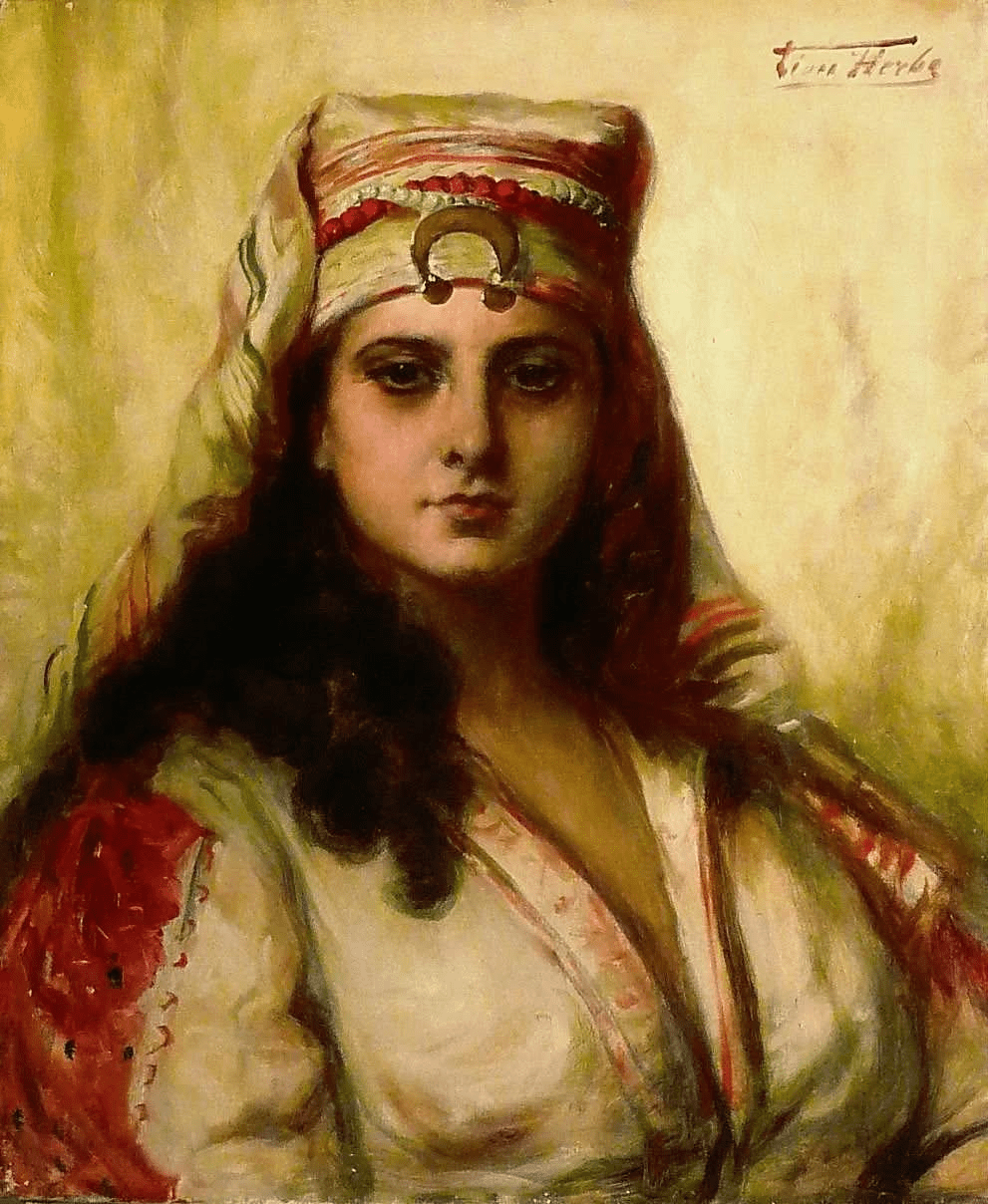

by Albert Vataj. Translation Petrit Latifi
Abstract
Shaxhar al-Durr, born a slave in Central Asia around 1220, rose to become the first female Sultan of Egypt. After being freed and married by Sultan al-Salih Ayyubi, she became his trusted advisor and co-ruler. Following his death in 1249, during the Crusader invasion led by King Louis IX of France, Shaxhar secretly assumed command, leading the Egyptian forces to a decisive victory at the Battle of Mansurah. Though she ruled as Sultan for just 80 days, her actions laid the foundation for the Mamluk Sultanate, which lasted for 267 years. Her legacy is marked by her military prowess, political acumen, and the dynasty she helped establish.
She was born a slave, was sold to Egypt, then defeated a Crusader king in battle, became Sultan and founded a dynasty that ruled for 267 years.
December 1249. Mansurah, Egypt. The most powerful king in Europe, Louis IX of France, has invaded Egypt with a large Crusader army. They have taken the port city of Damietta and are marching towards Cairo, expecting an easy victory.
The Egyptian sultan, al-Salih Ayyubi, is dying of tuberculosis. The Crusaders know this. They expect him to fall, for the Egyptian leadership to crumble into chaos. What they do not know is that, the moment the Sultan dies, the woman who will replace him is already plotting their destruction.
Her name is Shaxhar al-Durr, “The Tree of Pearls.”
And she is about to do something that almost no woman in medieval history has ever done, command an army against a European king, and win. But to understand how a woman came to command an army in 13th-century Egypt, we need to know where she came from. Shaxhar al-Durr was born around 1220 in the Turkic regions of Central Asia.
She was enslaved. Sold in Egyptian markets as property. But she was extremely intelligent, politically brilliant, and extremely beautiful. She caught the eye of al-Salih Ayyubid, a prince who would become Sultan of Egypt. He freed her. He married her.
And, unlike other royal wives locked away in harems, Shaxhari became directly involved in state affairs. She advised her husband on military strategy. She became his most trusted advisor. When he became Sultan in 1240, she effectively became his co-ruler.
Then, in 1249, disaster struck. King Louis IX launched the Seventh Crusade, not against Jerusalem, but against Egypt. In June, the crusader army captured Damietta. Sultan al-Salih Ayyubi, now dying, could not lead the defense. In November 1249, as the crusaders marched on Cairo, the Sultan died.
This should have been the moment of Egypt’s collapse. Leaderless medieval armies disintegrated. Succession crises paralyzed kingdoms for months. Instead, Shahshar al-Durr made a decision that changed history. She hid her husband’s death.
She announced that he was ill and recovering. She signed orders in his name. She kept up the fiction that he was still alive and in command of the army. Meanwhile, she assumed real command. She coordinated with the Mamluk commanders. She organized the defense of Mansurah. She sent urgent messages for her husband’s son, Turanshah, to return from Syria to take the throne.
In February 1250, the crusader army arrived at Mansurah.
King Louis IX believed he was facing a demoralized force led by a dead sultan. He expected victory. Instead, he fell into a trap. On February 8, 1250, the Battle of Mansurah began. The crusaders broke into the city, then Egyptian forces counterattacked with devastating efficiency.
The battle turned into a massacre. The elite French cavalry was destroyed. Thousands of crusaders were killed.
And King Louis IX of France, the man who thought he would conquer Egypt, was captured. One of Europe’s most powerful monarchs became a prisoner of an army secretly commanded by a woman born a slave.
After the victory, Shahshar al-Durr announced that her husband was dead. Turanshah arrived and declared himself Sultan. The crisis was over. Egypt had defeated the Seventh Crusade.
But Turanshah proved incompetent and paranoid. Within months, the Mamluk commanders who had won the battle lost their patience.
In May 1250, they killed him. Then they did something unprecedented: they declared Shahshar al-Durr Sultan of Egypt. Not regent. Not queen. Sultana.
Coins were minted in her name. Her name was mentioned in Friday prayers, the ultimate sign of sovereignty in the Islamic world. For 80 days, Shaxhar al-Durr was the first and only female Sultan in the history of Egypt. But the Abbasid Caliph in Baghdad was furious. He sent a message: “If Egypt has no men capable of ruling, we will send you one.”
Under religious and political pressure, a deal was reached, Shaxhar would marry the Mamluk commander Aybak and “relinquish” power in his favor.
Formally, Aybak ruled. In practice, Shaxhar al-Durr continued to wield great power. Together, they founded the Mamluk Sultanate, a dynasty that would rule Egypt and Syria for more than 250 years.
But palace politics are ruthless.
In 1257, Aybak planned to take another wife in a political alliance. Shaxhar al-Durr, who had commanded armies and defeated kings, was being sidelined. She ordered his assassination. Then, in April 1257, Aybak’s first wife took revenge. Shaxhar al-Durr was beaten to death with wooden shoes by slave women. Her body was thrown over the palace walls.
She was about 50 years old. She had been Sultan for 80 days. She had commanded an army that had defeated a Crusader king. She had founded a dynasty.
And she died violently in the same palace where she had once ruled.
But here’s what makes her story extraordinary: The Mamluk Sultanate that she helped create became the most powerful force in the Middle East. In 1260, the Mamluks defeated the Mongol Empire at Ain Jalut, halting the Mongol advance into Africa. They drove the last Crusaders from the Holy Land in 1291.
The Mamluk Sultanate ruled until 1517, 267 years after Shahjar al-Durr helped establish it. Everything that came after, the defeat of the Mongols, the end of the Crusades, centuries of Mamluk rule, was built on the foundations she laid, when she hid her husband’s death and commanded an army against a king.
She was born a slave. She became a Sultan. She defeated kings. She founded a dynasty. Shaxhar al-Durr ruled for 80 days. The dynasty she created ruled for 267 years. She commanded a battle. That battle changed the course of history. “The Tree of Pearls,” that’s what her name meant. And she was worth more than all the pearls in the world.
Sources
The Mamluks in Egyptian Politics and Society by Michael Winter
The Crusades: A History by Jonathan Riley-Smith
Women in the Islamic World: A History of Women in the Middle East and North Africa by Suad Joseph
“Shajarat al-Durr and the Mamluks” (Journal of Middle Eastern Studies)
“The Female Sultan: Shajarat al-Durr and the Struggle for Power” (Islamic History Journal)
The History of the Ayubids
Chronicles of the Crusades by Jean de Joinville
Encyclopedia of the Crusades (Online)
The Mamluks: Masters of the Mediterranean (Documentary)


 Balkan Academia