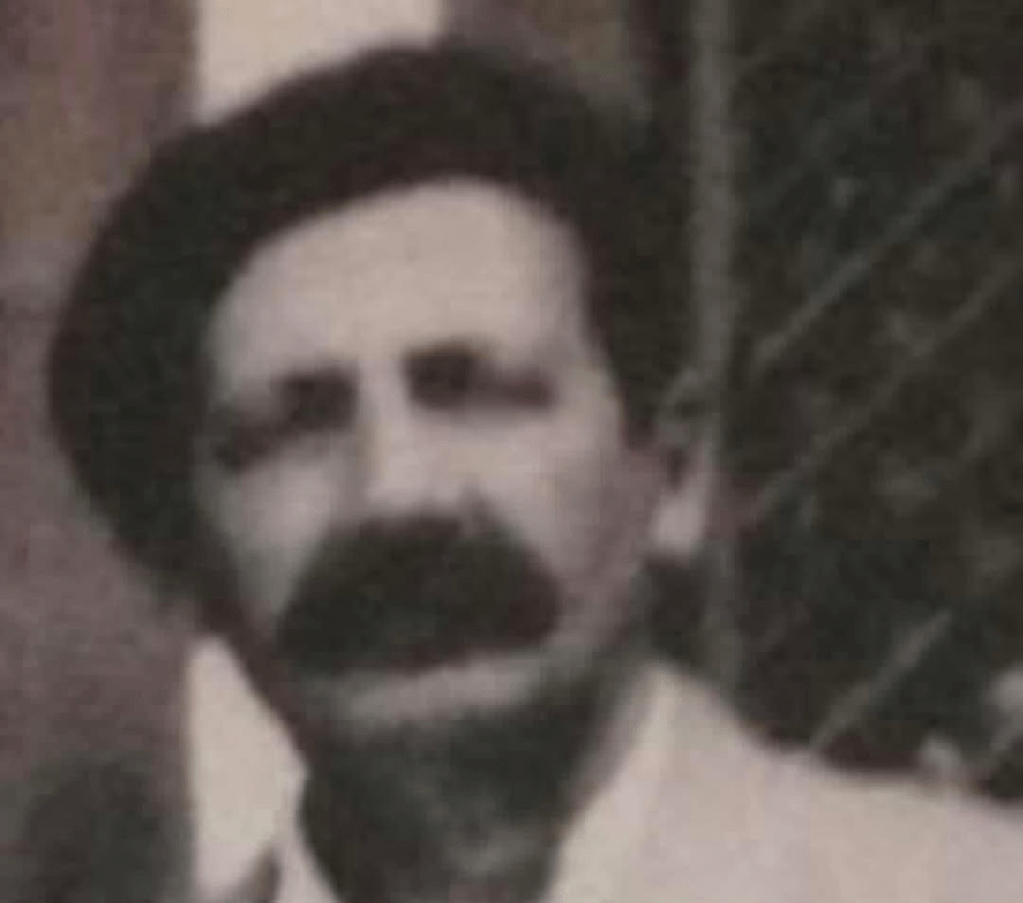

by Jashar Selmanaj. Translation Petrit Latifi
Abstract
“Unë më Sheh Abedinin” is a personal story set in a rural Albanian village during the summer of the 1940s and 1950s. The narrator, Jashar, recounts his life as he and his older brother, Mehmet, gather feed for their animals in preparation for winter. The entire village is working the fields, and the air is filled with the sounds of their labor. The story takes a turn when Jashar encounters Sheh Abedini, the village imam, and other key figures, revealing complex cultural, political, and familial dynamics. Through these interactions, the narrative explores themes of Albanian identity, the political landscape, and the challenges the community faces, particularly in its relationship with Serbian influence. The story also touches on Jashar’s internal struggles as he navigates the socio-political tensions of the time, revealing his deep connection to the Albanian heritage and his commitment to preserving it.
Unë më Sheh Abedinin (The Imam of Our Village)
It was summer, and Ramadan was about to begin that day. My older brother Mehmet and I had decided to gather hay (dried grass) to feed the animals for the winter. The whole field was mowed, and the villagers were working in the meadows. The field was flourishing and shining because the whole village was in the fields. Naturally, the sounds of the villagers working could be heard, each one on their own land.
We collected the hay and placed it in the mound. That’s what it was called back then. Nowadays, you don’t see mounds like that in Kosovo. In Albania, I’ve seen such mounds with hay in recent years.
That day was sunny with high temperatures. From the cart (Rimorkija), I handed the hay up to my brother, who was arranging it in the mound. I was drenched in sweat, covered in the dust from the hay. Suddenly, we heard a voice at the yard gate calling, “Mehmet, come into the barn!” (A barn is where the food for the animals was kept, like hay and other feed). When I looked up, I saw Brahim Mete Aliçkaj.
“Good work,” the old man said to us. “Are you tired?” I replied, “Enough, very much.” He smiled and added, “It’s summer now, and winter requires food for the animals.” “That’s true,” I said. “Is there anything new?” I asked, wanting to know what he needed. He said, “We are collecting money for the mosque to repair two rooms for the school.” I looked at him and bluntly interrupted without asking my brother, “Please, leave. I’ve given money for the mosque twice, and you’ve drunk rakia (a type of alcohol) with it.
May it burn your stomach!” “Not another penny, forget it!” My brother scolded me from above. “Why did you speak like that to Brahim? It’s shameful!” I said, “They’ve taken money a hundred times, and they still haven’t fixed anything. They drink rakia with it.”
At that time, we would set aside some hay for Sheh Abedini, our imam. He and a few others would travel with him. I spoke loudly, expressing my disagreement with the situation. They had overheard me, but my brother scolded me again from above, “Hush, they will hear you.” I said, “It doesn’t matter. I’m not lying; I’m speaking the truth.” After a few hours, Osman Jolla, the drummer (tupangjiu) who played for Ramadan, arrived. He was accompanied by Sheh Abedini and Brahim Mete. I greeted them, “Welcome! Every year, we start the first night of Ramadan with you.”
My brother asked who they were. I explained, “Osman Jolla, the drummer.” “What did you say to him? I hope you didn’t offend him?” he asked. “No,” I said, “I told him to come, we’re ready to welcome him.” We spent the whole day working with the hay. In the evening, before 7:00 PM, Sheh Abedini, Brahim Mete, and Osman Jolla arrived.
The imam, before calling out the evening prayer for Iftar, said to me, “Jashar, don’t lean on the haystack; it might collapse.” I asked, “Why do you speak like that? Don’t worry, it’s fine. The work will be done, then we’ll fix it again.” I said a few other words. We stopped working, and he called for Iftar. After Iftar, I asked Sheh Abedini, “Do you pray for the Christian faith?” He replied, “No, you’re tired, you need rest.”
It was the first time that we didn’t serve rakia after Iftar in our family’s history. I remember this well. At 9:00 PM, we set the table for dinner. After 11:00 PM, we fell asleep in the Divanhan (a room or place for guests). Sheh Abedini slept on the large side by the windows, while I slept by the door. I often fell asleep to the songs of the rhapsodist Dervish Shaqa or the speeches of Enver Hoxha.
Even though I was young and didn’t understand politics fully, the hatred for Serbs had surpassed all boundaries. I was deeply disturbed when my father, Xhafer Ali Muslijaj from Shaptej, told me about the Serbian atrocities. From that time, I had been poisoned in my soul. I would listen to Dervish Shaqa’s songs on the radio with my uncle Xhemajl, who would tune in to Radio Kukës from 12:00 to 1:00 PM, and I would absorb the spirit of patriotism.
When we went to bed, I asked Sheh Abedini, “Do you mind that I listen to Dervish Shaqa?” He said, “No, don’t worry, Jashar. It doesn’t disturb me.”
A while later, I heard Sheh Abedini calling my name, “Jashar.” I woke up, confused. I was very tired, and the first sleep is always heavy. I sat up, and he called again, “Jashar, open the door and go outside to relieve yourself. It’s dark, and no one will see you.” I said, “I’ll go outside, but I’m embarrassed to go in front of you in just my shorts.” After dressing, I turned on the light and saw that Sheh Abedini had already dressed himself and was sitting cross-legged. I didn’t believe my eyes. It was midnight.
I asked, “Are you ill, should we take you to a hospital in Gjakova or Prishtina?” He smiled and said, “No, I’m not ill, Jashar. But would you like to accompany me tonight?” Without hesitation, I said yes. He asked, “Do you have rakia at home?” “Yes,” I said, “We have as much as you want.” “Do you want me to drink homemade rakia or bought rakia?” he asked. “Bought rakia,” I said, “because it’s stronger.” I brought the small tray and set the glasses for rakia and a liter of purchased rakia. He then asked me not to wake Mehmet or Xhemajl because Baba Xhemajl, Baca Adem, Baca Sadik, Zenuni, and Mehmeti were all in the house. I was serving them standing.
I went to the kitchen to get some cheese and pickles. Half asleep, I accidentally broke some dishes and trays. My mother heard and came, asking, “What are you doing in the middle of the night, you crazy boy?” I told her, “Sheh Abedini asked for rakia and some cheese and pickles.” She cursed me for breaking the dishes.
I returned to the room, where we sat. I filled the glasses with rakia, and Sheh Abedini said, “Jashar, always raise the glass and drink it with me, but I don’t want any more rakia in my mouth. Now, you raise the glass and offer it to me, and then return it to the tray.”
After a while, he asked, “Why do you listen to Dervish and Enver Hoxha? You don’t know either of them.” I said, “That’s true. It’s better to support Enver than Tito, because Enver is Albanian, and Tito is a Serb.” “As for Dervish, I said, I listen to him because my uncle Xhemajl does, and I’ve been inspired by his songs.”
He sighed deeply and said, “Let me tell you something, but listen carefully. Before I left for Albania, I stayed at Sejfijaj’s in Gramaçel for a couple of days. I got drunk and became completely wasted. Dervishi was singing with Demushi. Later, Dervishi came to me and said he wanted to join us (my group), and asked for my help to cross the border. I told him, ‘You’ll pass without a problem, but you’ll have trouble in Albania in the beginning.’
He went to Albania, and after some time, we began exchanging letters. Soon after, UDB (the secret police) started calling me to the police station every day in Gjakova, and they tortured more Albanians than Serbs. I was exhausted, and in my last letter to him, I wrote that winter in Kosovo is severe, and we were dying here, not one person. In his reply, he wrote that even there in Albania, it was a terrible winter. I understood that he was suffering just like me in Kosovo. After some weeks, the UDB stopped calling me. I was finally free from their control.”
He then took out a letter, which was wrapped carefully in plastic. He said, “This is the last letter Dervishi sent me.” He continued, “Jashar, don’t let anyone know what I’ve told you tonight, especially my name. If you ever face trouble, you should tell Xhemajl and Mehmet.”


 Balkan Academia