
by Adriano Xhafaj.
Summary
The proclamation argues that the Greek uprising of 1821 was largely shaped by Arvanites, both Christian and Muslim, who fought decisively against Ottoman rule. Island heroes from Spetses, Poros, and Kranidi, as well as fighters from Souli, Himara, and many regions of mainland Greece, are described as Arvanite in origin. It emphasizes cooperation between Greeks and Albanians, portraying conflicts not as ethnic wars but as struggles between Christians and Ottomans. Muslim Arvanites also joined the revolution, reinforcing the claim that liberation was achieved through shared sacrifice and fraternal bonds.
Among the many heroes that the Greek uprising of 1821 produced, all the heroes of the islands, except for the Psarians, were the Arvanites of Spece, Poros and Kranidou.
Most of the heroes of Stere were the Arvanites of Sulis, Himara, Thiva, Lavadhya, Atlantis, Corinth and many lands of the Morea, which to this day speak Arvanite.
In addition to the Christian Arvanites, there were also thirty-five hundred Mohammedan Arvanites who fought alongside the Greeks against the Turks and the leaders of these Arvanites were: Tafil Buzi (12), Gjon Leka, Hodua and many other Arvanite leaders (Mohammedans – me). We would not be telling any lies, brothers, if we say that the Arvanites liberated Greece.
It is true that in the Greek revolution of 1821 the Greeks and the Albanians (14) fought each other, on the one hand the Albanians killed Marko Boçar in Karpenisi, on the other Karaiskaq killed Mustafa Bey Qafëzeni (15) in Arahova, but it was not the Greeks who fought the Albanians then and the Albanians with the Greeks, but the Greeks with the Turks and the Turks with the Greeks.
The Suljots, Himariots and so many other Albanians fought the Albanians then as Turks and not as Albanians, and Shkodran Pasha, Musta Bey, Çelo Picari. Omer Vrioni, Ago Vasjari, Ahmet Dino and so many others fought the Greeks as Turks and not as Albanians. Two great events of that era convince us that the Albanians and the Greeks judged each other as if they were brothers and not strangers.
When Ali Pasha brought the disarmed men, women and children of Gardhiqiot inside a large prison to torture them, he called the Greek Christian captains he had to kill them.
Proclamation, May 1899
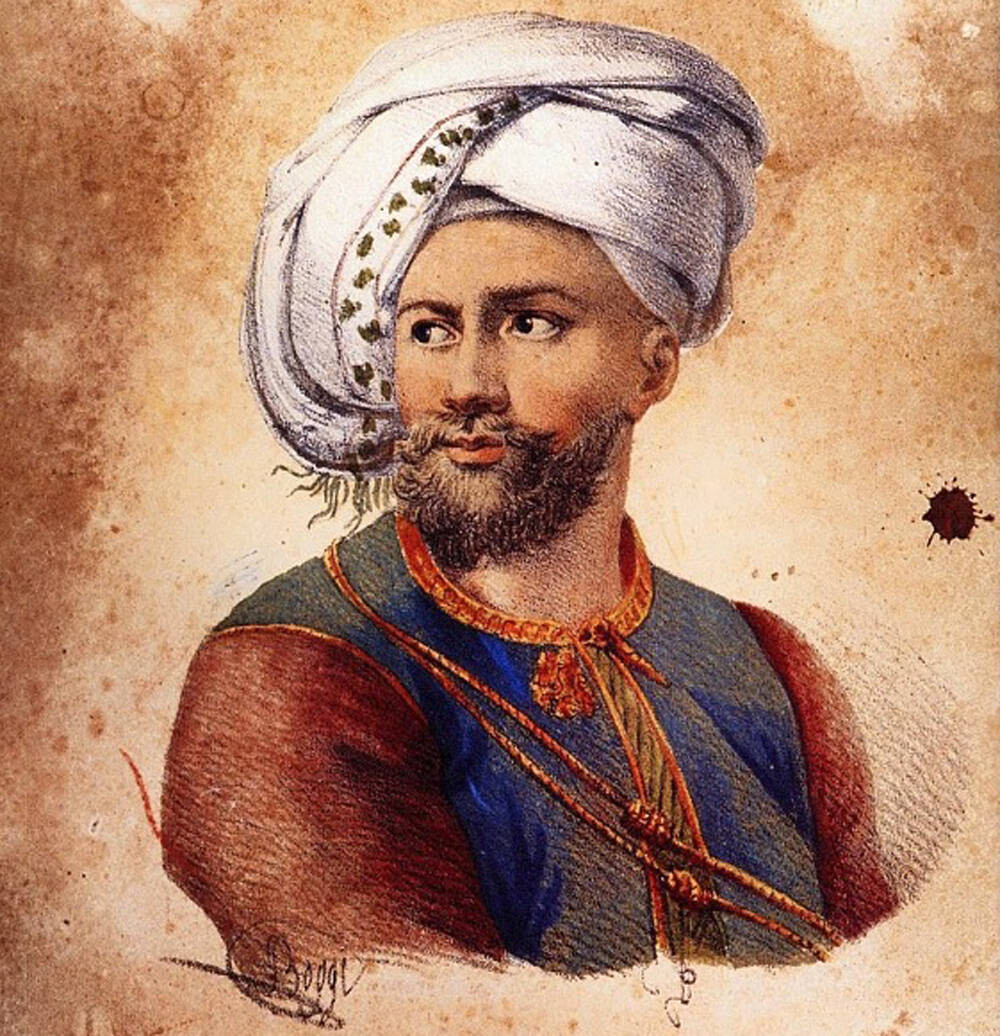
In the photo: the son of the Albanian king of Egypt, Ibrahim Muhamet Aliu.


 Balkan Academia