
Written by: Besim Muhadri. Translation Petrit Latifi
Abstract
The text examines the spiritual and national legacy of Shejh Ibrahim Muçaj, a leading successor of Dervish Salihu. It highlights his role in preserving and strengthening the tekke tradition in Has, his commitment to religious service, and his courageous resistance against political oppression during Yugoslav rule. Despite imprisonment and persecution, Shejh Ibrahim remained steadfast in his moral principles and became a respected symbol of spiritual continuity and national dignity.
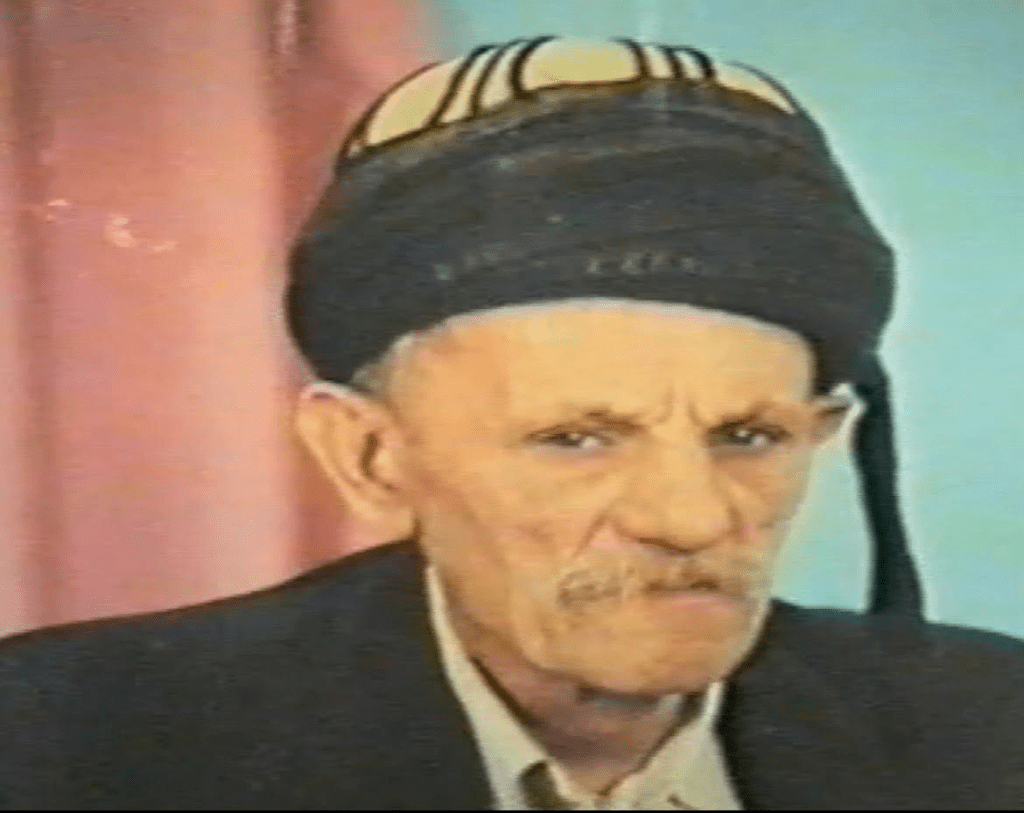
Shejh Ibrahim Muçaj – A Devoted Heir of the Path of Dervish Salihu
The work and influence of Dervish Salihu (1815–1895) did not end with his death. On the contrary, they continued through his spiritual successors, who carried forward the mission of the tekke he founded in the mid-19th century under various historical circumstances.
In the spiritual history of the Tekke of Dervish Salihu in Libizhdë of Has, Shejh Ibrahim holds a special place as one of the most devoted successors, embodying spiritual wisdom and national consciousness, strengthening the bond between generations.
After the death of his father, Shejh Shaban (1903–1946), who had inherited the mission from Shejh Fejzullah (1880–1943), Shejh Ibrahim assumed spiritual leadership. He served until 1989, dedicating his life to religious, national, and humanitarian activities. During his leadership, he expanded the community of believers and carried out important reorganizations and restorations of the tekke and its shrine.
Shejh Ibrahim was also known for his national commitment. During the weapon-confiscation campaigns of 1955–1956, he confronted the notorious Serbian UDB chief of the Prizren region, Ilia Deniq. In a moment of moral revolt, he struck the official as a protest against injustice and humiliation. For this act, he was imprisoned and later repeatedly isolated by the authorities whenever political tensions arose.
Despite persecution, his legacy remained strong. He is remembered as a faithful spiritual leader and a quiet but firm symbol of Albanian resistance and dignity.
(Material excerpted from the book “Dervish Salihu in Popular and Historical-Literary Memory”, forthcoming.)


 Balkan Academia