
Qazim Namani Dr. Archaeology & Cultural Heritage. Translation and edit Petrit Latifi
Abstract
This paper analyzes the organization and budget allocation of Kosovo’s cultural heritage institutions between 2002 and 2008, focusing on structural inefficiencies and mismanagement following the post-war reorganization. It examines the uncontrolled proliferation of institutes and cultural heritage centers, many established without legal procedures or parliamentary approval, resulting in overlapping competencies and weak coordination. Through budget data and comparative analysis, the study demonstrates that cultural heritage—particularly archaeology and monument protection—received disproportionately low funding compared to performing arts and building renovations. Key archaeological sites of national importance were neglected, while resources were diverted to non-priority projects. The paper argues that the absence of strategic planning, institutional reform, and scholarly input weakened Kosovo’s ability to document heritage damage, counter Serbian narratives, and protect its cultural identity during international negotiations.
Budget Statement for the Department of Culture during the years 2002-2008 and budget allocation for cultural institutions
The reorganization of cultural heritage institutions after the 1999 war caused many disruptions in the institutional organizational aspect, but also in the distribution of the budget to fully cover the geographical map of Kosovo.
The former Provincial Institution for the Protection of Monuments of Kosovo after the war was decided to be called the Kosovo Institute for the Protection of Cultural Monuments. After this decision, the Institutions for the Protection of Regional Monuments in Prishtina, Prizren, and Gjakova declared themselves as Institutes, a similar step was followed by the Municipal Assembly of Peja in 2002, by establishing the Institute for the Protection of Monuments in Peja, and in 2004, Cultural Heritage Centers were established in Mitrovica and Gjilan. All changes in these names were made without going through the regular procedure in the Parliament of Kosovo.
Initially, other cities such as Ferizaj, Vushtrri and many other municipalities remained not included in this network after the war. Later, the Cultural Heritage Center was also founded in the city of Ferizaj, and some of the institutes established at the beginning were turned into centers.
Such an unplanned action cannot stop the initiative, so that these municipalities also take such steps, without calculating the consequences in the future. Such an organizational chart does not promise a sustainable organization.
No analysis has been conducted to assess the reform of the institutions dealing with this field, inherited from the 1974 constitution, such as: The Institute of Ethnology (folk culture), the Institute of Archaeology and other institutes should have been established from the Albanological Institute, while the history sector should have been attached to the Institute of History.
As can be seen, currently in Kosovo there were two institutes and seven centers dealing with the protection of architectural heritage, uncoordinated in one center and with confusion of competencies.
If we make a logical analysis, these institutes and centers that deal with cultural heritage are very numerous, if we take into account the territorial area of Kosovo or the number of inhabitants. Kosovo today has 10,887 km²., with about 2 million inhabitants. As an example, we are taking two large cities from two states that ruled us for over 500 years, Ankara in Turkey and Belgrade in Serbia.
Ankara alone covers 25,615km² with a population of 4,007,860 inhabitants,while Belgrade covers an area of 3220 km2.km²with over 1500,000 inhabitants.Both of these cities have traces of ancient civilizations and monuments with capital values from cultural heritage, and if the two criteria mentioned above are taken as a basis, and if they had the institutional organization model of Kosovo, the question arises? How many institutes would they have for the protection of architectural heritage!
Table 3. Budget overview 2002 to 2008
| Department of Culture Budget | S h u m a |
| during the years 2002 – 2008 | |
| Budget in 2002 | 2,315,477.00 |
| Budget in 2003 | 2,725,000,00 |
| Budget in 2004 | 4,298,644,00 |
| Budget in 2005 | 3,182,909,00 |
| Budget in 2006 | 3,804,839,00 |
| Budget in 2007 | 3,660,176,00 |
| Budget in 2008 | 5,442,690,00 |
| T o t a l i | 25,429,735,00 |
The data was obtained from the Finance Office at MCYS..
Examples of budget allocation:

As can be seen from the above-worked budget allocation scheme for the Division of Performing, Musical and Visual Arts for 2003, we see that all of these institutions had more budget than the Division of Cultural Heritage, which had allocated 165,000 euros, or parity with the Gjakova City Theater, which had allocated 160,000 euros.
It is seen that the largest amount of the budget for institutions had gone to the renovation of the National Theater of Kosovo, where they had allocated 405,000 euros. Several times later, budgets were allocated several times for the renovation of the National Theater, and I am not sorry to say that since the establishment of the ministry in 2002, when I was employed, I have found institutional buildings under renovation and until now, with my retirement, investments of millions of euros in their renovation continue, concrete examples are the National Theater of Kosovo, the Museum of Kosovo, etc.
From all these budget expenditures for renovations of institutions and private buildings that do not meet any criteria to be registered as cultural monuments, the question arises as to why no proper report or publication has been made on the state of cultural heritage in Kosovo, to argue the damage and falsifications committed by the Serbian government until 1999.
The lack of such a study made the Albanian side very weak during negotiations with the Serbian and international sides about our cultural heritage, when it is known that the Serbs during that period had managed to publish several reports, which they offered to the internationals at the negotiating table.
In this example, it is noticeable how much budget goes to projects, and to some institutions that should be managed by the Municipal Assemblies that have established the municipalities, e.g. the Gjakova City Theater, Municipal Libraries, etc. Over the years, it has happened that the budget of the Kosovo Institute for the Protection of Cultural Monuments is equal to a municipal library such as Leposaviq.
From the data mentioned above, and from the total budget for the Department of Culture during the period 2002 to 2008, with the amount of 25,429,735 Euros, we can understand the wrong program policies where so far no investment has been made in Ulpiana, Artana, Runik, Vendenis (Gllamnik) and other localities of interest for our national identity.
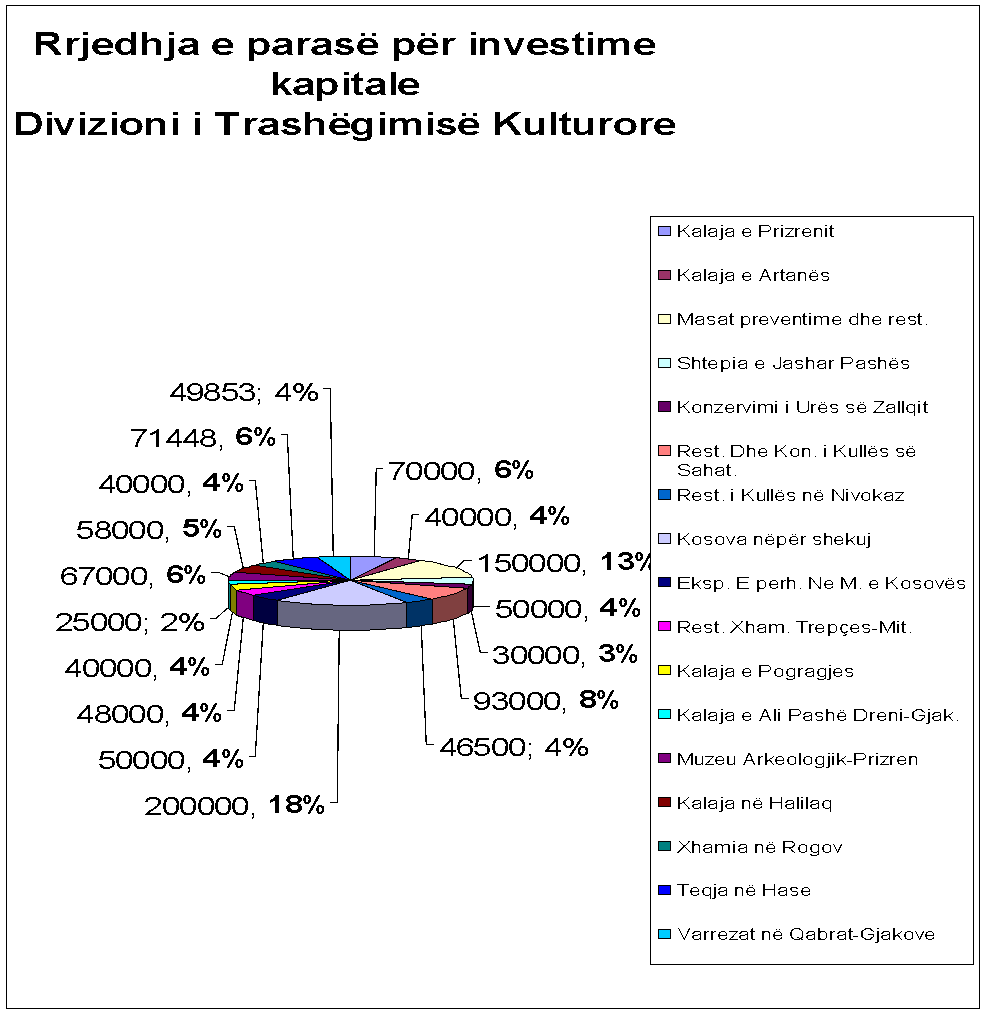
Fig. 4. Capital investments in the Cultural Heritage Division in 2007
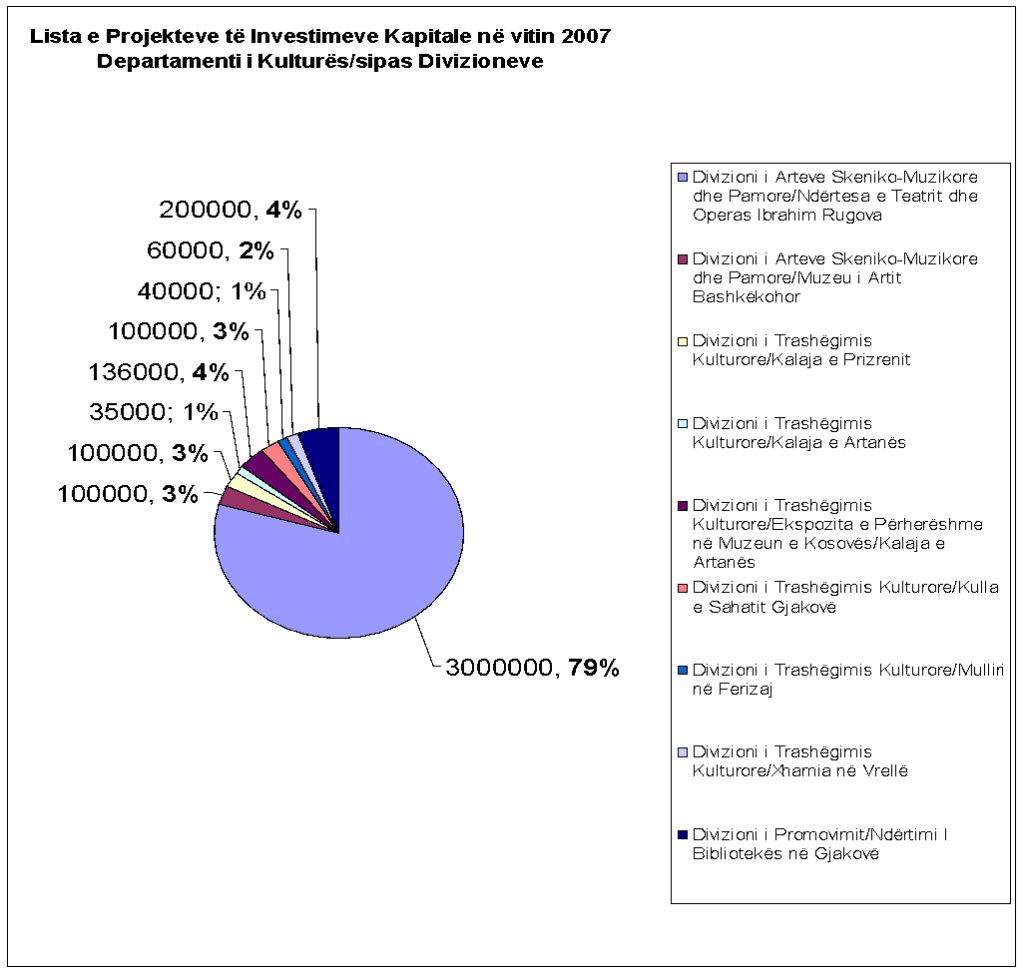
Fig. 5. Percentage of investments in capital projects in 2007
From the examples mentioned above, although investments were foreseen in the Castle, these projects were not implemented, but the project for the Clock Tower in Gjakova, which had no traces of construction, the Nika Mill in Ferizaj, the Mosque in Vrella, which were not declared as protected monuments, and the construction of the Library in Gjakova, which was the competence of the municipality, was implemented.
The mismanagement of the budget is also described in the final audit report on the financial statements of the MCYS, for the year ended December 31, 2007, with Document No. 21.05.1-2007-8.
These analyses were conducted during my work as an Officer for Movable Heritage (Museology and Archaeology), from 2002-2009.


 Balkan Academia