

by Dr. Qazim Namani. Translation Petrit Latifi
Contact: Kosovo Institute for the Protection of Monuments, IKMM, Pristina qazimnamani@hotmail.com
Abstract:
With the establishment of the UNMIK administration in Kosovo, conditions and standards began to be set for the newly formed institutions, with the aim of fulfilling the requirements and agreements for the finalization of Kosovo’s status.
In December 2003, the international community (BE, UN) through “Special Representatives of the Secretary-General of the United Nations” Harry Holkeri handed over to the authoritiesKosovo issued the document “Standards for Kosovo”. Now all requests for a status solution from internationals were responded to with “standards before status”.
The purpose of this paper is to provide an overview of events, related to the activities and contribution of Kosovo’s institutions to meeting the standards for the final status of Kosovo as an independent state.
Kosovo institutions, after the March 2004 protests, where several Orthodox churches and monasteries were burned, successfully met the standards, renovating and rebuilding these religious buildings.
By mid-2005, the UN will assess the Kosovo government’s commitment to standards of democracy, good governance and human rights.
Before the end of 2005, an international conference should be held, under the leadership of the UN, which would be attended by representatives of the Contact Group member countries, the EU, Belgrade and the Kosovo Assembly.
The paper identifies events, uncertainties, published reports on Kosovo’s cultural heritage, exchanges of letters, problems and difficulties that emerged, especially after the protests of March 2004 until the end of 2005, when it was assessed that the Kosovo issue should be officially resolved with the recognition of independence, which was achieved on February 17, 2008.
Keywords:UNMIK, EU, UN, Standards, Status, Kosovo, Serbia, Serbian Orthodox Church.
Cultural Heritage and Fulfillment of Standards for Kosovo’s Independence 1999– 2006
Dr. Qazim Namani: Cultural Heritage Expert
After the 1998-1999 war, the establishment of institutions in Kosovo began. In the interim administration of UNMIK, the Department of Culture was established, which operated until 2002, when the Ministry of Culture, Youth and Sports (MCYS) was established. The UNMIK administration began work in this field with many problems as a result of the monuments destroyed during the war; the lack of documents and files of monuments, and the politicization of cultural heritage.
In April 2001, several administrative instructions were drafted for Archives and Institutions for the Protection of Monuments. Based on“Regulation 2000/45 on Self-Government of Municipalities in Kosovo”and considering that the municipalities did not have experts for archival work and protection of cultural monuments, consolidation was sought with the former Municipal Entities for the Protection of Cultural Heritage, which would develop activities under central authority.
At this time, the Deputy Special Representative of the United Nations Secretary-General and responsible for Civil Administration, Tom Koenings, takes an administrative decision to transform some of the Regional Cultural Heritage Institutions into Institutes.
The politicization of this field led to the situation being accompanied by the same problems even after the establishment of the MCYS..
Politicization of Cultural Heritage
Since 1999, Serbia, with the aim of politicizing cultural heritage, had initiated numerous protests in Serbian cities, but also in the diaspora, to protect the interests of the Serbian population and Orthodox churches in Kosovo.
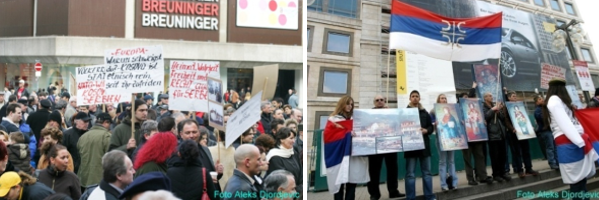
Photo. 1. Serbian protests in 2001 in Stuttgart, Photo. 2- Protests in 2004 in Stuttgart
The Serbian protests were organized by the Serbian Government, the Serbian Orthodox Church, and the Serbian Academy of Sciences. This propaganda through protests, written materials, and maps was carried out in accordance with the Serbian project Project – Proposal for the Protection of the Interests of the Serbian Population in Kosovo, which came out of the Institute for Geopolitical Studies, founded in 1997, in Belgrade, and published on November 19, 1998.
The document states that, as the crisis and ethnic problems in Kosovo deepened, it was proposed“Proposal for a solution to protect the interests of the Serbian people in Kosovo and Metohija”, to prepare the delegation of the Republic of Serbia for the difficult talks that will follow with the internationals.
This project was sent on November 19, 1998:
- Serbian Patriarch, Mr. Pavle
- President of the Federal Republic of Yugoslavia
- President of the Republic of Serbia
- President of the Republic of Montenegro
The proposed solution for the protection of the interests of the Serbian people in Kosovo and Metohija contains the following six points:
- Formation of Cantons
- Special status for Serbs in cities where the majority population is Albanian
- New territorial regulation and the formation of bodies for the protection of the Serbian population
- Regulating relations between provincial institutions and Serbian bodies
- The ethnic structure of the population
- Cantons with a majority Serbian population, and monastery properties.
This project is based on the United Nations Charter, the Helsinki Final Act, the OSCE Declaration and other international documents.
This document states that it is necessary to add measures to the agreement on Kosovo and Metohija that ensure full physical and property protection, demanding full ethnic, religious and cultural rights for the Serbian population in Kosovo.
The project for the protection of the interests of the Serbian population planned to form the following cantons:
- Ibar Canton
- Canton of Kosovo
- Novo Brdo Canton
- Sharr Canton
- Canton of Metohija
This draft proposal envisages that cantons with a Serb majority population will have their own local administration, judiciary and police.
The Dayton Peace Agreement for the protection of the cultural, religious and political rights of the peoples of Bosnia and Herzegovina is also considered a positive experience. With the creation of cantons, a territorial change of the borders in the municipalities is required, including as much agricultural land as possible in the small municipalities that would be established to be included in the Serbian cantons.
The Serbian cantons were to be annexed to their monasteries and properties. It was also required that the monasteries be returned all the properties they had taken before World War II. With these measures, it is envisaged that the Serbs will have ownership and control over 30% of the territory of Kosovo.
In large urban areas, mixed Serb-Albanian governance is envisaged. In large multi-ethnic cities, local assemblies are required to have two chambers: a lower chamber, which would express the will of the citizens, and an upper chamber, which would consist of half Serbs and half Albanians with equal veto rights.
The provincial assemblies would be formed by representatives of all cantons and would also have two chambers. The guarantor of the cantonal agreement would be the Serbian Parliament, while the external guarantor would be the international community.
The document states that the regulation of cantons in the southern Serbian province would be carried out by a special law of the Assembly of the Republic of Serbia. This issue is expected to be regulated within a time frame of 15 to 20 years.
The drafting of this document was based on the population structure in Kosovo according to the 1981 census.
After the end of the 1999 war, this Serbian project began to be implemented by Serbian politics and disseminated to internationals.
The Albanian population emerged damaged after the war, without any project to organize, form institutions, and revive the ruined economy of families.
In the field of cultural heritage, there were many difficulties in reactivating previously established entities for the protection of monuments.
Cultural monument files.-In June 1999, after the end of the war in Kosovo, they were taken and sent to the Kruševac Museum in Serbia.
Considering the cultural policies during the last decade of the 20th century, the UNMIK Administration removed from the list of cultural monuments all other objects and monuments that had received the status of monuments during the years 1990 to 1999. A list of 425 monuments that had been declared under protection during the years 1947 to 1990 was selected as protected cultural monuments.
From the list of 425 cultural monuments protected by decision of the state, 174 were sacred buildings, of which only 32 were of the Islamic faith, 139 of the Orthodox faith, 116 were traditional profane buildings, which included characteristic residential buildings, bridges, hammams, clock towers, etc., and only 96 were archaeological sites.These data did not reflect the true value of the cultural and historical past on the territory of Kosovo.
As can be seen, the UNMIK Administration began its work in this field with many problems due to the monuments destroyed during the war and the lack of documents and files on the monuments. This situation in the field of cultural heritage was followed by similar problems even after the establishment of the MCYS..
During this period of time, the branch of the Institute for the Protection of Cultural Monuments in Belgrade operated in the northern part of the city of Mitrovica. This branch for the protection of cultural heritage, in close cooperation with the Belgrade Institute, carried out archaeological excavations in the Municipality of Sočanica, and the municipalities and localities controlled by the Serbian population. Kosovo institutions were not notified in writing about the start of the excavations and the results of the projects. The discovered artifacts and reports were sent to Belgrade.
Officials from the Ministry of Culture, Youth and Sports dealing with cultural heritage were unable to visit Orthodox churches and monasteries without the consent of the Orthodox Church in Gracanica.
Having as a political program the importance of the cultural and natural heritage of Kosovo, in talks with internationals, the Serbs, based on the Geostrategic Project of 1997, had begun drafting a final report on the state of cultural and natural heritage in Kosovo after 1999. The work on drafting this project had begun in June 2001, and had lasted until July 2002. This final report of 426 pages, in English and Serbian, was published in 2003, in Belgrade.
In addition to the protests and these reports, the Serbs had also prepared a lot of other propaganda material, where through the publication of books, magazines and reports they also distributed many maps and other documents to international staff in Kosovo and in Western countries.

Maps 1 and 2, Representation of the Serbian population in 1999, and the Serbian population in 2002.
Following reports drafted in Belgrade during 2001-2002 and 2003, Serbia establishes in Gracanica“Coordination Center of the Republic of Serbia and Montenegro for Kosovo and Metohija”, with the aim of protecting the interests of the Serbian population and Orthodox churches and monasteries in Kosovo.
Based on document no. 06-5363/2003 dated 25.08.2003 issued by“Coordination Center of the Republic of Serbia and Montenegro for Kosovo and Metohija”, in Gracanica and signed by its president, Nebojša Ćović, addressed to the Special Representative of the United Nations Secretary-General in Kosovo (UNMIK), Harry Halkery, among other things, requests:“that the Vice President of the Coordination Center, Prof. Branislav Krstic, and Mr. Jovan Cirilov, Chairman of the UNESCO Committee of this center, visit Pristina in early September 2003, to begin cooperation”Nebojša Čović wrote at the end of the letter:“took this opportunity to send you and Mr. Brayshaw a copy of our publication, which has recently been published by our UNESCO mission.”.
From this publication we are providing some data:“NATO’s bombing campaign against Yugoslavia and local governance by the KLA” have endangered Serbia’s cultural heritage in Kosovo and Metohija”.During the military fighting between the Yugoslav Army and the KLA, 3 mosques and 14 towers of Albanians registered as cultural monuments were damaged, as well as a number of minarets of mosques not registered as cultural monuments, which were demolished.
However, in the period from the intervention of NATO troops on 10 June 1999 to August 2001, these cultural heritage monuments were damaged, which are classified into 4 categories: category I: 18 monuments, category II: 30, category III: 55 objects registered as cultural monuments, all of which were Orthodox, and category IV: 107 other religious buildings.
Below we provide the state of monuments in Kosovo in 1994, published in the 2003 report by the Coordination Center of the Republic of Serbia and Montenegro for Kosovo in Gracanica, sent to the Special Representative of the Permanent Secretary to the United Nations.

Table 1. Cultural monuments damaged and destroyed during and after the 1998/99 war
According to this document, it is further stated that in the post-war period in Kosovo, two parallel non-civilizing processes occurred: the destruction of Christian cultural heritage and the authentic settlements of Serbs, Montenegrins and Croats, who have mainly left Kosovo.
This propaganda data in this publication is also presented illustrated on maps. The document also describes the cultural monuments in Kosovo registered in 1986, 1994 and their condition after the war of 1998 and 1999.
Such documents, accompanied by falsified data containing numerous maps and photographs, were distributed by Serbs to international staff employed in Kosovo and to the embassies of many Western countries in Pristina.
Besides these Serbian documents, Albanian researchers had not prepared any general report or publication on the damage to cultural monuments by Serbian military and police forces in Kosovo during the 1998 and 1999 war.
The Special Representative of the United Nations Secretary-General in Kosovo (UNMIK), Harry Halkery, is requested, among other things:“that the Vice President of the Coordination Center, Prof. Branislav Krstic, and Mr. Jovan Cirilov, Chairman of the UNESCO Committee of this center, visit Pristina in early September 2003, to begin cooperation”Nebojša Čović wrote at the end of the letter:“took this opportunity to send you and Mr. Brayshaw a copy of our publication, which has recently been published by our UNESCO mission.”.
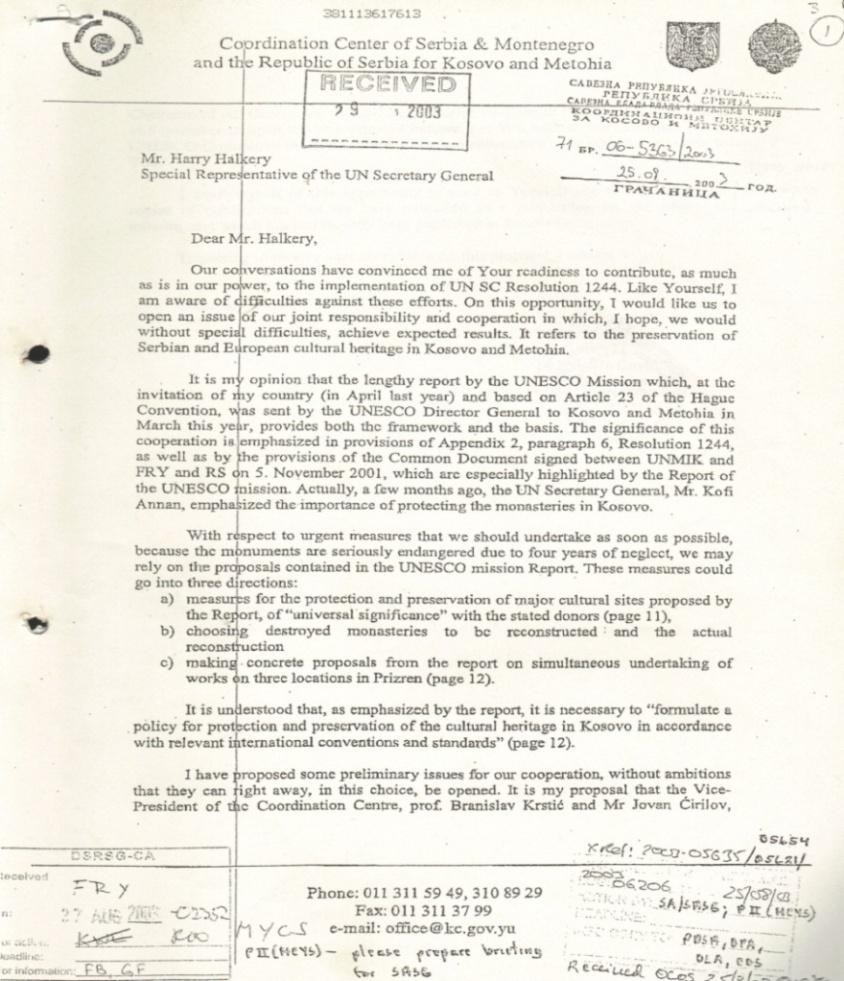
Document drafted by Nebojsh Ćović, sent to Mr. Harry Holkery
Standards for Kosovo
In December 2003, the institutions of the international community in Kosovo, such as the European Union and the United Nations (UNMIK), through“Special Representatives of the Secretary-General of the United Nations”, Harri Holker, handed over the document to the Kosovo authorities“Standards for Kosovo”.
The document contained the main tasks that Kosovo had to accomplish by 2005, so that achievements could then be assessed and whether it was judged that“standards are met”, the next phase of determining the final status of Kosovo would be initiated. All the demands for a status solution from the internationals were related to“standards before status”. This document also included the cultural and historical heritage of Kosovo. In order to meet the demands of international factors, working groups were formed in the MCYS and the Government of Kosovo.
International donor conference
International donor conference, organized by UNESCO, in cooperation with the United Nations, the UNMIK Administrative Mission in Kosovo, the Council of Europe and the European Commission, for the preservation and conservation of cultural heritage monuments in Kosovo.
To attract donors to the conference, a list of cultural heritage monuments and sites was compiled, based on two reports from the UNESCO Mission from 2003 and April 2004, and four reports from the Council of Europe.
The data for all these monuments were compiled in a document by international and local experts, such as: from CHëB, Sweden: Francisco Mondanes, Alex Mills and Ms. Susanne Wik, UNESCO experts: Alessandro Bianchi, and Horst Godicke, from the Council of Europe and the European Commission experts: Alkiviades Nicolaos Prepis and David Johnson, from the Ministry of Culture of the Republic of Serbia: Borislav Surdić, and from the Ministry of Culture, Youth and Sports Ms. Gjejlane Hoxha.
The documents compiled by these experts were published in a book that was published in Paris in several languages. Below we offer some of the published documents for some of the cultural monuments in Kosovo. The document was published and published in 2005 in Paris.
From the analysis of this document, it is understood that the historical data for all the monuments described in the list were taken from Serbian reports and publications. Almost all the cultural monuments are described as Serbian monuments built in the 11th-14th centuries.
The protests of March 17, 2004
The strained relations between Albanians and Serbs, as well as the unwillingness to quickly resolve the Status of Kosovo, led to the protests of March 17, 2004, in which dozens of citizens died, as well as the burning of several Orthodox religious buildings.
On March 17, 2004, protests began that would later be referred to as the “March Riots.” They lasted two days, during which 19 civilians were killed, 11 of whom were Albanians and 8 Serbs, while over 900 people, mostly Albanians, were injured.
The new institutions of Kosovo, although with a small budget to operate, reacted to this case with determination to prevent interethnic conflict between Serbs and Albanians. Very quickly, mobilization was made to renovate all the damage caused to religious buildings and properties of the Serbian population.
The riots erupted after reports that two Albanian children had drowned in the Ibar River as a result of Serb violence, while the cause of this tragedy was never fully clarified.
The Secretary-General of the United Nations, Kofi Annan, tasked the Norwegian, Kai Eide, with drafting a report that would reflect the situation in Kosovo.
Following these events, Serbian propaganda activities against Kosovo Albanian demands for independence increased.
After these events, the Serbs went on the offensive, accusing Albanians of burning Serbian churches and monasteries in Kosovo, making efforts to give this conflict the character of interethnic and religious hatred. Reactions began in Belgrade and other Serbian cities, mobilizing the Serbian diaspora for propaganda, and all employees in Kosovo institutions, to distribute as much propaganda material as possible wherever possible.
Propaganda material was printed on paper and duplicated on CDs about the events in general, about all the cities in Kosovo where there were riots, about churches and monasteries, about the Serbs wounded in these riots.
From the propaganda material that was discovered on the computer of a Serbian employee in Kosovo institutions, we are providing some maps and data on the level of organization to accuse Albanians as much as possible for this event.
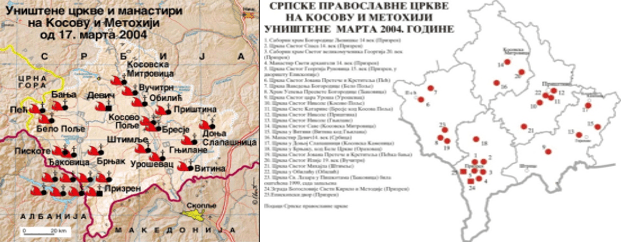
Maps 3 and 4, showing the burning of churches and monasteries after March 17, 2004; Showing the damaged churches
To prove that it was propaganda material prepared by various Serbian political circles, we are highlighting two photos from the propaganda material for the events of March 17, 2004, in the city of Prizren, titled“Palestine”, which presented the buildings of Orthodox churches in the city of Prizren. From this material we highlight two photos:
– In the first photo, a girl is clearly seen allegedly writing graffiti on the gate of a damaged building.“Death to the Serbs”. For the girl in the photo he writes“Albania”(The Albanian)! From what is seen in the photo, we understand that we are dealing with a minor Roma girl.
-The second photo also shows the fuel allegedly used to burn Orthodox churches and monasteries in the city of Prizren.
Serbian propaganda documents chronologically summarized all the events that had occurred from March 15-20, 2004, and thousands of photographs were taken in all cities and municipalities of Kosovo.
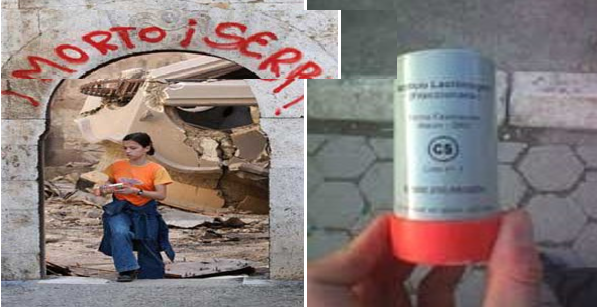
Photo 4 of 5- The photos are from propaganda material about the events of March 17, 2004 in the city of Prizren.
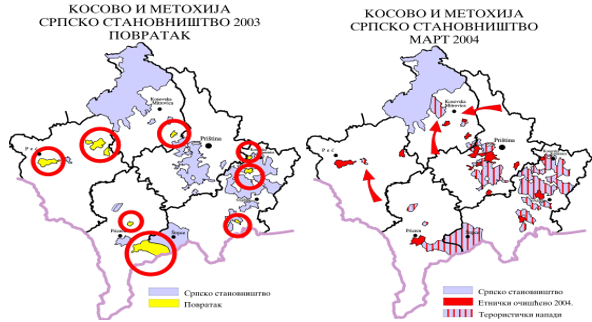
Maps 5 and 6 show the return of the Serbian population in 2003, and the alleged purges in 2004.
These maps were distributed to UNMIK international staff, and to European countries, with the aim of accusing Albanians as citizens who are destroying the ethno-cultural values of ethnic minorities in Kosovo.
Preliminary report on the technical assessment of religious buildings and assemblies and cultural complexes damaged in March 2004
Following the events of March 17, 2004, a Preliminary Report for the Technical Assessment of Religious Buildings/Assemblies and Cultural Entities was drafted. The technical assessment mission was carried out from May 10-16, 2004.
This mission was organised by the Council of Europe (Directorate for Culture and Cultural and Natural Heritage) and the European Commission (Directorate-General for Education and Culture), at the request of the United Nations Interim Mission in Kosovo (UNMIK), and the provisional institutions of Kosovo..
The mission had active support from“Coordination Center for Kosovo and Montenegro and the Republic of Serbia for Kosovo and Metohija”, Serbian Orthodox Church (SOC) and the Ministry of Culture of Serbia.
To draft the report and assess the damage to 35 monuments, Orthodox buildings and cultural ensembles, a group of experts was formed, which had the following composition: Mr. David Johnson (United Kingdom), Mr. Alkiviades Prepis (Greece), UNMIK representative, Ms. Melinda Taylor and Mr. Stefano Sgabbo, PISG representatives, Mr. Bujar Demjaha and Mr. Xhavit Lokaj, representatives of the Serbian authorities, Mr. Dragoljub and Father Jezekilj.
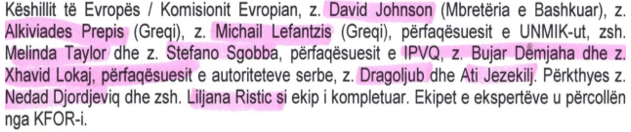
Fig. 11- Document, Experts who drafted the report on 35 Orthodox monuments, objects and cultural ensembles
The technical conditions and the summary of the repairs were prepared by three experts from the Council of Europe. During the work, documents from“Institute for the Protection of Monuments of Kosovo”, Ministry of Culture of Serbia, from the report conducted by CHwB (Cultural Heritage without Borders – Sweden) and from the publication“The Heritage of Kosovo and Metohija”, of the Institute for the Protection of Cultural Monuments of the Republic of Serbia, Belgrade, 2002The report was compiled from site visits and professional and scientific literature used.
Kosovo institutions, in order to make the right decisions, were required to coordinate with international institutions, the Serbian Orthodox Church, and Serbian authorities.
Memorandum of Understanding
Memorandum of Understanding in Accordance with the General Principles for the Reconstruction of Churches.-The Ministry of Culture, Youth and Sports, the Provisional Institutions of Self-Government (“PISG”) and the Serbian Orthodox Church (SOC), in June 2004, regarding the undertaking of urgent measures in churches and other entities and objects of the Serbian Orthodox religion, damaged in March 2004. The Provisional Institutions of Self-Government (PISG) and the Serbian Orthodox Church (SOC), agree to resume the reconstruction process as follows:
- A five-member commission will be established. An international expert to be appointed by the Council of Europe or the European Commission, or by another international agency, will lead the commission. The other four members will be: a representative of the Church, a representative from the Institute for the Protection of Monuments in Belgrade, a representative from the Institute for the Protection of Monuments in Kosovo, and a representative from the MCYS.
- UNMIK will be assisted by the commission in an advisory capacity and will provide technical assistance whenever necessary.
- The Commission will implement the recommendations of the Council of Europe for the necessary work during the summer and autumn of 2004. MCYS and SOC may suggest their own changes to the Council of Europe, which will be considered at the first meeting of the Commission.
- The Commission will prepare the tender documents, based on the recommendations of the Council of Europe Technical Evaluation Report, in cooperation with local experts.
- The Commission will open general tenders (allowing applications from companies from Kosovo, Serbia, Montenegro and Greece), but drawing attention to companies that are involved in the construction and restoration of Orthodox churches, monuments and other religious objects. The qualifications and experience of the companies will be a condition for winning the tender.
- The Commission will decide on the selection of the most suitable companies, following the procurement rules of the Provisional Institutions of Self-Government (PISG).
- When the commission makes the selection of the company that will work in the field, the commission’s decision must be sent to the bishop of the SOC. He may ask the commission to reconsider his decision, in a specific case as a representative of the church. The commission may take into account his opinion on whether it is in accordance with the procurement standards and procedures.
The final decision is that of the commission. If such a decision is not accepted by the bishop of the church, financing for that entity will not be made from the Provisional Institutions of Self-Government (PISG) fund. - When the commission issues a decision confirmed by the bishop of the SOC, the PISG officials responsible for committing and releasing funds (Lek) will ensure that the funds are released very quickly.
- The Commission will also supervise the works. The Commission may request the assessment of international experts, from Belgrade and experts from Kosovo to supervise the works if necessary. When dealing with protected monuments, the Commission will apply the existing rules and procedures for super-supervision for such monuments.
- To oversee the field work, the commission will appoint supervisors in consultation with the Bishop of the Church.
- Media contacts for all members of the commission regarding construction work should be made through the commission leader, including representatives of the Orthodox Church.
In all talks on Kosovo, the fulfillment of the standards for cultural and historical heritage and in particular the renovation of Orthodox churches and monasteries was required.mafter the 1998/99 war in Kosovo.
Below we present the Memorandum of Understanding in accordance with the general principles for the conservation and restoration of churches, signed by the Permanent Secretary at the Ministry of Culture, Youth and Sports, Ms. Zana Kryeziu, and Artemije, Archbishop of Rashka in Prizren.
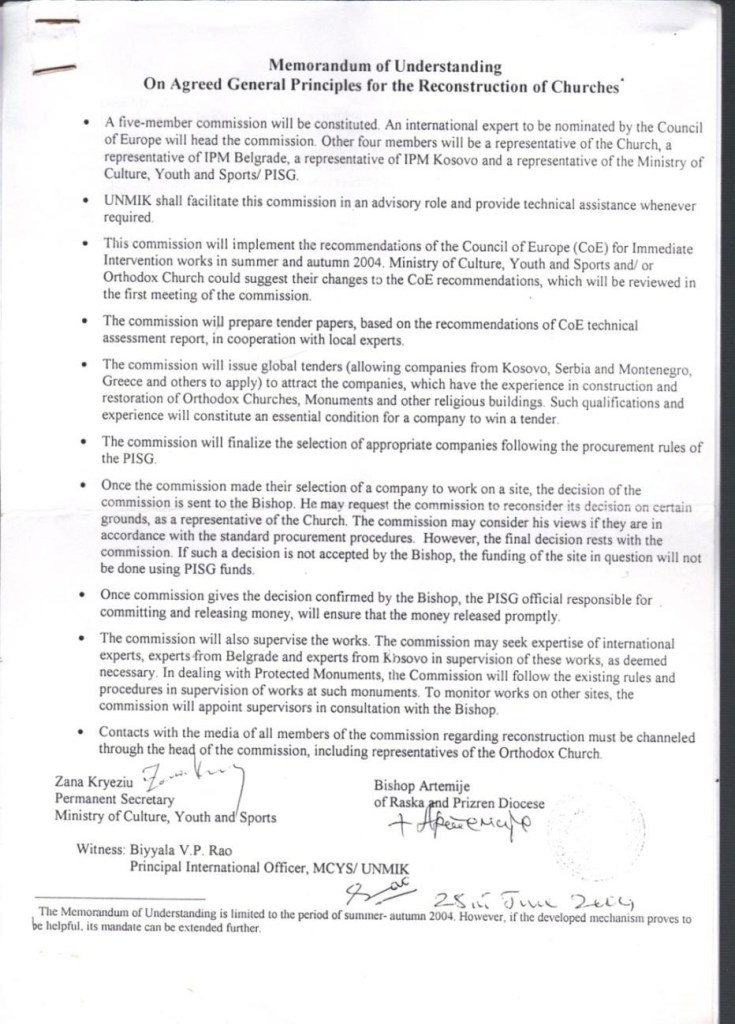
Document, Memorandum of Understanding in Accordance with General Principles for the Conservation and Restoration of Churches
This memorandum of understanding is limited to the summer-autumn period of 2004. However, if the mechanisms developed prove to be efficient, its term may be extended.
Cultural heritage at this stage had taken a very wrong direction, led by a staff unprepared to cope with the demands of international factors and the Serbian Orthodox Church. The budget was going to the renovation of the consequences after March 17, 2004, and to other projects that were irrelevant to the identity of the Albanian population in Kosovo.
After these events, international demands and pressure on Kosovo institutions increased. The Serbian government inliaison me Orthodox Church SThe Serbian side submitted requests that some of the Orthodox churches and monasteries in Kosovo be taken under UNESCO protection. The Serbian side’s request was approved and some of these objects were taken under temporary protection by the highest international institutions such as the Council of Europe and UNESCO.

Letter that the President of Serbia and Montenegro, Mr. Svetozar Marković, sends to the Director-General of UNESCO, Mr. Koichiro Marsuura.
BesidesThe renovations also required complete security of Orthodox buildings and other facilities in areas inhabited by a Serb majority population.
This program has continued after 2005, with the fulfillment of the conditions and the compilation of documentation for the field of cultural heritage and cultural monuments.
Renowned Albanian experts in the field of Cultural Heritage, as well as officials in the field of history and cultural monuments, were involved in the compilation of these documents.
In addition to numerous protests and propaganda material from the Serbian Orthodox Church (SOC), following these events of March 17, 2004, the President of Serbia and Montenegro, Mr. Svetozar Marković, on March 19, sent a letter to the Director General of UNESCO, Mr. Koichiro Matsuura.
In addition to numerous protests and propaganda material from the Serbian Orthodox Church (SOC), following these events of March 17, 2004, the President of Serbia and Montenegro, Mr. Svetozar Marković, on March 19, sent a letter to the Director General of UNESCO, Mr. Koichiro Matsuura.
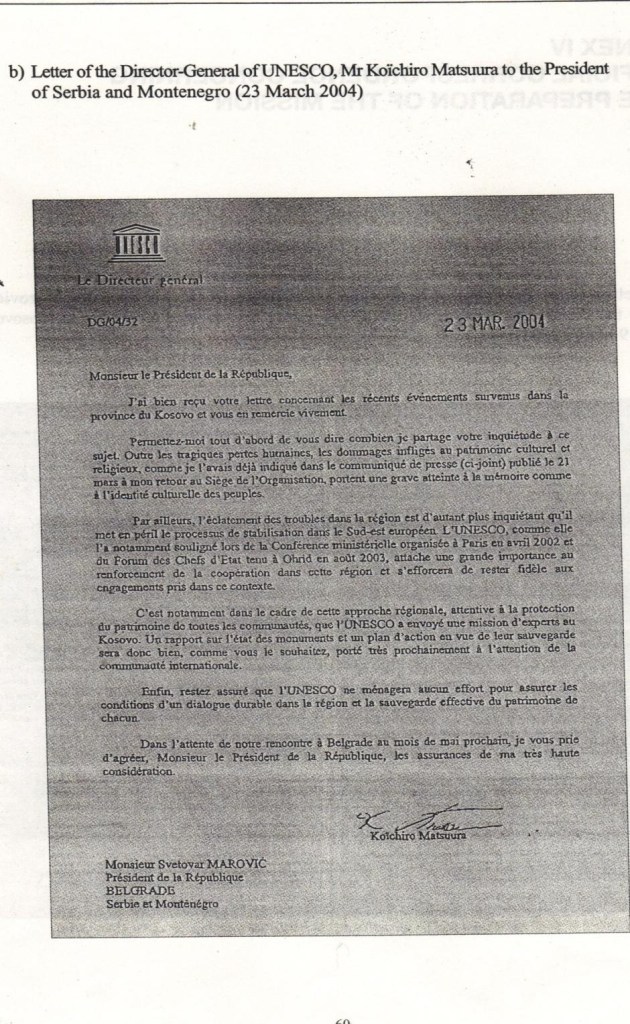
The letter to which the Director-General of UNESCO, Mr. Koichiro, dated 23 March, responds with a letter to the President of Serbia and Montenegro
Belgrade’s policy used this opportunity to activate all intellectual potential in the highest international instances to returnattentioninISSUEand victimization ofpOPULATIONSerbian in Kosovo.
The Albanian side was under great pressure and demanded the signing of a memorandum of understanding for the conservation and restoration of Orthodox churches.
In order to repair the damage caused after the events of March 17, 2004, a commission consisting of two teams of experts was formed for the technical assessment of the damage to 35 Orthodox monuments and ensembles. The commissions were formed by international and local experts, the Council of Europe, the European Commission.
In March 2005, a memorandum of understanding was signed by the Serbian Orthodox Church (SOC).and MCYS, establishing the Reconstruction Implementation Commission (RIC)to review and manage the reconstruction process.
This memorandum was signed by the Patriarch, and the Holy Synod appointed Bishop Teodosije as the representative of the Serbian Orthodox Church. The Reconstruction Implementation Commission (RIC) has drawn up a work program for 2005/06, according to which work began on 10 October 2005, and the commission established the website in August 2005.
In September 2005, the Reconstruction Implementation Commission (RIC) pledged to be able to spend 1.5 million Euros, out of the 4.2 million allocated for this purpose from the Kosovo consolidated budget for 2005, while the Provisional Institutions of Self-Government (PISG)They are requesting another 2.7 million, while the European Agency for Reconstruction (EAR) has allocated another 2 million for the reconstruction of Orthodox religious buildings..
Reconstruction Implementation Committee (RIC), in 2006, carried out the restoration of these buildings: repair of the lead roof, conservation works on the bell towers, catacombs, ossuary and internal repairs in the church of St. Friday in Prizren; in the Deviç Monastery: reconstruction of the old konak, reconstruction of the defensive wall, internal repairs, consolidation of the central konak; reconstruction of the Synodal church in Prizren; restoration of the old church of St. George in Prizren; reconstruction of the church of St. Elijah in Vushtrri; reconstruction of the parish house, baptistery, bell towers and the church of St. Nicholas in Prishtina; reconstruction – second phase of the church of the Apparition of the Blessed Virgin in Bellopole-Peja; reconstruction of the surrounding wall of the location of the church of the Blessed Virgin in Gjakova.
The Kosovo Assembly pledged 3.4 million euros for this purpose in 2007.During 2005, 778,397.57 euros were spent for this purpose, for 2006 1,925,001.38 euros were spent, for both years a total of 2,703,408.95 euros were spent.
The contact person in the Commission for the implementation of the reconstruction of Serbian Orthodox religious complexes by the MCYS was designated as Tomorr Buza.After these events, many monuments and objects of Orthodox worship came under the care of international peacekeeping forces.
In addition to the Orthodox cult objects, during the events of March 17, the Serbian population also attacked the house in Çagllavica of the Albanian sculptor Agim Çavdarbasha, where the stone and wooden artifacts were destroyed, and only a small number of them have survived. The Atelier“Gallery and Hapur”It was restored as part of the project to restore the damage of March 17, 2004.
KFOR had increased security measures to protect Orthodox churches in Kosovo, especially after the riots of March 17, 2004. There are 24 cultural heritage sites in Kosovo, which have so far been under the care of international peacekeeping forces. Of these, twenty-three have passed under the care of the Kosovo police unit. The Deçan Monastery, a cultural heritage site in Kosovo that UNESCO recognizes as Serbian heritage, is the only one that is still protected by KFOR..
Captain Drazho Božović has been appointed head of the Kosovo Police Unit for the Protection of Cultural Monuments. The unit for the protection of cultural heritage objects consists of approximately 200 police officers and is the result of a previous agreement between Belgrade and Pristina.
This agreement was reached in Brussels during talks on normalizing relations with Serbia. The agreement envisaged the establishment of a special multi-ethnic unit within the Kosovo police, whose mandate would be the preservation of religious monuments. Orthodox in Kosovo.
The Ministry of Culture and the institutions responsible for the preservation of cultural heritage are completely outside this process. The members of this unit have had several trainings organized throughout Kosovo by the OSCE.
The project included a series of eight trainings throughout Kosovo to familiarize police officers with the legal framework for cultural and religious sites, new police responsibilities, and approaches to communicating with the public and clergy..
The creation of this special unit was achieved in November 2012, in Brussels. One of the four points that the former president of Serbia, Boris Tadić, had put forward in his plan after the failure of his plan for the partition of Kosovo. The plan was called“The solution for northern Kosovo”: “Protection of monasteries and heritage of Serbia, protection of state property and citizens in Kosovo, guarantees and security and future of Serbs living in enclaves”.
The Kosovo Police has identified a number of more than 100 facilities that are guarded by the Kosovo Police, while 24 of them will have guards 24 hours a day, 7 days a week, while the others are facilities that are secured from time to time with visits depending on the assessment of their risk.
Civil society and experts in this field have repeatedly criticized such a decision, expressing their belief that cultural heritage in Kosovo does not need the protection of KFOR and the police, but that serious cultural projects and policies need to be developed to guide projects for the restoration and promotion of cultural values.
Cultural heritage sites in Kosovo are not endangered by the population of Kosovo. These heritage sites should be preserved according to the law on cultural heritage and cultural monuments should not be politicized.
The population of Kosovo has since that time become aware of the consequences of those events and is ready to preserve the cultural and historical heritage objects on the territory of Kosovo, as well as to contribute to the conservation and maintenance of cultural monuments.
Conclusion
The damage of the war, the politicization of cultural and historical heritage, the demands of Serbs, the lack of proper policies in this field, and weak institutional organization put Kosovo’s new institutions in a difficult position to assess the situation of cultural and historical heritage in the country.
Considering the situation created in the first years after the war, we consider that the lack of proper cultural policies, administrative disorders, lack of publications, inefficient management of conservation and restoration projects of objects, international interventions, lack of laws, bylaws and regulations, small budget as well as weak and party-based organization influenced us not to have full supervision in this field.
I think that mistakes were made at the beginning, which are still following us today in the field of identity and cultural heritage. With the program policies of professional centralization and institutional decentralization, we were left without a sustainable institute for the study and promotion of the true values of material culture in Kosovo.
Professional centralization creates space for our political parties to lead this field with party cadres, bypassing other specialized cadres. With institutional decentralization, regional centers were formed for the protection and management of cultural heritage, without experts and specialized cadres.
Regardless of the weaknesses in the management of this field, regarding the demands of internationals, they have been met even though they were not favorable to the Albanian population and Kosovo institutions.
Fulfilling the standards before the final status of Kosovo also included the field of cultural heritage, so Kosovo institutions fulfilled all the obligations that were requested by the international community.
The situation worsened especially after the events of March 2004, when dozens of Orthodox religious buildings were burned. These events burdened Kosovo with new and very heavy obligations for the meager budget of the provisional self-governing institutions.
Kosovo institutions meticulously fulfilled the standards, and renovated all religious buildings and damaged properties of Serbs according to the project envisaged by the internationals and the memorandum of Kosovo institutions with the Serbian side.


 Balkan Academia