
by Qazim Namani. Translation Petrit Latifi
Summary
This paper examines the political, legal, and historical controversies surrounding the Sokolica Monastery in Boletin and the agreements concluded with Kosovo’s Ministry of Culture in 2006. It analyzes property disputes between the monastery and the Boletini family, highlighting how state institutions authorized construction and protective measures without resolving ownership through legal channels. The study argues that the monastery’s historical narrative and protected status were based on falsified or selectively interpreted sources, despite evidence that the site functioned as a small private or community chapel until the mid-twentieth century. By tracing institutional decisions, budget allocations, and heritage listings, the paper demonstrates how cultural heritage governance became entangled with political agendas, undermining legal certainty, historical accuracy, and intercommunal trust in northern Kosovo.
Sokolica Monastery in Boletin and agreements with the Ministry of Culture in 2006
In 2006, the Sokolica Monastery began to erect a wall on the property of the Boletins with the consent of the Ministry of Culture. At that time, the Ministry of Culture had entered into negotiations with Mati Makarije to exchange the properties that were under the Tower of Jesus, with another property at the main entrance of the church. The exchange of these properties was signed by the Archivist Jusuf Musa.
The negotiations also resulted in an agreement to build a stone wall to enclose the monastery courtyard. The construction of the wall was supported with 10,000 euros by the Ministry of Culture. This decision was opposed by the Boletini family, since the church has no property documented with any valid document from earlier times.
In a memorandum of understanding signed between the Ministry of Culture and the “Sokolica Monastery”, the monastery is allowed to build the wall.
After the signing of this memorandum, the Boletini family also reacted, stating, among other things, in a statement dated 19.4.2006:
I, Xhavit Boletini – legal heir of Isa Boletini, on behalf of the extended family of Isa Boletini, as an authorized representative, declare that the Memorandum of Understanding signed on 18.04. 2006, between the Ministry of Culture, Youth and Sports, signed by the minister, Astrit Haraçia, and the Orthodox Church, signed by Igmuena Makaria, is NON-EXISTENT, unjust, illegal and permanently unacceptable for the Boletini family, and the Albanian population as a whole in this region..
The wall was built at the same time as the monument was being restored.“Isa Boletini’s Tower”, a project that began in 2004. In addition to the wall, other reconstructions have been made in this church and the number of buildings has been increased with the aim of building a church complex near the Isa Boletini tower, including this church, the tower and the property of the Boletini family. Today, this complex is protected by the law on special protected areas.
In 2004, restoration began according to the project“Isa Boletini’s Tower”as a cultural monument it is supported by the Ministry of Culture, Youth and Sports and NGOs from Sweden, while the project was led by the NGO, CHWB from Sweden and the Kosovo Institute for the Protection of Monuments, Architect: Gani Gashi. The construction works were carried out by the construction organization“Older”from Decani.
After the restoration of this building, it was decided to turn the house where Isa Boletini was born into a tower-museum. This museum exhibited some of the exhibits and documents of the time related to the life and work of Isa Boletini. Now, the remains of Isa Boletini are expected to be buried in this museum complex, but to achieve this goal, according to the law, permission is also required from the Sokolica Monastery.
Below we offer data from the Boletini family’s statement to the “Express” newspaper:
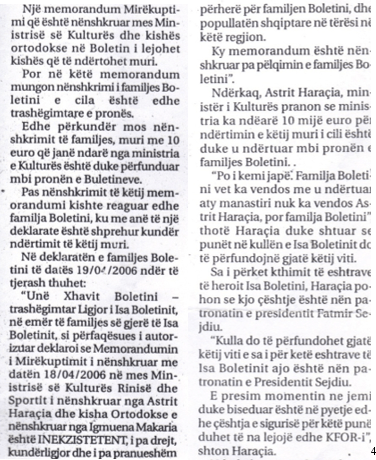
– Statement by Xhavit Boletini, given to journalist Artan Behrami, “Express” newspaper, article, Between the Church and the Boletini, July 25, 2006
From the documents provided above as well as from the statement of the Boletini family, we understand that the “Sokolica Monastery” is a political object supported by the Serbian government but also by the policy of UNMIK and other international institutions.
Given the facts that the monastery was built by the Serbian government on the property of the Boletini family, Kosovo institutions should have respected the legal rights of the Boletini family, demanding that this family’s rights be resolved in court.
Disrespecting the legal rights of the Boletini family and falsifying the history of this church in various publications and in the registration list of cultural objects has long-term consequences for creating a healthy climate between communities in the Mitrovica region.
The Ministry of Culture, in relation to this case, had to form an academic working group to study the history of the church and its ownership, as well as re-evaluate the list of cultural monuments, respecting the criteria for monuments.
After the approval of the list by the above-mentioned working groups in 2010, the budget distribution was carried out without respecting any single criterion regarding the obligations set out in the law and regulations in force for the preservation and protection of cultural monuments. During this period, cultural policies were lacking and the entire budget was distributed according to the power of interest groups and clans.
Based on the budget expenditure statement, we note that the majority of officials employed in the Department of Cultural Heritage are in violation of the applicable law on labor relations and conflict of interest. Since 2009, the Kosovo Institute for the Protection of Cultural Monuments has not been supported with any project for the conservation and restoration of cultural monuments.
The Institute was engaged to carry out the conservation of the Bazaar Mosque in Pristina and to supervise the conservation and restoration works in the city hammam according to a cooperation agreement between the MCYS and the municipality of Pristina.
These projects were implemented from the budget of the municipality of Prishtina, even though municipalities are obliged by local government regulations to support local projects. Based on the above list, the Department of Culture supported projects of individuals more than cultural monuments, which it had left to the mercy of local and international NGOs, local government and individuals.
We offer some data, from archival sources, the list of cultural heritage monuments, Serbian sources when the women’s monastery was declared, and the article of the newspaper “Tema” in Tirana to understand the falsifications, manipulations, and propaganda about the monastery and the Albanian population living in Boletin.
“Orthodox Women’s Monastery”, interfering with the construction of other buildings during the 1990s and until now. The legal dispute between the Boletini family and the Monastery regarding these properties for the descendants of this family, is still not closed.
Field data suggests that this shrine was a small church of the Boletini family and that since the mid-19th century it served as a shrine for the Jewish community, which during the 19th century the Boletini family had brought to their village to help them run the well-known business that the Boletini family had at that time. During the 19th century, especially after the construction of the railway in the city of Mitrovica, quite a few Jewish families from Prishtina, Artana, Prizren and other cities had settled there.
We also find information about the church in Boleti from Todor Stankovic, who visited the church in 1897. He describes the church as small, but says that the church was old, while the altar was a new construction. He writes that the church had been abandoned 40 years ago. It was renovated by a villager from the surrounding villages with the surname Ostojic.
Stankovic writes that the residents had told him that the merits for the renovation of the church belong to Fiqa Haxhi Jakiqi and his son Jakov. They, he says, were originally from Prizren, but 25 years ago they had moved to Mitrovica. Jakov still takes care of the maintenance of this monastery, writes Stankovic.
As evidence, we can take the Jewish cemetery in Zhazha and the very name of a Serbized Jew named Avram, who had his house near this shrine and had lived in the village of Boletin until 1966. This Jewish family lived very close to the Boletin tower, namely the “Guri i Tupanit”, a place from which the Buletin family would signal the surrounding residents with a tupan on occasions of holidays or other gatherings.
Despite the fact that Serbian publications state that this church was built between the 14th and 15th centuries, this is known to be inaccurate and a falsification of historical sources. In this publication, we also find the year when, after the confiscation of the Boletini family’s properties, it was declared a “Women’s Monastery”.
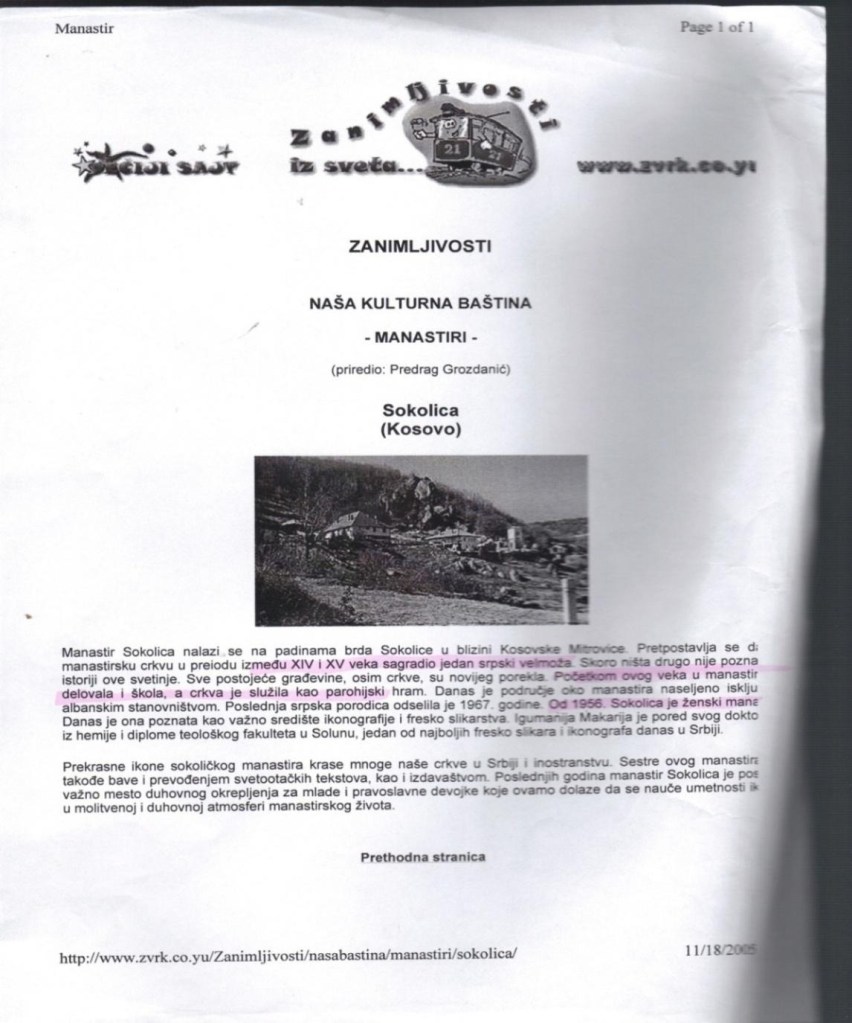
– Sokolica Monastery, Publication in Serbian magazines where it is written that this small church was declared a Women’s Monastery in 1956
The data for the Sokolica Monastery was also falsified in the list of heritage for temporary protection signed by Minister Memli Krasniqi on October 1, 2012.
Table. List of heritage for temporary protection, October 1, 2012
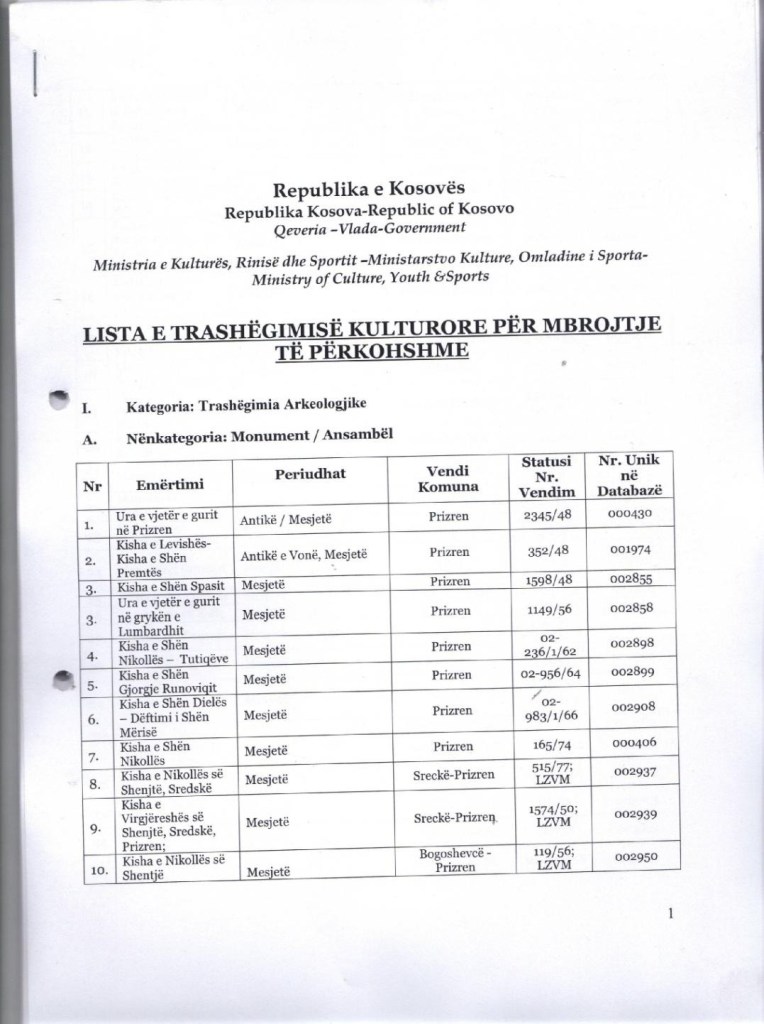
A total of 1,179 cultural objects and ensembles were included in the list of temporary heritage protection until 2012. Among them, the Sokolica Monastery is marked with the serial number 50. The historical description of this monastery is the 14th century, and the status, the number of the decision for protection is 2304/48 (1948).
Table.List of heritage for temporary protection, October 1, 2012
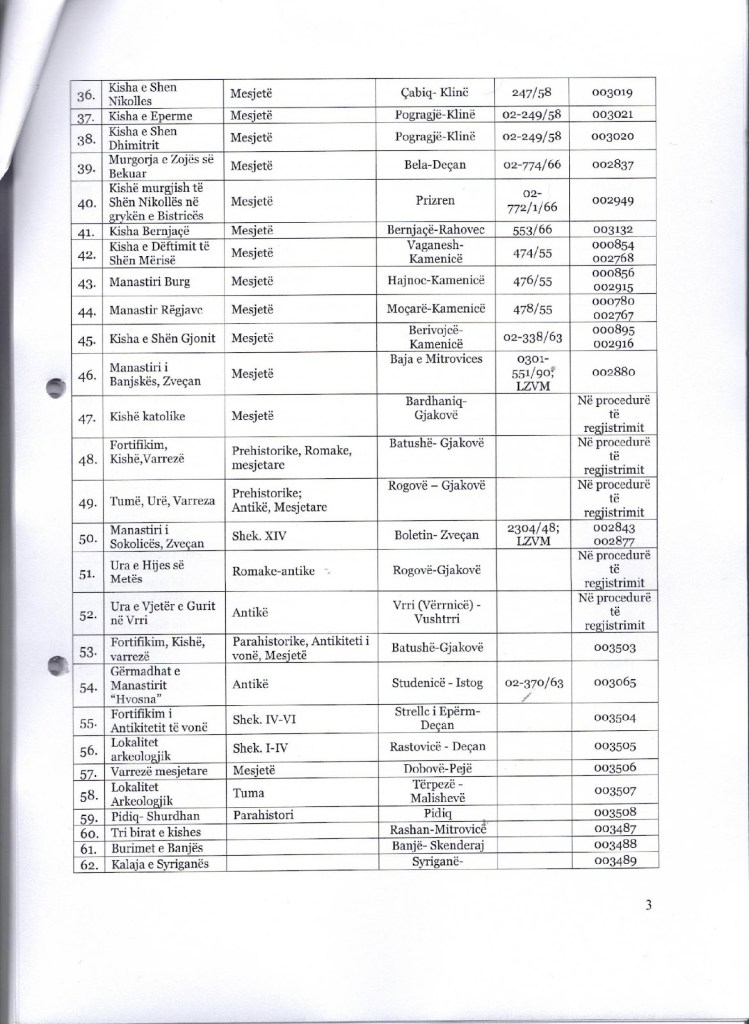
The Ministry of Culture, in 2010, had started the “Project for the re-evaluation of the list of monuments that had been under protection before the war (1998 and 1999)”. This project continued until 2014, including the re-evaluation of the objects from the field survey. The project leader was Jusuf Musa, head of the Archaeology sector at the Department of Cultural Heritage.
The data compiled and presented in this list were sent to the Council of Europe, although there were major errors in it and the evaluation of the monuments was done without taking into account any professional and scientific criteria. We should emphasize that for example, regarding the Sokolica Monastery, even in Serbian literature and sources, Serbian authors themselves testify that this cult object only began to be called a“Monastery and Grave”.
Of 1956: Sokolica is feminine monastery.Today it is known as an important center of iconography and fresco painting. Abbess Makarija, in addition to her doctorate.
Sokolica Monastery is located on the slopes of the Sokolica hill near Kosovska Mitrovica. … From 1956. Sokolica is a nunnery. Today it is known as an important.
About the Sokolica Monastery, Daily Newspaper“His”dated 11.4.2011, published in Tirana, published the article:“Serbian nuns learn Albanian”, giving importance to teaching the Albanian language to the nuns of this monastery, so that they can converse with the Muslim villagers, who come to pray at the statue of Saint Mary. Among other things, the article writes that Muslims from all over Kosovo visit the Sokolica Monastery because they believe that the 14th-century sculpture of the Blessed Virgin Mary can cure deaf-mute children and help childless couples become pregnant.
From this article I am highlighting the words of Mati Makaria for AFP, when he says that we allow them to pray to their “Allah”, just as we allow them to pray to our “God”! The monastery is located in the mountains outside the ethnically divided city of Mitrovica, where relations between Orthodox Christians and Muslim Albanians are tense, the article writes. The article mentions Mustafa Kelmendi as a regular visitor to the monastery.
From the information mentioned above, I think that the article contains propaganda data about the “charitable services” that this monastery is allegedly providing to the Albanian Muslim population in Kosovo.
Based on the data in this article, Mati Makarija offends the Albanian population of Kosovo with the sentence when he says that we allow them to pray to their “Allah”, while we pray to our “God”! The question is added who is the “God of the Serbs” and the “Allah of the Albanians”, and who does this division serve, when it is known that Albanians called God God before the ancient Greeks and before the Serbs, formed as a people by the influence of Russian Pan-Slavic propaganda in the 19th century?
We offer evidence from the article about the Sokolic Monastery: Serbian nuns learn Albanian, in the newspaper “Tema” in Tirana.
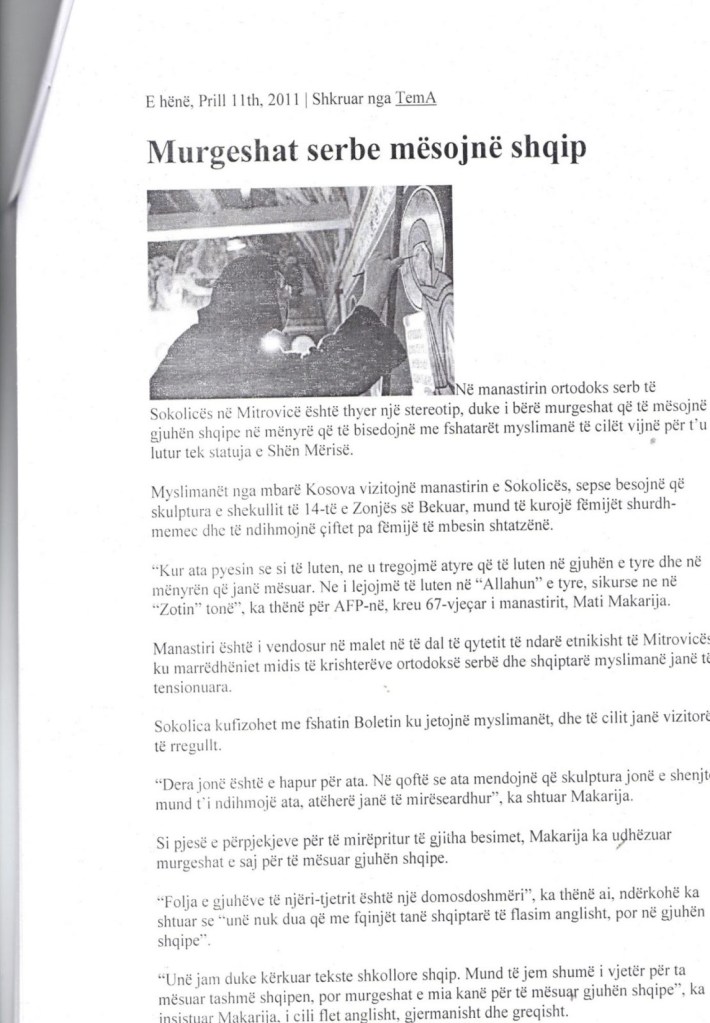
– Excerpt from the article, Serbian nuns learn Albanian, published in the newspaper “Tema” in Tirana
The article ends with a sentence, where it provides information about the restored monastery of Sokolica, supposedly built in the Middle Ages, decorated with carefully cut stone slabs, and considers it one of the highlights of medieval Orthodox architecture in Kosovo!
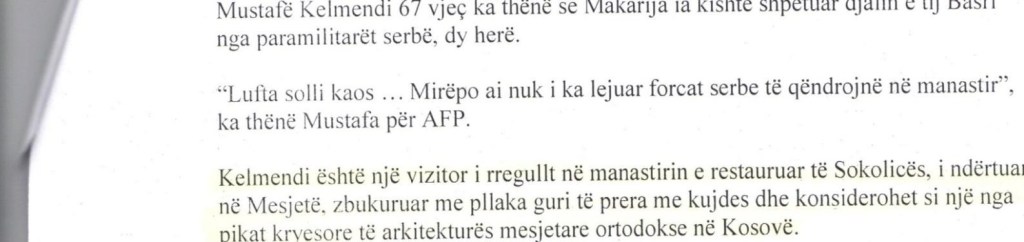
Such documents cannot be approved by the MCYS without being reviewed by genuine experts and historians who deal with these issues.
These documents folded into international archives severely damage the history of the Albanian population in Kosovo, therefore the history written about some cultural monuments should be written by proven historians in this field, either at the Institute of History of Kosovo or at the Department of History at the University of Pristina.
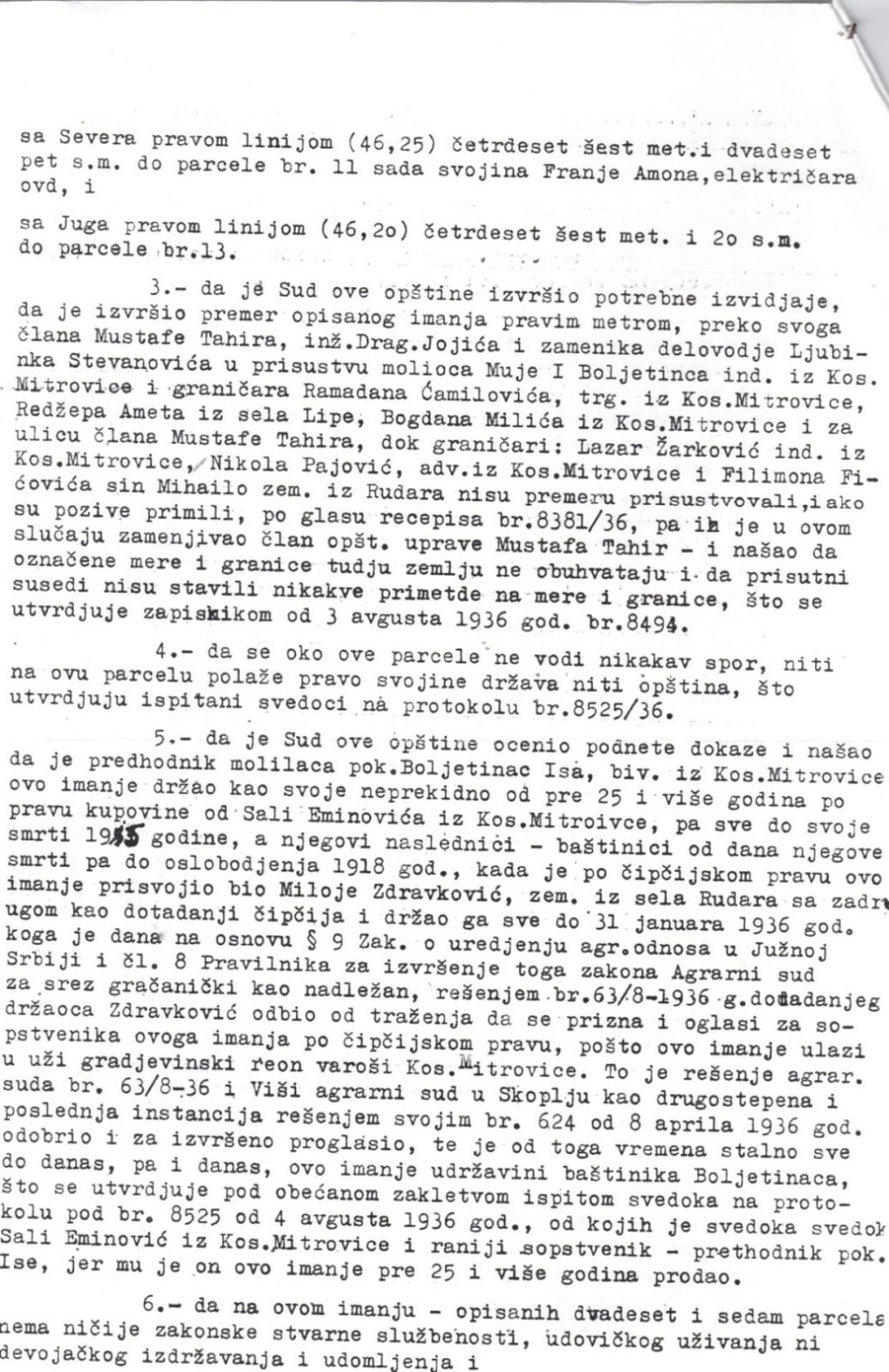
From Serbian literature it is noted that the small, ownerless church was declared“Monastery and Grave”, in 1956. From other sources and field data we understand that it is a small church of the Boletini family, who after the conversion to Islam, gave it to a Jew for use. The church was on the property of the Boletini family, so below we offer documents with data regarding the confiscation of the properties of this family after World War I, and the requests of the family members to return their properties.
As evidence, we offer documents from the court process regarding the Boletini family’s properties,
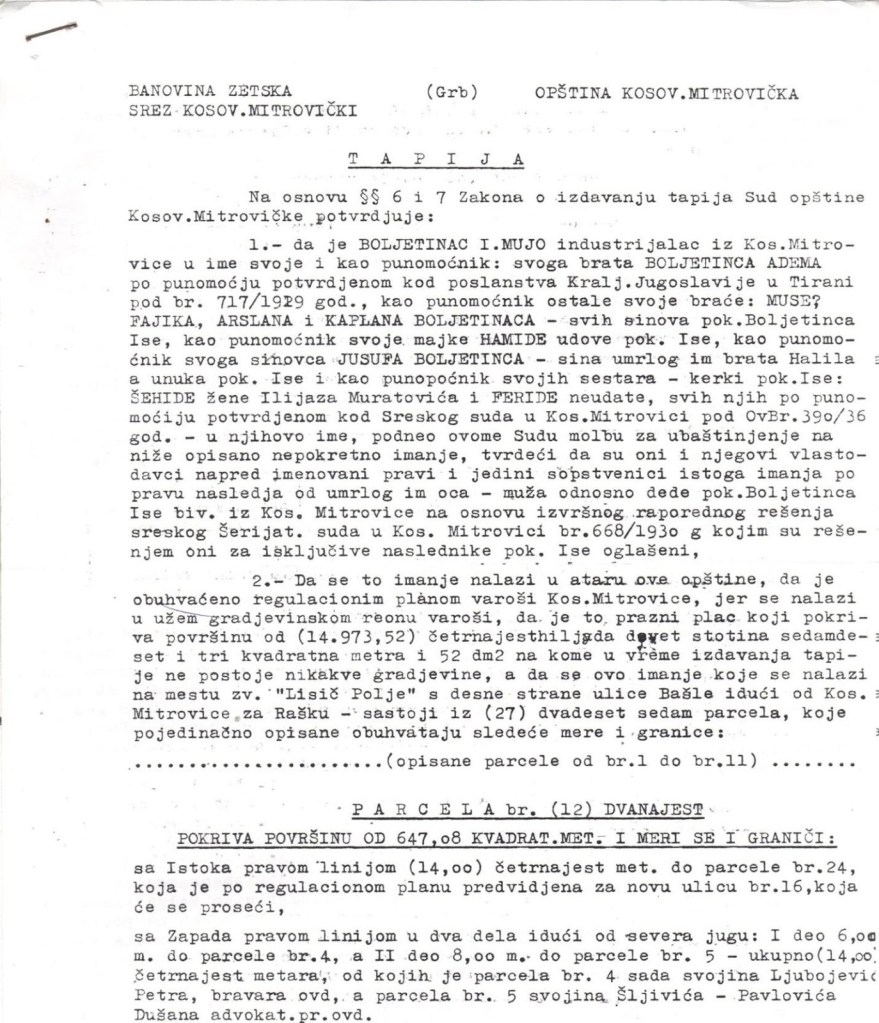
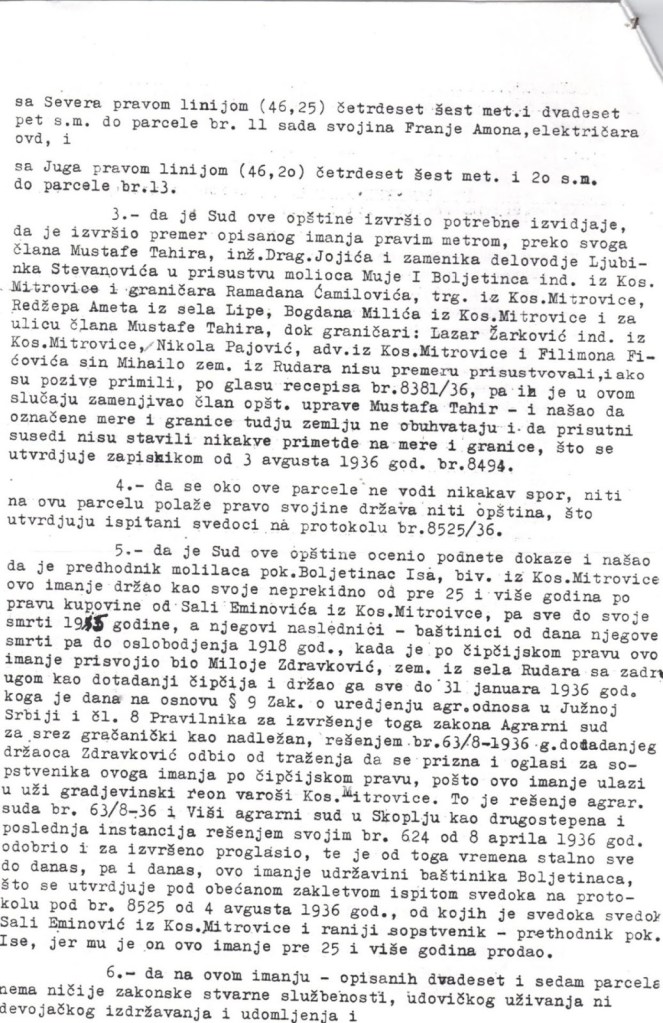
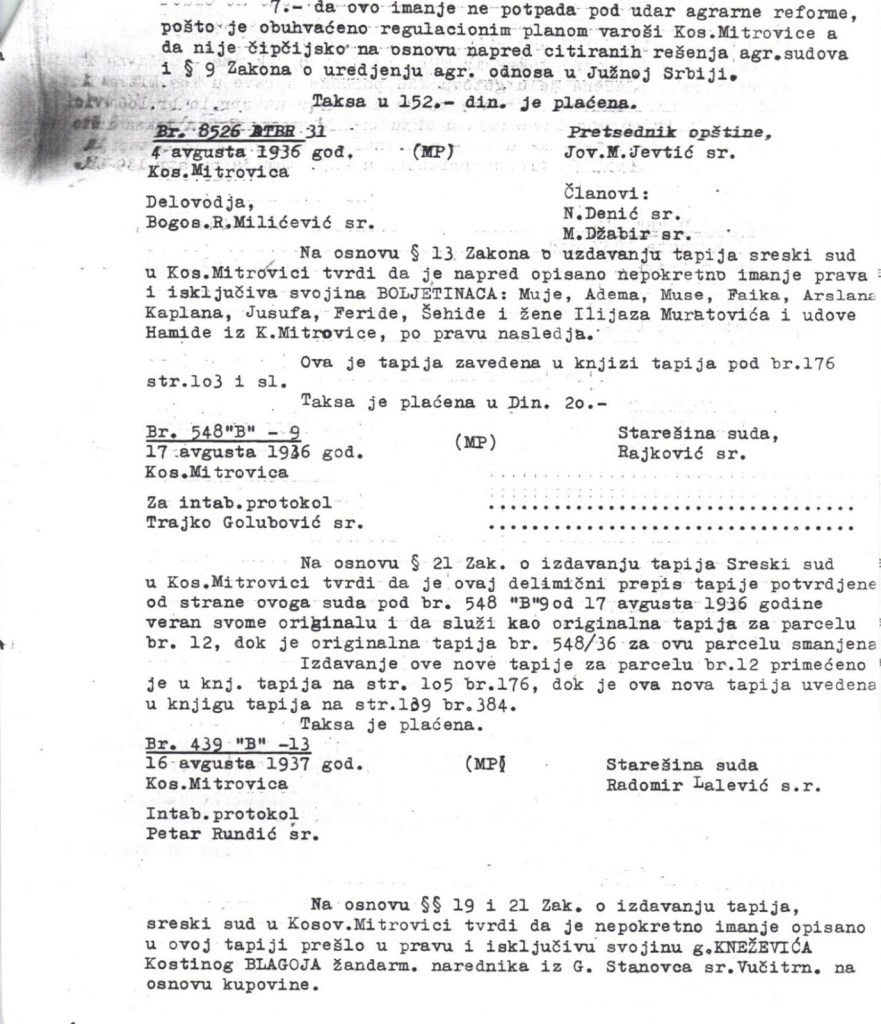
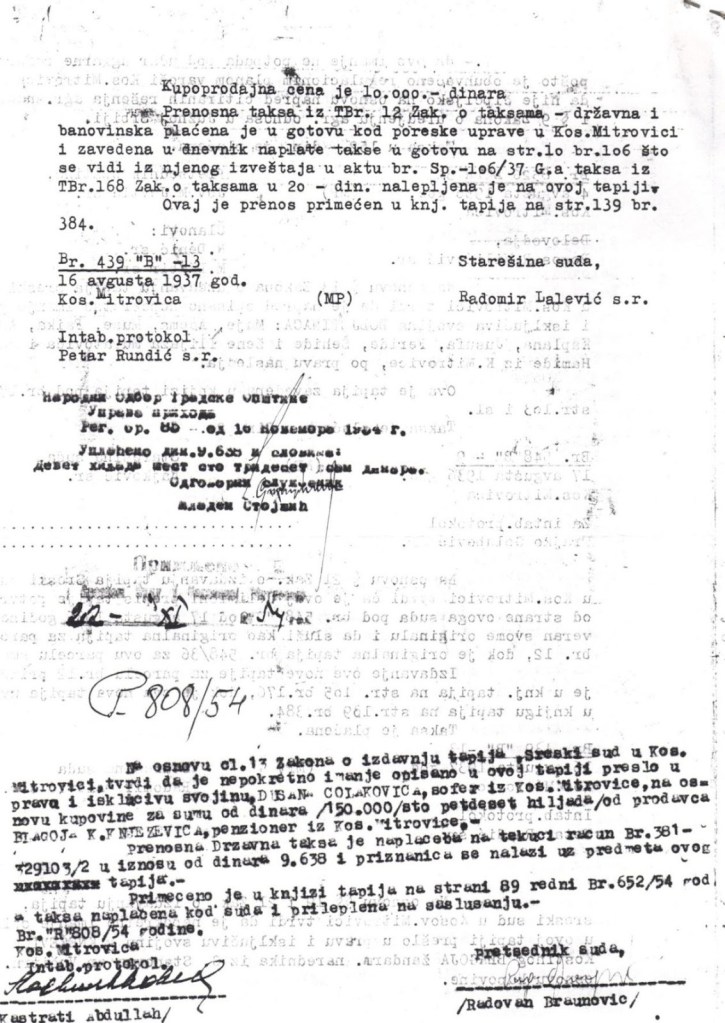
– Documents on the ownership of the Boletini family confiscated in 1954.
Table.Confiscation of the Boletini family’s properties
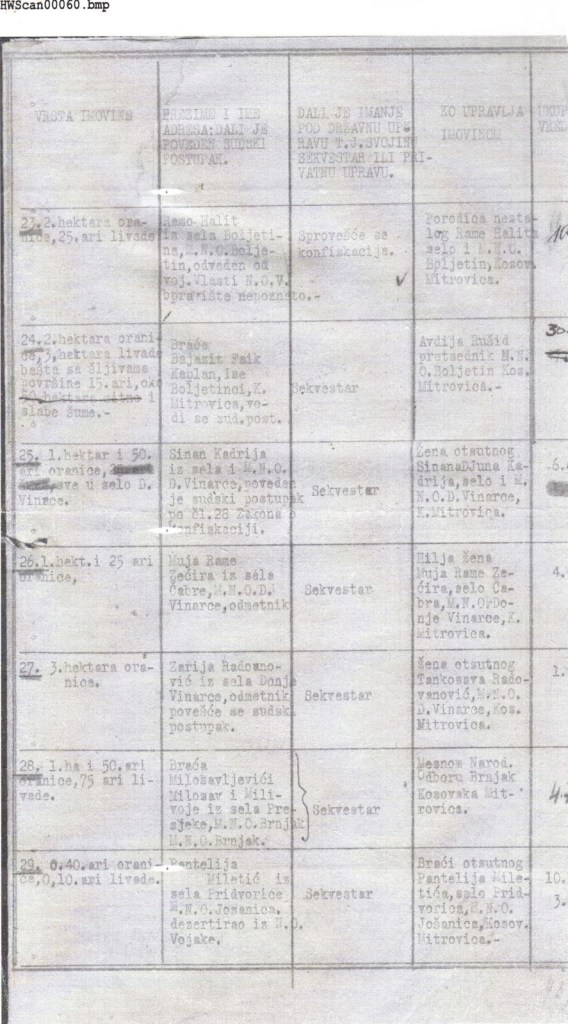
Meanwhile, in 1993, the Serbian government in the municipality of Zvečanite decided to annex the properties of the Boletini family and forgive them.“Sokolica Monastery”.


 Balkan Academia