
Abstract
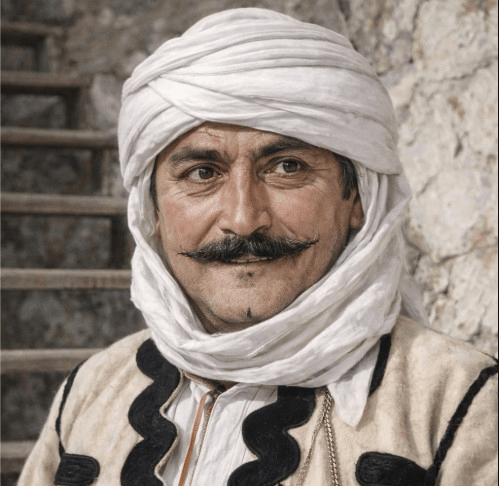
Zymer Selmani (Muriqi) (1851–1913) was a prominent figure from Rugova e Poshtme, known for his physical strength, bravery, and resistance against oppressive regimes. Following the heroic death of his brother Zhuj Selmani in 1875, Zymer assumed leadership of his family and household, from which the family name Zymer Selmanaj emerged. His life was marked by acts of defiance, including resistance against Ottoman Nizams and later persecution by Montenegrin military forces. In 1913, Zymer Selmani was arrested without trial and executed, leaving behind a legacy of resistance continued by his descendants.
Zymer Selmani, also known as Muriqi, was the son of Selman Muça Muriqi (Koshutani) from Rugova e Poshtme, Pat. The family had five children.
Selman Muça’s children were:
Zhujin, Zymeri,, Hyseni,, Bajrami,, Sokoli, as well as two daughters.
Zymer Selmani was a large, developed and very handsome man, blessed by God with rare physical features and great bravery. He was killed in middle age, leaving behind orphaned children.
After the heroic death of his older brother, Zhujin, in 1875, in the Sheremet tower, Zymeri took on the burden of the tower and the family. From that time on, the family took the name Zymer Selmanaj.
Zymeri was equally brave and physically strong. At the entrance to the Hajla mountains, six Turkish Nizams tried to tie him up, but they failed: Zymeri threw them to the ground and escaped. This act of bravery made his name even more famous.
However, jealousy and hostility never ceased. Even though he was no longer young, the eyes of traitors continued to follow him to kill him. Finally, Zymeri Selmani was killed in 1913.
His son, Riz Zymeri, took the blood and killed the murderer, the third one himself. The Zymeri Selmanaj family is ranked among the most prominent families of Rugova, having given five generations of fighters for the homeland.
This story deserves encyclopedic treatment, not only for Zymeri and Zhujin, but also for their daughters and sisters, who kept the family tree alive.
In the end, Riz Zymeri resisted the life of the Kaccha for 35 years, making Rugova an unsafe area for the regimes. This brave man was afraid of both the millet and the hyqymet.
I am convinced that this legendary family will illuminate history with heroic deeds, like a fountain of crystal waters, which for a long time were covered by jealousy or unjust historical denial.
The Montenegrin military police forces tracked down and pursued Zymeri Selmani in 1913, found him and arrested him in the village of Kotradiq where he had taken refuge with his sister.
He begged the gendarmes to let him return to a shop to pay a debt to a tinsmith of Jewish origin. On that occasion, Zymeri left the vault with Turkish liras, so that when the shopkeeper met him, he would hand over 18 liras to Ram Ceks, a young man who later became a good and wealthy householder who led Zymeri Selmani’s family for many years.
Zymeri was immediately executed without any trial, where his grave was not even known. After Zymeri was killed, Montenegrin forces went after Uka’s son, where they arrested him in the village of Koshutan, but in a moment of carelessness he managed to escape from the Montenegrin forces.


 Balkan Academia