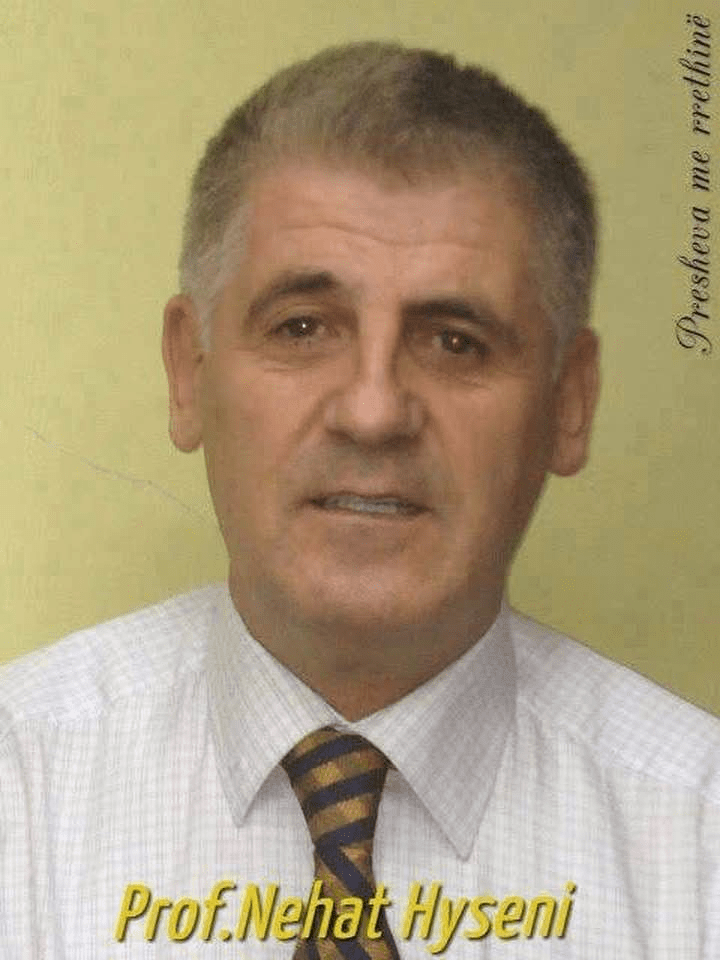

Written by: Nehat Hyseni
Abstract
This article examines the events of August 25, 1981, in Preševo as a paradigmatic case of cultural cleansing directed against Albanian education within the former Yugoslavia. Through the confiscation and banning of Albanian literature, the intimidation of educators, and the attempted expulsion of high-achieving students, state authorities enacted a systematic policy aimed at suppressing Albanian cultural identity. The forced removal of canonical Albanian authors from educational institutions represented not mere censorship, but symbolic violence intended to disrupt cultural continuity and historical memory. Analyzed through contemporary international human rights standards, these actions constitute grave violations of minority rights, academic freedom, and cultural heritage protection.
On August 25, 1981, an open act of state repression against Albanian education and cultural identity was carried out in Presevo, which, in the light of contemporary international standards, constitutes a classic form of cultural cleansing and systematic violation of the rights of national minorities.
The visit of the two highest officials of the then Yugoslavia – Fadil Hoxha, member of the Presidency of the SFRY, and Dobrivoje Vidiq, chairman of the Presidency of the Republic of Serbia – was not an educational or consultative event, but a brutal demonstration of power and a direct political warning to the Albanian educational community in the Presevo Valley.
While Fadil Hoxha represented a limited attempt at formal respect for national equality, Dobrivoje Vidić emerged as the spokesman for a repressive Serbocentric policy that saw Albanian cultural existence not as a right but as a threat. His discourse was devoid of any norms of dialogue, filled with ideological aggression and institutionalized hatred, culminating in a direct demand for the elimination of Albanian literature from the educational space.
The order to remove books by authors from Albania from the library of the Skanderbeg Gymnasium was not an administrative measure, but a deliberate act of symbolic violence, aimed at interrupting Albanian cultural continuity and amputating the historical memory of an entire community.
The banning of the works of Naim and Sami Frashëri, Ismail Kadare and other canonical Albanian authors constituted a frontal attack on the very existence of Albanian culture, an act that today would undoubtedly be qualified as ethnic discrimination and a serious violation of academic freedom.
Our professional and moral opposition – based on universal comparative arguments – highlighted the absurdity and racist character of this measure. It was clearly emphasized that the banning of Albanian authors was equivalent to the banning of fundamental authors of Serbian literature, such as Jovan Jovanović Zmaj or Borisav Stanković.
But this very comparison exposed the essence of state policy: double standards, where the culture of the majority was protected as “heritage”, while the culture of the minority was criminalized as “danger”.
The reaction of the state apparatus was immediate and brutal.
Around 3,000 books were confiscated from the Gymnasium library and moved to industrial warehouses near the Preševo Railway Station, in the “7 Korriku” enterprises, as if they were hazardous materials or nuclear waste.
This act was not simply censorship, but an open form of cultural dehumanization: Albanian books were excluded from public spaces, hidden from students and treated as forbidden objects, clearly demonstrating the intention to gradually eliminate the Albanian cultural presence in education.
At the same time, the repression also extended to students. A so-called “disciplinary case” was staged, with the aim of expelling 12 Albanian students from school, all with excellent success, arbitrarily labeling them as “hostile activities”. This was a typical mechanism of repressive regimes: criminalizing excellence, punishing knowledge and intimidating the younger generation as a means of political and ethnic control.
The fact that this attempt failed, thanks to the professional resistance of the teaching staff and the intervention of Fadil Hoxha, does not in any way mitigate the criminal nature of the actions taken. On the contrary, it proves that Albanian education in Preševo survived under constant state pressure, where every cultural right depended on political arbitrariness and not on the law.
This case constitutes a clear indictment of Serbia’s state policy in relation to Albanians, a policy that at that time and later manifested itself through censorship, forced assimilation and the systematic suppression of cultural identity.
In contemporary legal and political terminology, these practices would qualify as flagrant violations of the European Convention on Human Rights, the Framework Convention for the Protection of National Minorities and the fundamental principles of UNESCO on the protection of cultural heritage and academic freedom.
This is not an episode of the past to be archived, but a dangerous precedent that clearly explains the historical roots of structural discrimination against Albanians in the Presevo Valley. Silence in the face of these facts is not neutrality – it is complicity.


 Balkan Academia