
by Xhelil Arifi.
Abstract
This paper explores the hypothesis that Albanians (Arbënors) represent a direct cultural and linguistic continuity from the Pelasgian–Illyrian populations of prehistoric southeastern Europe. It situates the Balkans as a core region in the formation of early European civilization and highlights the Danube Valley (Vinča) Civilization as a key contributor to this process. Particular attention is given to the debated Vinča script, which some scholars, including Harald Haarmann, regard as the world’s earliest known writing system. The study argues that, if this interpretation is accepted, Albanian cultural heritage may be linked to one of the earliest traditions of written expression in human history.
Albanians (Arbënors) are widely regarded as descendants of the Pelasgian–Illyrian populations and are often associated with one of the oldest continuous linguistic traditions in Europe.
It is increasingly acknowledged that large parts of southeastern Europe—particularly the region known today as the Balkans—constituted a foundational cradle of European civilization. Within this framework, proto-Illyrian and Pelasgian populations are commonly identified as among the earliest inhabitants of this space and as formative contributors to the cultural and demographic development of the continent.
From these early populations emerged the Illyrians and other regional groups who, over time, gave rise to distinct cultural traditions and, ultimately, to the historical nations of Europe. In this sense, European antiquity is not external to the Albanian historical experience but is directly connected to it through enduring linguistic and cultural continuities. The persistence of Albanian as a living language is frequently cited as evidence of this deep historical inheritance.
The Danube Valley Civilization—often associated with the Vinča culture—occupies a central place in discussions of early European antiquity. Flourishing between approximately 5500 and 3500 BCE, this civilization extended from northern Greece to Slovakia and from the Adriatic hinterland to present-day Romania. Archaeological research indicates that it was among the most advanced prehistoric societies in Europe, characterized by early copper metallurgy, sophisticated architectural forms including multi-story houses, furniture production, textile manufacture, leatherworking, and the early use of the wheel. These developments occurred at a time when much of Europe remained within the Neolithic stone-based technological horizon.
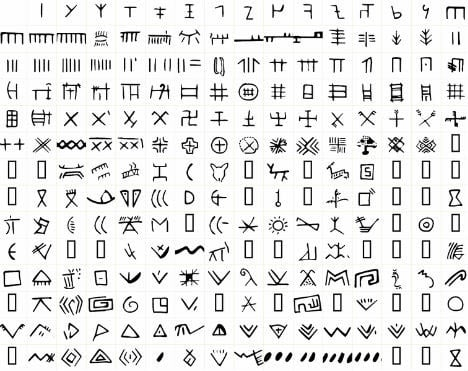
One of the most debated aspects of the Danube Valley Civilization is its system of symbols, commonly known as the Vinča signs. While some scholars interpret these as proto-symbolic or decorative motifs, others argue that they represent an early form of writing. Linguist and cultural historian Harald Haarmann, Vice President of the Institute of Archaeomythology and a leading authority on ancient scripts, has strongly supported the position that the Danube script constitutes the earliest known writing system in the world. Artifacts bearing these signs, dated to around 5500 BCE, have been uncovered across numerous archaeological sites and appear on pottery, figurines, spindle whorls, and other clay objects.
According to this interpretation, the Danube script predates Sumerian writing and even the Dispilio Tablet, dated to approximately 5260 BCE. If accepted as a genuine writing system, it would place the Balkans—and by extension their ancient populations—at the very origins of written communication. Within this perspective, Albanians, as historical inhabitants and cultural heirs of this region, are positioned as inheritors of one of the oldest written traditions known to humanity.


 Balkan Academia