
Abstract
Recent archaeological excavations at the Neolithic site of Svinjarička Čuka in southern Serbia have revealed the remains of a well-preserved prehistoric house dating to approximately 6000 BCE. This discovery contributes to a broader understanding of early agricultural societies in the Balkans and their role in the spread of Neolithic innovations across Europe. The structure, built with woven wicker reinforced by wooden posts, suggests permanent settlement patterns rather than temporary habitation. The site’s proximity to the later Byzantine city of Justiniana Prima highlights long-term human occupation of the region, underscoring its importance in both prehistoric and historical contexts.
These regions were inhabited by Paleo-Balkan natives thousands of years before Serbian or Slavic tribes had yet to arrive in the Balkans
Recent archaeological research has uncovered the remains of a well-preserved prehistoric house dating to approximately 8,000 years ago before Slavic migration. These territories were inhabited by the indigenous Illyrian and Dardanian population.
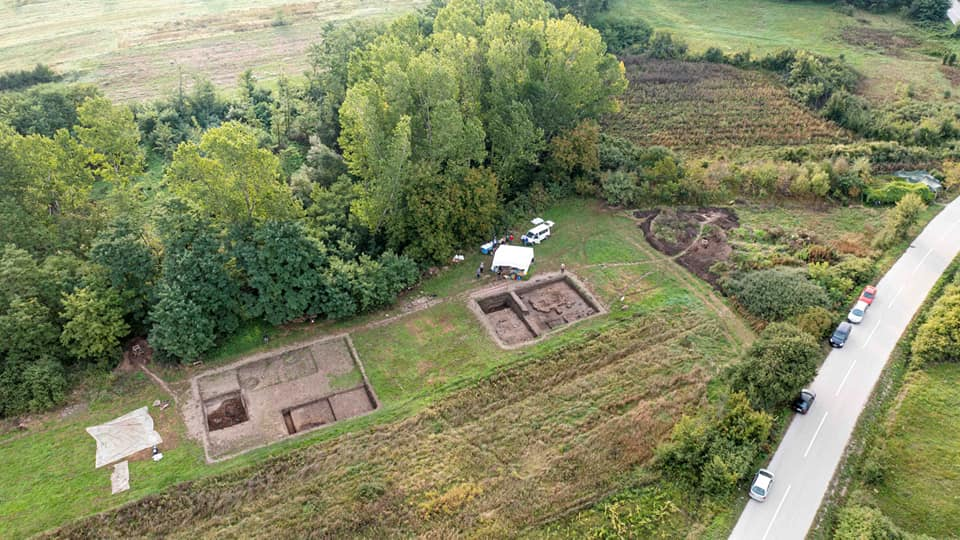
The structure was discovered at the Neolithic site of Svinjarička Čuka in southern Serbia and provides important insight into early European and Pre-Slavic societies. According to reports cited by Interesting Engineering, the find contributes to a better understanding of early agricultural communities in the Balkans and the spread of Neolithic innovations across Europe.
Researchers suggest that the construction techniques—woven wicker reinforced with wooden poles—indicate that early Neolithic populations in the region practiced permanent settlement rather than temporary or nomadic habitation. The presence of storage facilities for supplies and grain further supports the interpretation of a stable, agrarian lifestyle. The site has also been discussed in relation to the emergence and development of the Linear Pottery culture in Central Europe.
Excavations at Svinjarička Čuka began in 2018. The site is located on a raised terrace near the Svinjarička River in the municipality of Lebane, close to the archaeological remains of Justiniana Prima, an important Byzantine city founded in the 6th century CE. Justiniana Prima served as a major ecclesiastical and administrative center of the Eastern Roman Empire between 535 and 615 CE.
The city was established by Emperor Justinian I (527–565 CE), who was born in Tauresium in the Roman province of Dardania.
Justiniana Prima functioned as the metropolitan seat of the Archbishopric of the same name, with ecclesiastical jurisdiction over large parts of the central Balkans, including territories from Praevalitana to Dacia Ripensis.
The broader region, including areas such as Lebane, Toplica, and Nish, has historically been part of Dardania and has experienced significant demographic and political changes over time. These territories reflect a complex history of settlement, migration, and cultural transformation from prehistory through antiquity and into the medieval and modern periods.


 Balkan Academia