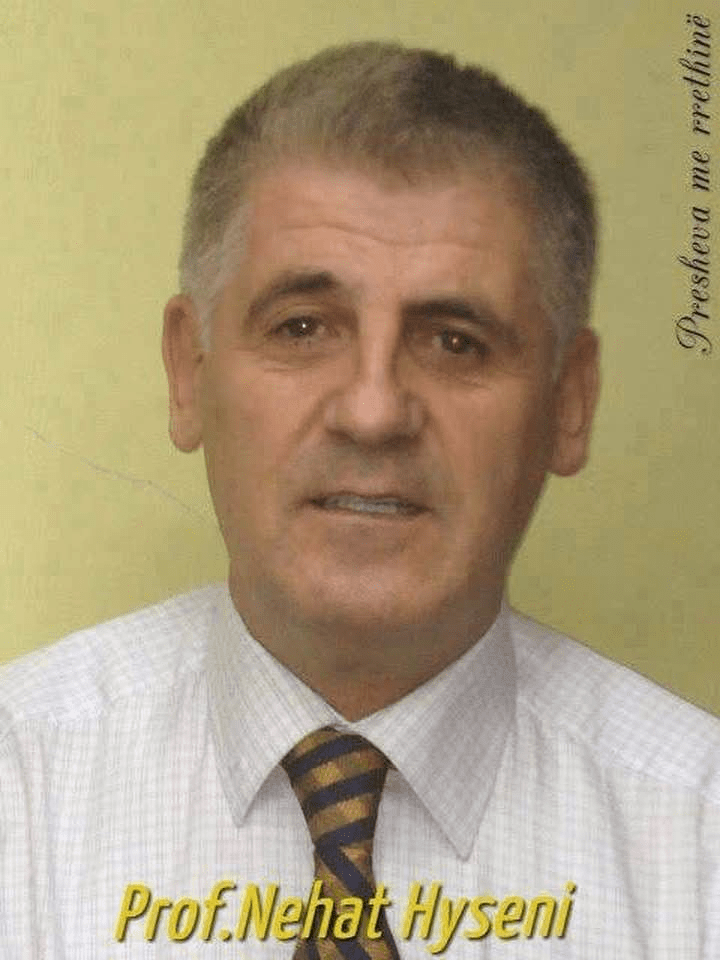

By Nehat Hysen
Abstract
This study examines the historical transformation of religious architecture in Vranje and its surrounding region from spiritual institutions into instruments of identity politics, Serbization, and state-building. Situated in a borderland marked by ethnic, religious, and linguistic diversity, Vranje offers a paradigmatic case of how churches and mosques have reflected shifting power relations. While pre-Ottoman and Ottoman periods were characterized by multiconfessional coexistence, the period following 1878 marked a radical rupture. Orthodox churches were reinterpreted as symbols of exclusive Serbian continuity, whereas mosques and Catholic churches were systematically destroyed, repurposed, or erased from historical memory. The article argues that religious architecture became a political narrative aimed at legitimizing territorial claims and erasing plural pasts.
Sacral Objects as Witnesses to the Multiconfessional Reality of the History of Vranje and Its Surroundings
The history of Vranje and its surrounding area represents a paradigmatic example of the way in which religious objects—churches and mosques—have been transformed over time from spiritual institutions into instruments of identity-based, Serbization-oriented, and state-building policies.
In this border region of the Western Balkans, where diverse ethnic, religious, and linguistic identities have intersected, religious architecture has continuously reflected the balance of political power and the hegemonistic projects of various authorities.
Pre-Ottoman Religious Heritage as Evidence of Coexistence
Before the Ottoman conquest, the territory of Vranje was characterized by pronounced religious pluralism, in which the following coexisted:
• Catholic churches, mainly associated with the Christian Albanian (Arbanian) population,
• Orthodox churches, which served as religious centers for Orthodox Albanians as well as Slavic elements,
• small monastic structures, rural chapels, and objects of local devotion.
During this period, religious affiliation was not equivalent to ethnic affiliation. Religious buildings primarily fulfilled spiritual and communal functions, rather than political or instrumental ones.
The Ottoman Period: The Mosque as a Pillar of Urban Life
With the establishment of Ottoman administration (15th century), the mosque became the central institution of urban life. It was not merely a place of worship, but also:
• an educational center (mektebs),
• a social institution (waqfs),
• a focal point of administrative, economic, and communal organization.
In Vranje, mosques were built mainly by Muslim Albanians, who constituted the dominant urban stratum. Islamic architecture thus became a marker of urban identity, but not an instrument of ethnic exclusion, as the city remained a space of interreligious coexistence.
The Transformation of Orthodox Churches into State and Political Instruments
Unlike mosques, Orthodox churches—especially from the 18th century onward and particularly after 1878—were gradually transformed into instruments of Serbian state policy.
They were presented as evidence of a so-called “Serbian continuity,” used to legitimize territorial claims, and turned into centers of cultural and linguistic Serbization.
In this process, the Albanian origin of a segment of Orthodox believers was systematically erased or deliberately denied, while religious buildings were “renamed” and reinterpreted as exclusively Serbian.
After 1878: The Destruction of Mosques and the Erasure of Memory
The Serbian conquest of Vranje (1877–1878) marked a historical turning point. Mosques—as symbols of Muslim Albanian presence—were systematically destroyed or transformed into civilian buildings, warehouses, or storage facilities, or were replaced by new Orthodox churches.
These actions were not religious in nature, but formed part of a deliberate strategy aimed at erasing historical memory and creating a new urban space with a homogenized ethnic and religious identity.
Catholic Churches: The Complete Erasure of a Historical Heritage
Unlike the other two categories, Catholic churches experienced an almost total disappearance from the historical landscape of Vranje. This erasure occurred in three phases:
1. the Islamization of part of the Albanian population,
2. the Orthodox conversion and Slavicization of another part,
3. historiographical silence after 1878.
As a result, Catholic heritage survived only in the form of toponyms, family traditions, and sporadic references in Western sources. The Catholic Church, as a witness to Western Christianity in this geographical area—represented by the “Latins,” that is, autochthonous Catholic Albanians—was deliberately forgotten and erased.
Religious Architecture as a Political Narrative
In Vranje, religious buildings were not treated as monuments of shared heritage, but as political arguments, symbols of power, and instruments of identity legitimation.
This approach produced a selective history in which the Orthodox church was absolutized, while the mosque was demonized or completely removed from the urban landscape and collective memory, as if it had never existed. In this way, the traces of an entire epoch and the evidence of multiconfessional life in this part of the Western Balkans were erased.
Conclusion
The case of Vranje, as well as other areas of southern Serbia—Niš, Toplica, Leskovac, Masurica, and others—demonstrates that religious buildings are not merely reflections of faith, but, especially after 1878, became political and historical acts.
They should have served as bridges of coexistence, but after the Serbo-Turkish War of 1877–1878 they were used as instruments of exclusion and identity erasure.
Without a critical and realistic re-examination of the history of mosques, Catholic churches, and the multiconfessional life of the past, the history of Vranje remains one-sided, mutilated, and distorted. Meanwhile, identity politics continues to be built on forgetting and denial, rather than on historical truth, which—despite attempts to erase it—remains alive in popular historical memory and in the documents of the true history of this land.


 Balkan Academia