
Abstract
This paper examines the public veneration of Serbian war veterans from the 1990s conflicts, including those implicated in war crimes, alongside student groups in Belgrade. It argues that such ceremonies function not merely as commemoration but as instruments of political symbolism that normalize radical nationalist narratives. By linking veterans with youth, these events contribute to the legitimization of extremist ideologies, particularly those associated with Chetnik movements, and facilitate the intergenerational transmission of revisionist historical memory.
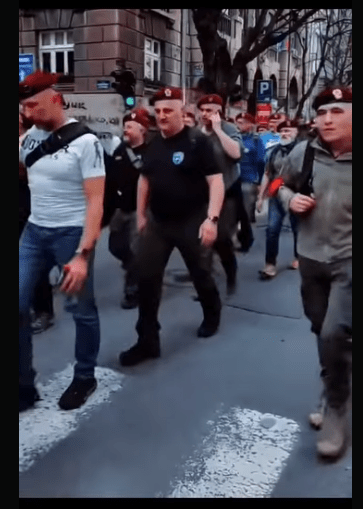
The public honoring of Serbian war veterans—including individuals documented or accused of committing war crimes during the 1990s Balkan conflicts—alongside students represents a troubling normalization of contentious historical actors.
By positioning these veterans as protectors or heroes in front of a young audience, their past actions are implicitly legitimized and romanticized. This symbolic alignment contributes to the resurgence of radical nationalist narratives, particularly those associated with Chetnik movements, which historically engaged in ethnic violence and ultranationalist ideology.
Such events blur the lines between civic education and nationalist propaganda, creating a social environment in which extremist political identities are valorized under the guise of patriotism. The ritualistic public celebration of these veterans also risks intergenerational transmission of revisionist historical memory, undermining critical engagement with the ethical and legal legacies of the wars.
In this sense, these ceremonies are not merely commemorative but politically performative, reinforcing existing hierarchies of power and nationalist ideology in contemporary Serbian society.
The public celebration of these veterans illustrates a broader struggle over historical memory in Serbia. By elevating individuals associated with wartime atrocities, these events implicitly endorse the values and objectives of radical nationalist movements, such as the Chetniks.
This blurring of heroism and criminality is socially and politically consequential: it normalizes extremism, undermines transitional justice, and fosters a culture in which revisionist and ethnonationalist ideologies can flourish unchallenged. From an academic perspective, such practices highlight the intersection of memory politics, youth socialization, and nationalist mobilization, raising urgent questions about the ethical responsibilities of public institutions in shaping historical consciousness.


 Balkan Academia