
Abstract
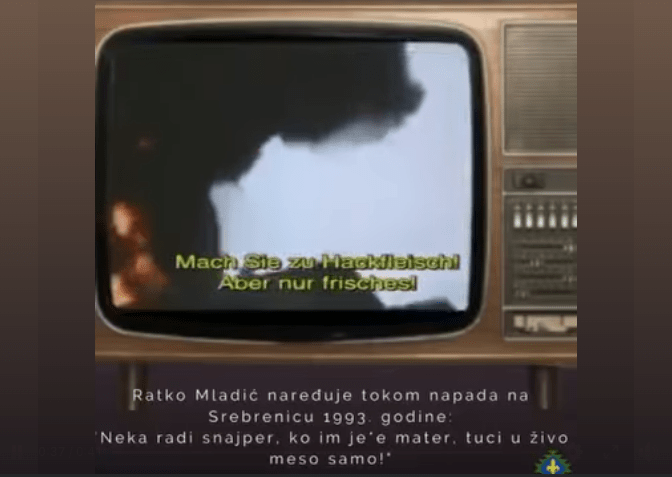
This article analyzes a recorded statement attributed to Ratko Mladić—“Beat the living flesh, just not the factory”—as an entry point into the moral economy and command culture of the Army of Republika Srpska during the Bosnian War. Drawing on scholarship in genocide studies, discourse analysis, and military sociology, the study examines how instrumental rationality, dehumanizing language, and moral disengagement shaped operational decision-making. The prioritization of material assets over civilian lives reveals a calculated hierarchy of value that normalized brutality while safeguarding resources for future exploitation. The article argues that such discourse was not incidental rhetoric but a functional mechanism that facilitated looting, coercion, and systematic violence. By situating the statement within broader patterns of leadership and organizational norms, the analysis contributes to understanding how language and material incentives converged to enable mass atrocities.
Instrumental Violence and Moral Indifference in Serbian terrorist Ratko Mladić’s Military Discourse
Ratko Mladić, former commander of the Army of Republika Srpska and a convicted war criminal, has become a central figure in scholarly analyses of organized violence during the Bosnian War (1992–1995). Audio and video recordings attributed to Mladić provide rare insight into the internal logic governing military operations that culminated in mass atrocities, including genocide. One such recording includes the statement: “Beat the living flesh, just not the factory.” This remark encapsulates the instrumental and morally indifferent nature of violence exercised by Mladić and his command structure.
From an analytical perspective, the statement reveals a prioritization of material and strategic assets over human life. The explicit concern for preserving industrial infrastructure—so it could later be looted or exploited—stands in stark contrast to the complete absence of regard for civilian suffering.
Violence against human bodies is treated as expendable and routine, while economic resources are framed as valuable and worthy of protection. This hierarchy reflects a form of extreme instrumental rationality, in which human beings are reduced to obstacles or objects rather than moral subjects.
The language used by Mladić is also significant. The phrase “living flesh” dehumanizes victims, stripping them of identity, individuality, and legal status. Such rhetorical dehumanization is widely recognized in genocide and mass violence studies as a facilitating mechanism: it lowers psychological barriers to cruelty and normalizes brutality within military units. The cold, directive tone of the statement further indicates that violence was not a spontaneous byproduct of war, but a calculated and normalized practice embedded in command decisions.
Moreover, the absence of any reference to civilian lives underscores a broader pattern of moral disengagement. Ethical considerations are entirely displaced by operational efficiency and material gain. This aligns with scholarly interpretations of Mladić’s leadership as characterized by a fusion of ideological hostility, economic predation, and bureaucratized violence—conditions that enable systematic atrocities rather than isolated crimes.
In sum, the recorded statement illustrates how Mladić and his associates operationalized violence with chilling detachment. The prioritization of property over people, the dehumanizing language, and the calculated nature of harm all point to a command culture marked by profound moral indifference. Such evidence contributes to understanding not only individual culpability, but also the structural and discursive conditions that made large-scale crimes against civilians possible.


 Balkan Academia