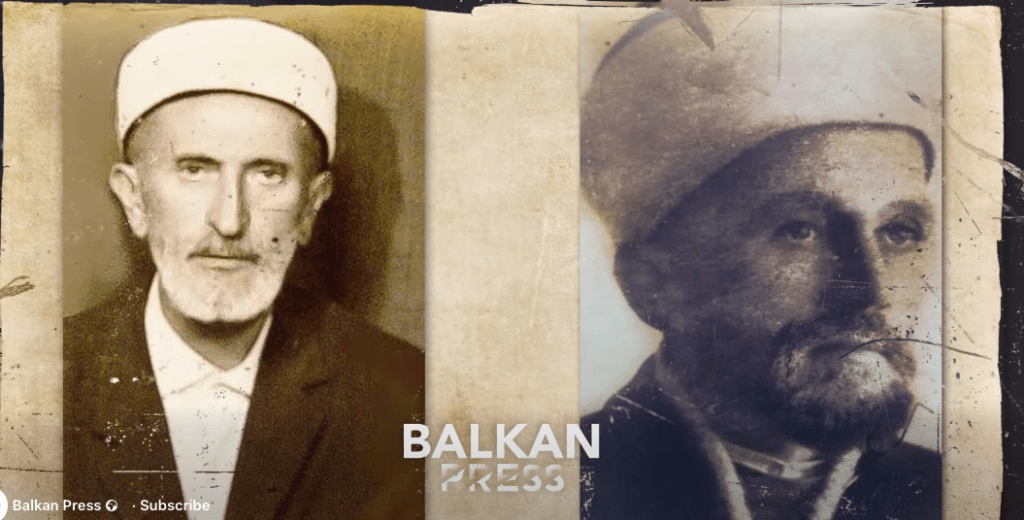

Info and images by BalkanPress.
Abstract
This article examines the role of Albanian Islamic clerics in the defense of Novi Pazar, Sjenica, and the Sandžak region during the Chetnik attacks of 1941. Drawing on contemporary accounts and secondary sources, it analyzes the mobilization of armed resistance led by Albanian commanders and supported by prominent imams. The study highlights both the military involvement of religious figures and the broader context of violence against civilians, including massacres and large-scale destruction of settlements. By situating these events within the dynamics of the Second World War in the western Balkans, the article contributes to a deeper understanding of communal defense, religious leadership, and wartime violence in Sandžak.
Academical overview
During the turbulent period of the Second World War, the Sandžak region—including Novi Pazar and Sjenica—became the scene of violent confrontations between local populations and Serbian Chetnik forces. In 1941, the advance of Chetnik units posed a serious threat to Muslim and Albanian communities in the region. In response, Albanian military and community leaders, most notably Aqif Blyta, Xhemail Koniqani, and the Drešević brothers, organized armed resistance to protect the civilian population. Among those mobilized were several Albanian Islamic clerics (hoxhallarë), whose participation reflected the close relationship between religious leadership and communal defense.
Prominent imams involved in the defense of Sandžak included Mulla Jakup Efendiu, Mulla Jakup Kombi, Ilaz Spahiu, and Mulla Zekë Berdynja from Radavci, who reportedly commanded a force of approximately 500 men. Another notable figure was Mulla Illaz Broja Spahiu from Peja in the Rugova region. Their involvement underscores the multifaceted role of religious leaders during wartime, extending beyond spiritual guidance to active military resistance.
The conflict was marked by significant violence against civilians. In 1941, Chetnik forces attacked villages between Pozhega and Vuqenic, resulting in armed clashes in which 22 Chetnik fighters were killed and 25 wounded. At the same time, Chetnik units carried out killings of civilians, including 22 women and children. Subsequently, Chetnik leaders reportedly misled German Wehrmacht forces by portraying the Albanian defenders of Novi Pazar as communist insurgents. Upon advancing alongside Chetnik units, German forces later realized that these claims were unfounded.
The broader consequences of the violence were severe. An estimated 750 individuals—Bosniaks, Serbs, and Albanians—were killed, and approximately 2,000 houses were destroyed in the regions of Ogjeka, Ternava, Rajetiqi, Deževa, Bjelopode, and Nikolaq. These events illustrate the scale of destruction in Sandžak during 1941 and highlight the role of Albanian religious and military leadership in organizing local resistance amid widespread wartime atrocities.
Famous Albanian imams who defended Sanxhak (Sandzak) was:
In 1941, Serbian Chetnik forces threatened Novi Pazar, Sjenica and Sanxhak. To defend the population, Albanian commanders Aqif Blyta, Xhemail Koniqani and the Dresevic brothers, mobelized forces. Among these were also imams (hoxhollarë).
Mulla Jakup Effendiu, Mulla Jakup Kombi, Ilaz Spahiu and Mulla Zek Berdynja from Radavci who fought with 500 men, and Mulla Illaz Broja Spahiu from Peja of Rugova.
Serbian atrocities
In 1941, Serbian chetnik forces attacked the villages of Pozheka to Vuqenic. 22 Chetniks were killed, and 25 were wounded. The Serbian Chetniks killed 22 women and children. The Serbs then tricked the Wehrmacht (German forces) that the Albanian forces in Novi Pazar were “communists”. The Germans then marched with the Serbs and later discovered that they had been deceived.
Casualties
750 Bosniaks, Serbs and Albanians were killed, and 2,000 houses were burned in the regions of Ogjeka, Ternava, Rajetiqi and Dezheva, Bjelopode and Nikolaq.
Full video: https://www.facebook.com/reel/1376610393711469?


 Balkan Academia