
Summary
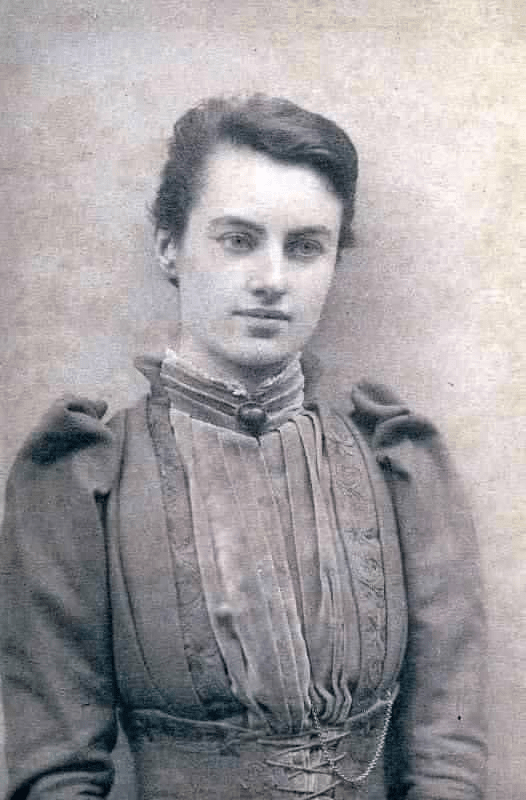
In her book Balkan Worries (1905), Edith Durham reflects on her travels through the Balkans. She asks people in different countries about their identity: Catholics in Rumelia, Protestants in some regions, and Orthodox Christians in Bulgaria and Serbia. Each time, the responses are shaped by religious labels. However, upon entering Albania, the people simply respond, “Albanians.” Durham expresses a sense of relief, feeling that she has finally escaped from the religious dogmas and divisions that plague other parts of the Balkans. This passage underscores the unique sense of Albanian identity that transcends religious affiliations.
Edith Durham’s passage from Balkan Worries (1905) provides an insightful commentary on the complexities of national and religious identities in the Balkans during the early 20th century.
Her travels and interactions with local populations reveal the extent to which religious identity played a dominant role in the self-understanding of various ethnic groups in the region. In contrast to the sectarian divisions in Rumelia, Bulgaria, and Serbia, Albania is presented as a unique case where a more secular, national identity takes precedence over religious labels.
Durham’s perception of Albania as a refuge from religious dogma is notable not only for its emphasis on ethnic identity (“Albanians”) but also for its implicit critique of the Balkan region’s persistent religious and political fragmentation. This contrast may be read as a reflection of Albania’s complex position at the crossroads of Eastern and Western influences, where ethnic identity, shaped by historical, political, and social factors, transcended the religious categories that dominated its neighbors.
However, it is important to recognize that Durham’s perspective is filtered through her own cultural and historical lens, and her privileging of an “ethnic” identity over religious affiliation can be viewed as both a product of her time and a simplification of the complex interplay between religion, ethnicity, and nationhood in the Balkans. Albania’s history, like much of the Balkans, is replete with religious pluralism and coexistence, and the notion that Albanians were united solely by ethnicity ignores the nuanced reality of religious diversity that characterized much of the country.
In sum, Durham’s observation serves as a window into early 20th-century British perspectives on the Balkans, reflecting both her frustration with religious divisions and a desire to see a unifying, non-sectarian national identity emerge—a view that would later resonate with nationalist movements in the region.
“I am Albanian”
Cited from the book:
“When I passed through Rumelia, I asked people: “What are you?”
— Catholic, one answered.
— Protestant, the other answered.
In Bulgaria I asked: “What are you?”
— Orthodox.
In Serbia I asked: “What are you?”
— Orthodox.
So, as I was completely drowning in the idiotic dogmas of the people, I entered Albania and asked: “What are you here?”
— Albanians, they all answered me clearly and distinctly.
“At last,” I said, “here I have escaped from fanatics and heretics.”
— Edith Durham, Balkan Worries (1905)”


 Balkan Academia