
Abstract
This study examines the historical and material significance of two Bajrak spears preserved in northern Albania. The beech-wood Bajrak spear is estimated to be over 250 years old, while the taller iron spear with multiple blades may exceed 300 years in age. The Bajrak spear, formerly owned by Selman Hajdar of Tanushë—killed by Ottoman forces on the hill of Rrahman in Mreti—is currently held in the residence of Hisni Avdi Arifi, who zealously defended the flag. These artifacts illustrate the intertwined roles of Bajraks as symbols of tribal authority, communal identity, and resistance during the Ottoman period.
Feri Arifi:
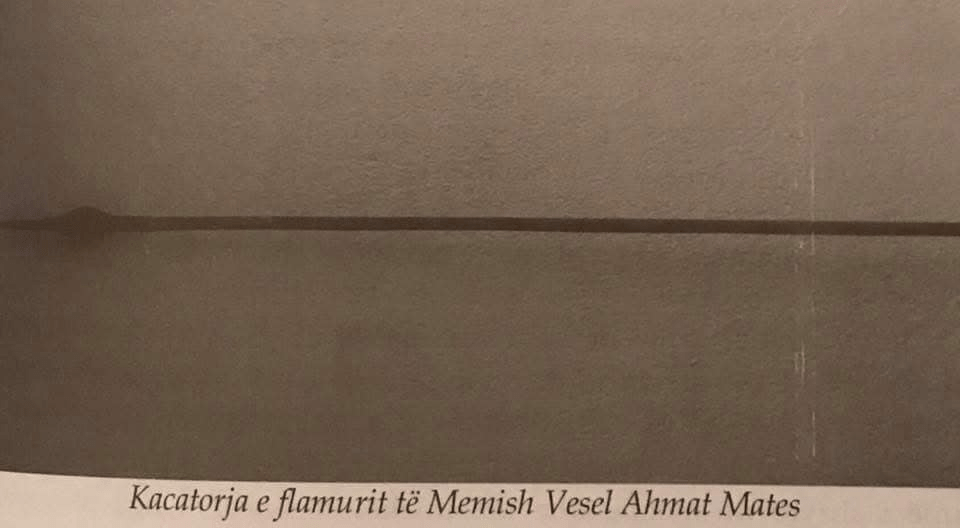
“If scholars wish to verify, this Bajrak spear, crafted from beech wood, is estimated to be over 250 years old. In contrast, the taller spear, constructed from iron with multiple blades, could potentially have a lifespan exceeding 300 years. The photograph below indicates the ownership of these spears. The Bajrak spear is currently preserved in the house of Hisni Avdi Arifi, who zealously safeguarded this flag. The original owner of this Bajrak, Selman Hajdar from Tanushë, was killed by the Ottoman forces on the hill of Rrahman in Mreti.”
The 300 years old Bajrak spear of Selman Hajdar of Tanushë killed on the hill of Rrahman of Mreti
For the purpose of scholarly verification, it should be noted that the Bajrak spear, crafted from beech wood, is estimated to have existed for over 250 years. In comparison, the taller iron spear, fitted with multiple blades, may possess a longevity exceeding 300 years. The photograph below indicates the respective ownership of these artifacts.
The Bajrak spear is currently preserved in the residence of Hisni Avdi Arifi, who zealously defended this emblematic flag, reflecting the central role of Bajraks in local military and social organization in northern Albanian communities during the Ottoman period. The original bearer of this Bajrak, Selman Hajdar of Tanushë, was killed by Ottoman forces on the hill of Rrahman in Mreti. This incident underscores both the symbolic significance of the Bajrak as a representation of communal identity and the violent context of Ottoman resistance in the region.
Bajraks, as historical units, functioned not only as military banners but also as markers of tribal and familial authority, often conferring both social status and territorial responsibility upon their bearers. The preservation of such spears in family households, as exemplified by the case of Hisni Avdi Arifi, illustrates the enduring cultural and historical memory associated with these objects.


 Balkan Academia