
Published by Preveza Abrashi.
Abstract
This paper discusses the ancient origins of the Albanian language and its historical development in the context of the lack of a written system until the 15th century AD. While many languages were spoken across ancient civilizations like Sumer and Egypt by 3200 BC, many of these languages remain unwritten, including Albanian. Despite this, historical sources, such as Ptolemy’s works from the 1st century BC, acknowledge the presence of the Albanian people. The paper explores how linguistic and archaeological evidence points to the long existence of the Albanian people, despite their language not being formally documented until much later, offering a unique comparison to the written tradition of Greek. The twist of fate in their respective linguistic histories casts Albanian as a much “older” language, while Greek is seen as relatively “new” in the context of written records.
Text by Elizabeth Pyatt, Pennsylvania State University
Photo shows Illyrian names in Durrës
By 3200 BC, there were many languages spoken across the world, besides Sumerian and Egyptian, but these languages did not have the fortune of being written down. These languages, although not recorded in written form, are just as ancient as those with established writing systems.
One interesting example is the Albanian language, spoken in northern Greece, which was not written until the 15th century AD. However, the historian Ptolemy mentions the presence of the Albanian people as early as the first century BC.¹ Linguistic and archaeological evidence suggests that the Albanians were a distinct ethnic group even before the advent of written records.
Therefore, while the Albanian language has been in existence for several millennia, it was only committed to writing around 500 years ago. In a fascinating twist of fate, the Albanians could be considered quite “old,” while the Greek language, which has a more extensive written history, could be seen as “young.”²
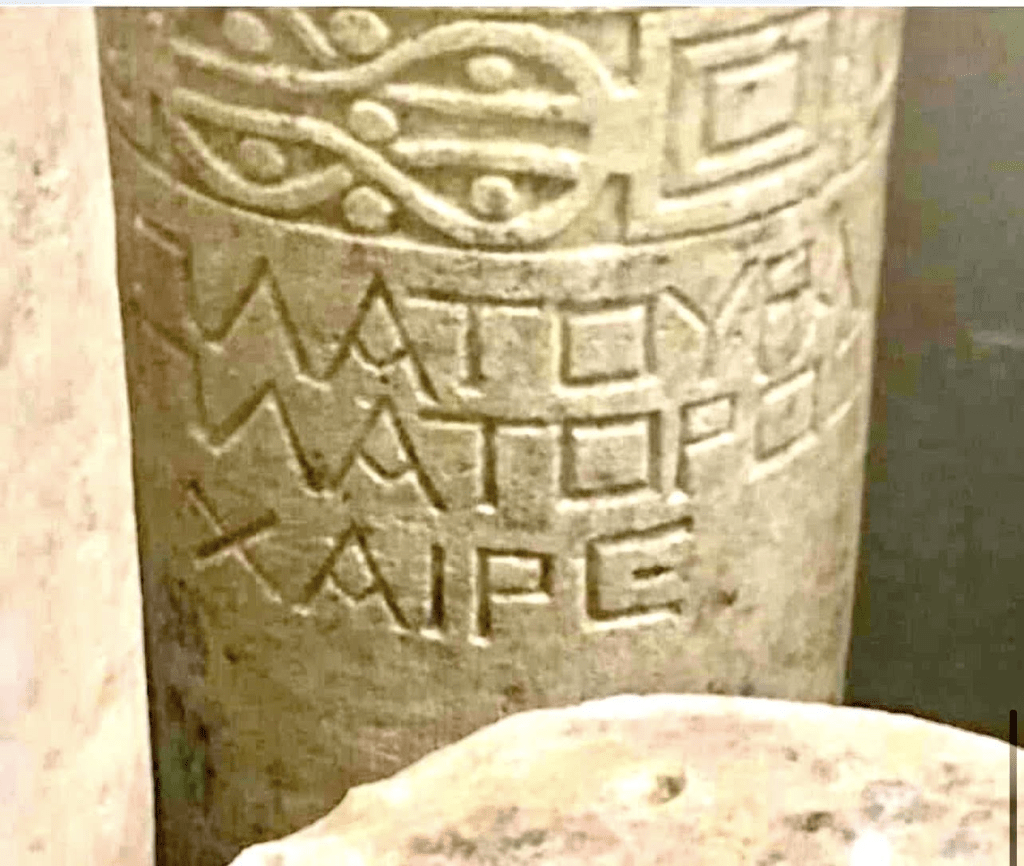
Source: Archaeological Museum, Durrës
Photos by Preveza Abrashi.
Footnotes
- Ptolemy refers to Claudius Ptolemy, the Greco-Roman mathematician, astronomer, and geographer, who lived in the 2nd century AD. His work Geographia mentions various peoples, including the Albanians, though there are few detailed accounts in historical sources prior to the Middle Ages.
- The Greek language has an extensive written record dating back to the 8th century BC (the Homeric epics), but its distinct development from ancient dialects to modern Greek is more recent in comparison to Albanian, which, despite its long existence, only became a written language in the late Middle Ages.


 Balkan Academia