
by Dr. Nikollë Loka
Abstract
Shahin Kolonja, born in 1865 in Kolonje, was an influential figure in Albania’s national movement. After studying in the Ottoman Empire, he became an advocate for the Albanian language and culture. He participated in the Bashkimi e Përparimi society, and later launched the journal Drita, aiming to unite Albanians and advance the national cause. Kolonja was instrumental in key political events, including the Manastir Congress, where the Albanian alphabet was standardized. He was also a delegate in the Ottoman Parliament. His political activities continued until his death in 1919, after dedicating his life to Albania’s independence and cultural development.
Shahin Kolonja: One of the Prominent Protagonists of Our National Movement
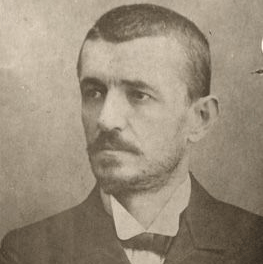
Shahin Kolonja, also known as Shahin Teki Ypi, was born in 1865 in Starje, Kolonje, to a prominent family; the son of Karahman Beu and the grandson of Sulejman Pasha, the governor of Plevlja. After completing his elementary education in Korça, he continued his higher studies at the Royal Civil Administration School “Mülkiye-iSehahane” where he studied economics and civil administration and graduated with honors in 1892.
Besides his native language, Albanian, he was fluent in Greek, which many people born and raised in Rumelia learned informally, as well as Turkish, Arabic, Persian, and French, which he studied during his education. During his studies in the capital, he became acquainted with Ibrahim Temo and the Frashëri brothers, Sami and Naim, and married Naim Frashëri’s daughter, Nevreze.
Shahin Kolonja’s connection with the Young Turks and his participation in their organization developed during his student years at Mülkiye. According to Ibrahim Temo, one of the founders of the Ottoman Union, in his memoirs, “Shahin Kolonja managed to become a member of the society at that time. He ensured that other Albanian students at Mekteb-i Mülkiye joined the ‘Union and Progress’ society.”
After graduating, Shahin was appointed deputy director of the Agricultural School in Thessaloniki, where he also taught. He later served as director in several idadije (secondary) schools, first in Edirne, and was one of the Albanians employed in the Ottoman civil administration. In 1898, he was appointed as the kaymakam (district governor) of Kozani in the Manastir province and, for a time, was the governor of the Athos Sanjak (Aynaroz).
Shahin Kolonja abandoned his civil service career to pursue activities for the national cause. He was arrested in Manastir and sentenced to three years in prison for distributing books in the Albanian language. In 1897, he wrote a memorandum to the Ottoman authorities requesting permission to publish a newspaper in Albanian.
His request was rejected. Two years later, he sought help from the Austro-Hungarian consul in Manastir to publish an Albanian-language newspaper. Due to ongoing difficulties and surveillance by the authorities, he left the country. Kolonja traveled to various European countries and finally settled in Sofia.
From 1901 to 1908, he published the magazine Drita in Sofia, with the help of Kristo Luarasi and financial support from Austro-Hungary, with the goal of spreading knowledge, teaching the Albanian language to Albanians, and supporting the national cause.
Through this newspaper, Kolonja worked towards achieving the national unification of Albanians and ensuring the availability of Albanian books. Shahin Kolonja advocated for the Albanian national awakening and the preservation of the national existence within the Ottoman Empire, though he also supported the activities of the armed guerrilla bands fighting against the Empire.
Shahin Kolonja did not trust the Arbëreshë (Italian-Albanians), whom he saw as hostages of the Italian government, defending Italian positions on the Albanian question, and he refused to cooperate with them. During the later Ottoman period, he supported Austro-Hungarian aid for Albanian geopolitical interests in the Balkans.
In 1904, Kolonja translated and published in Drita the manifesto of the Albanian national awakening, Shqipëria ç’ka qenë, ç’është e çdo të bëhet (“Albania: What It Was, What It Is, and What It Will Be”) by Sami Frashëri. Personally, Shahin Kolonja participated in the activities of Albanian patriots in Albania and neighboring countries. He played a leading role in the “Bashkimi” (Unity) club in Manastir, alongside Gjergj Qiriazi.
Along with the Topulli brothers and other patriots, he went to Skopje to “propagate the national idea.” In 1906, Kolonja became involved in activities aimed at including Albanian activists in the Albanian Revolutionary Committee of Manastir, among the Albanian diaspora in Bucharest, Constanța, Sofia, and Egypt. In the years 1907-1908, in cooperation with Bajo Topulli, Çerçiz Topulli, Luigj Gurakuqi, Mihal Gramen, and other Albanian patriots, Kolonja made efforts to organize the “For Freedom or for the Death of Albanians and Albania” Committee, which would be responsible for the fate of the people in all four Albanian provinces.
Not only through the pages of Drita but also in conversations and meetings in Sofia, Bucharest, or Vienna, Shahin Kolonja promoted the idea of this Committee, which aimed to unify all Albanian bands under a single command, thus giving the Albanian National Movement a certain level of security amidst the growing dangers.
In the days following the declaration of the Constitutional Monarchy, the Union and Progress Committee did not hinder the activities of Albanian clubs and supported their establishment, thinking they could control the Albanian movement. By the end of 1908, around thirty Albanian patriotic clubs had been established, and the number grew to 80 by 1912, not counting those created in the diaspora.
In the north, the establishment of Albanian clubs was difficult due to the backwardness and fanaticism of the people. In Kosovo, there were people who still believed that the constitution was bid’at (an innovation contrary to religious law). Only in Skopje was it possible to create a club. For the creation of this club, two capable patriots, Shahin Kolonja and Bajo Topulli, were sent from Thessaloniki.
In 1908, Shahin Kolonja was elected as a deputy for Korça in the Ottoman Parliament with financial support from Albanian activists. He was one of the 26 deputies representing the four Albanian provinces. In the same year, he was elected as a delegate to the Congress of Manastir, representing Kolonja, where the unified Albanian alphabet was established.
Several Albanian leaders realized that creating a single alphabet would strengthen national unity and education, so the need for unification of the Albanian alphabet was raised. In fact, the contrast between the Latin and Turkish alphabets would make the Albanian consciousness distinct from that of the Turks. With the establishment of the alphabet, Albanians demonstrated that they were united; prepared as a single body, ready to win sovereignty, and a community deserving of its place in the international arena.
The patriots who participated in the Congress felt it was their duty to address the issue of the alphabet within a broader national context, with the drafting of a political platform and a common national project. The drafting of a national program had as its main issue the national rights of the Albanian people for their educational and cultural development.
Although the political program did not contain clear political demands for autonomous organization, such as the unification of Albanian territories into a single province or the form of governance in Albanian territories, it was of significant importance because it addressed the Albanian issue in its entirety.
The approval of political documents showed that the Albanian National Movement, after the Young Turk Revolution, had preserved its independence from the Young Turks and developed its independent character, with the objective of securing the political rights of Albanians as a distinct nation within the Ottoman Empire. Another important activity of Shahin Kolonja at the Congress was that he prepared and presented a program which, when evaluated for its content, included demands for complete autonomy in administration.
The text included many requests in the fields of education, civil administration, military, and economic issues:
- The language of instruction in all elementary and secondary schools would be Albanian; the expenses of these schools would be covered by the state, while Turkish would be taught only after the fourth year.
- Financial aid sent by the Greek administration to the schools of our Christian Albanian brothers must be stopped by all means. As compensation, church properties should be properly managed, and the state should meet the needs of the Orthodox Albanian schools, so that these schools of Christian Albanians become national Albanian schools.
- Regular management of Albanian-Muslim foundations in Albania and allocation of a portion of their income for national purposes.
- All historical objects found in the provinces of Manastir, Janina, Kosovo, and Shkodra should be collected in a museum of an Albanian city, such as Elbasan, and this museum should be considered a branch of the National Ottoman Museum in Istanbul.
- Reduction of military service to two or two and a half years, and Albanian soldiers should serve only in their provinces or at least in Albania, except in cases of war mobilization.
- Low-ranking officers should be Albanians, to better train Albanian troops.
- Gendarmerie officers employed in Albania should be Albanians, graduates of military schools or special gendarmerie schools.
- Elections for mayors should follow an open electoral system, the powers of the mayor should be expanded, and the collection of taxes should be left to municipal officials.
- Enterprises such as the exploitation of mines in Albania and the construction and operation of railroads should be conducted in a way that takes into account the interests of Albanians. A law should be passed to reduce foreign intervention and influence.
- Priority should be given to Albanians over others when appointing civil servants in Albanian provinces, and whenever possible, the local population should be taken into account.
- All revenues for public works, such as road construction, and all means of transport should be left to local authorities. Also
, a significant portion of revenues should be used for public works.
- Opening two large farms and a large agricultural primary school in the southern part of Albania and in the cultivable land of Myzeqe.
- Granting the administrative councils of the sanjaks and provinces the right to collect special taxes to increase the number of schools and spread education in Albania.
- To create an Albanian university, the education budget should allocate five scholarships annually for five Albanians who would be sent to civilization centers in Europe and America to specialize as professors.
- Official recognition of the Albanian language and nationality by the administration, and the registration of the phrase “Christian Albanian” or “Muslim Albanian” in the population registers.
- Salaries for Catholic and Orthodox Albanian clergy should be paid by the state to prevent foreign interference and influences, such as those from Austria, Italy, and Greece.
Shahin Kolonja continued his political activity as an opponent of the Union and Progress Committee in Sofia and Bucharest between 1910 and 1912. After Albania’s independence, he went to Vlora in 1913. However, the political atmosphere there, particularly the fierce competition between politicians, left him disillusioned, especially while Prime Minister Ismail Qemali was leading the Albanian delegation in London.
Unable to remain in such an environment, he returned to Sofia. Due to the worsening of his health day by day, he was forced to withdraw from politics. He returned to Istanbul in 1915 in poor health, together with his wife Nevreza and their three children, where he passed away in October 1919.
Shahin Kolonja dedicated his entire life to the educational and cultural development of Albanians and to the freedom and independence of Albania, being one of the prominent protagonists of our National Movement.


 Balkan Academia