
by Preveza Abrashi
Abstract
This abstract presents a remarkable discovery in the Rugova region that may significantly reshape historical understanding. In the Black Peaks—volcanic, pyramid-shaped mountains near Reka e Allagës, Shtupeq i Madh, and Ishtetym—massive stone structures have long intrigued locals. Traditionally attributed to mythic heroes Muja and Halili, these megalithic walls are now believed to date back to the Neolithic period. Their precise construction suggests advanced scientific and architectural knowledge. The stones also display pictograms resembling animals and birds. Despite their importance, the megaliths remain largely ignored and are increasingly deteriorating under natural decay.
A spectacular discovery that will certainly rewrite many pages of history.
Discovery by Moza Zaja Gyrçari. Text by Zenun Nikçi, dentist in Peja.
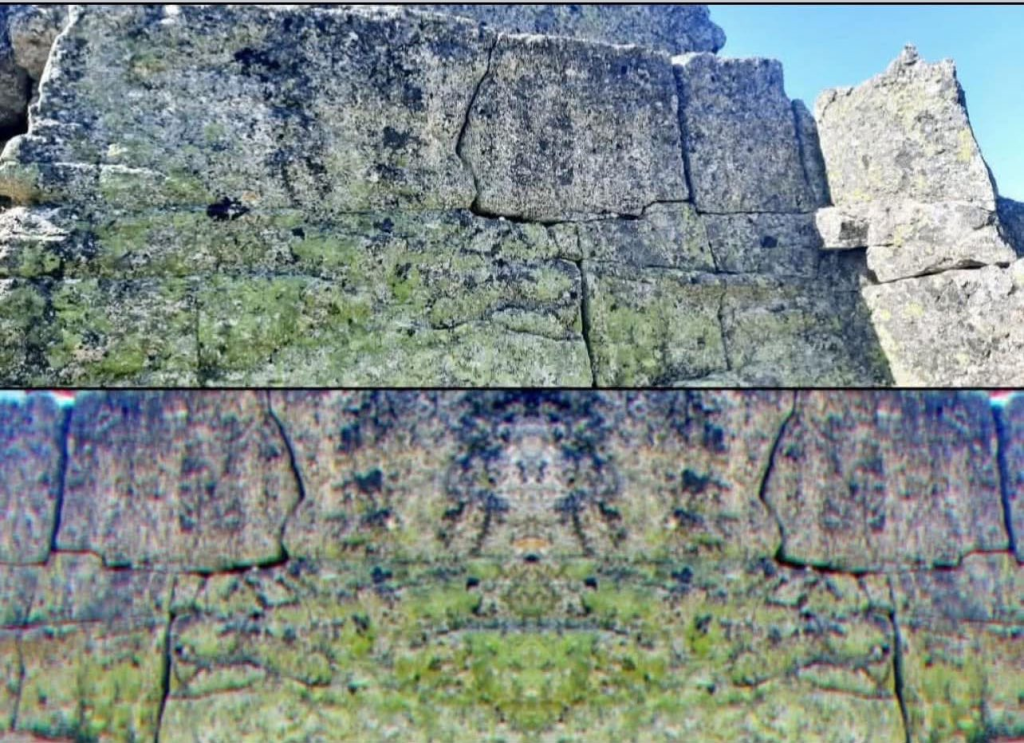
Northeast of Reka se Allage, north of Shtupeq e Madh, and southwest of Ishtetym are the Black Peaks, pyramid-shaped peaks made of volcanic stone. When we were little, we used to pick blueberries near them, a wall made of large stones aroused our curiosity, the way they were stacked, their weight, shape and arrangement and we used to ask the adults who built them.
They told us that only Muja and Halili could have built them. The heroes of Jutbine were sung with the lute at that time among us, they had become Myths, and this Myth of Giants had fascinated generations for centuries.
These megalith-shaped stones are said to date back to the Neolithic period, the way the megaliths were placed, the construction of the wall suggests that humanity had already understood the sophisticated concept of science at that time. On their surface, pictograms in the form of animal heads, birds, snakes, etc. can be seen.
Unfortunately, these megaliths are becoming more and more covered in moss and the ravages of time, fading under their shadow, unable to gain any attention from today’s historians and archaeologists.


 Balkan Academia